Publication details
First published . Series dates place related notes together in the reading archive.
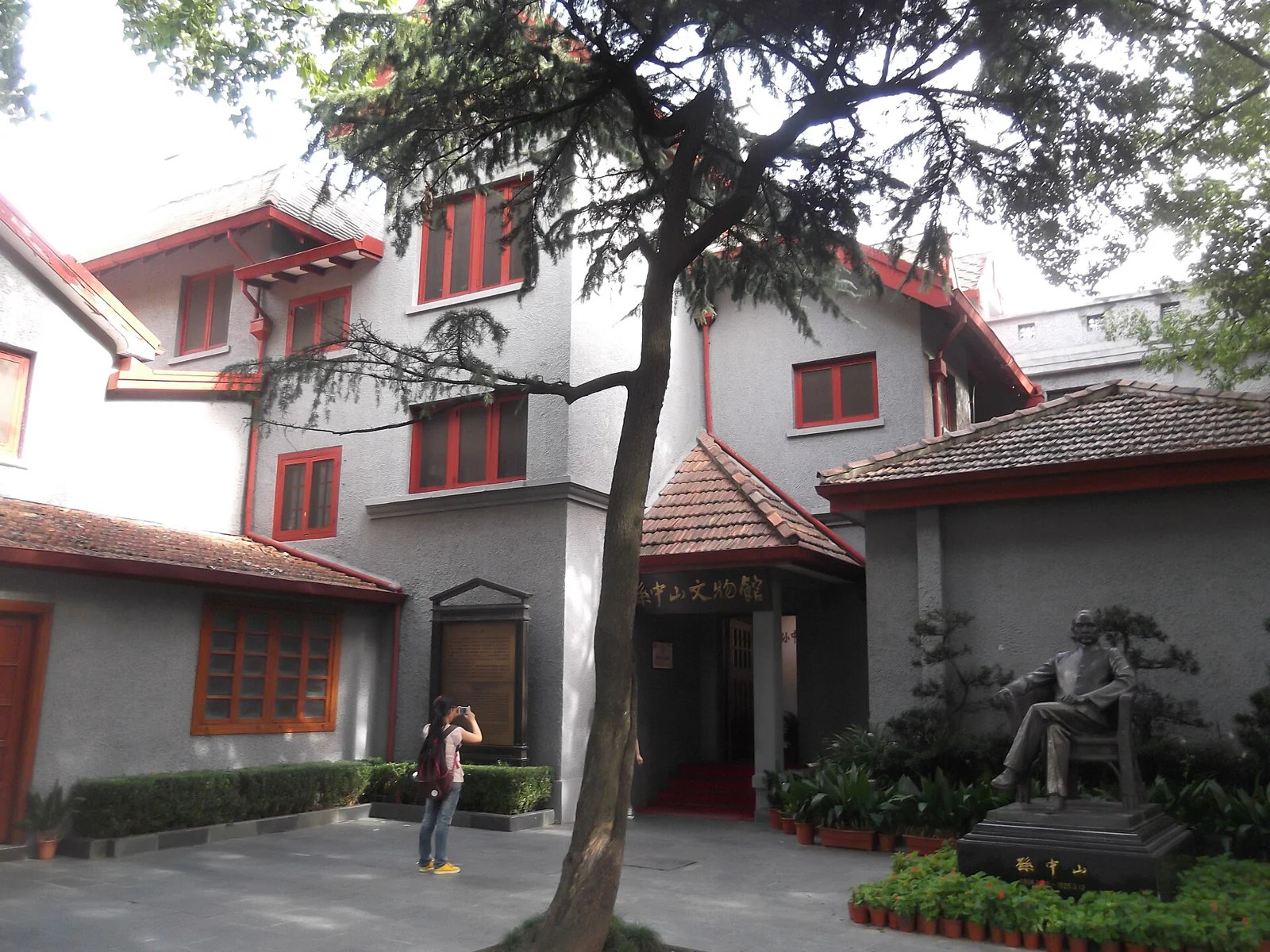

Decide which political history you want to follow
Interest in Chiang Kai-shek can mean several things: his relationship with the Soong family, the Nationalist government, political alliances and conflict, or the ways public figures lived and worked. I would ask which of those you mean before suggesting a route. A family-history day and a history of political institutions should not contain the same stops simply because the names overlap. The choice changes both the sequence and the reading that makes it useful.
My suggested core links Sun Yat-sen's residence, Zhougongguan and Soong Ching Ling's later home. It is a comparative route through public sites, not a claim that all three tell Chiang's biography. Each illuminates part of a broader political landscape. Dongping Road 9, associated with Chiang and Soong Meiling, is an optional exterior-only addition. If entering a Chiang-specific historic interior is the main purpose of your trip, this Shanghai route should not be sold as supplying one.
Start on Xiangshan Road with Sun Yat-sen
Begin at 7 Xiangshan Road, 上海市黄浦区香山路7号, the Shanghai Sun Yat-sen Former Residence Museum. This puts the early Republican subject on a domestic scale. Sun and Soong Ching Ling moved into the house in 1918, and the address is associated with political writing and negotiation, including the 1923 Sun–Joffe Manifesto. I would use the setting to ask how ideas and alliances depended on a home that could also receive and support public work.
The current access point needs particular care. The latest verified museum announcement, issued in June 2026, describes partial reopening with only the residence available and half-price tickets. Do not assume the adjoining relics hall is open. Allow 60–90 minutes and check the museum's newest notice. A selective but genuine house visit is more useful than an itinerary promising a complete complex on the strength of an older general description.
Use Sinan Road to move into the 1940 s
Zhougongguan is at 73 Sinan Road, 上海市黄浦区思南路73号. It served as the Shanghai office of the CPC delegation in 1946, under the public description of General Zhou's residence. That makes it a different kind of historical stop from Sun's house: the main question is how an office operated inside a residence and how political work depended on communication, reception and networks. The comparison works best when the dates remain clearly separate.
I would look for the small practical objects highlighted at the 2024 reopening: a coat, a relief-association receipt and a silk quilt cover linked to Soong Ching Ling. Their value is that they make organization material. Clothes, records and gifts perform different roles, but all belong to the infrastructure of public life. This stop can prevent the day from becoming only a story of marriages, leaders and dramatic national events. It asks how the work was actually sustained.
Let Soong Ching Ling have an independent political life
Continue, with a separate transfer and a pause, to 1843 Middle Huaihai Road, 上海市徐汇区淮海中路1843号. Soong Ching Ling's memorial residence deserves time on its own terms. She was Sun Yat-sen's wife and later Honorary President of the People's Republic of China. She was not Soong Meiling, Chiang's wife. I would make that distinction explicit early and keep it active throughout the day rather than relying on a family tree to explain individual positions.
The useful comparison here is between periods of a public life and between domestic settings. Read the reception rooms, studies and personal spaces in relation to the work the museum documents. Do not ask the house to prove a sweeping explanation of every Soong-family disagreement. A furnished room supplies particular evidence; a biographical argument needs more. I think the journey is richer when relationships help open questions instead of supplying easy answers about why everyone chose a particular side.
Dongping Road 9 is an exterior stop, full stop
The property associated with Chiang Kai-shek and Soong Meiling at 9 Dongping Road, 上海市徐汇区东平路9号, is known as Ailu, 爱庐. The official Shanghai tourism listing explicitly says it is not open to the public. It is associated with the Shanghai Conservatory's affiliated middle school. I would only offer it as a brief look from public pavement, subject to what is visible, with no promise of entering the garden, school grounds or historic rooms.
A property being historically important, architecturally protected or discussed online does not make it a public museum. Nor does a nearby restaurant or accessible street frontage establish access to the associated residence. This distinction matters enough to be part of the route description. If you want the context, the exterior may be worthwhile. If you are expecting an intimate view of Chiang and Soong Meiling's household, skip it rather than let a closed gate become the disappointing centre of the day.
The family is a network, not one political character
I would avoid the neat version of this subject in which a family relationship explains an entire country's political history. Marriage, kinship, education, money and social access mattered, but individuals still made choices in changing circumstances. The museums on this route give you material for comparing those lives. They do not erase differences between them. Keep names and roles precise: Soong Ching Ling and Soong Meiling are related people with distinct public histories.
As a Chinese American, I find the movement between cultures and languages especially interesting. Homes, books, overseas support and translated ideas show that the national story was connected to places beyond China. Yet an international connection does not automatically explain a political commitment. I would look for what the evidence actually establishes: who supported an address, who signed a document, who received a gift. That is a stronger basis for an opinion than treating cosmopolitanism as a complete personality description.
You can study politics without turning a walk into endorsement
A visitor interested in a historical figure need not admire everything that figure did. I would frame this journey around understanding political work and its consequences, with room for questions about power, legitimacy and institutional change. Museums have their own perspectives, and houses emphasize particular aspects of a life. Reading those choices is part of the visit. You can take a source seriously without assuming it settles every argument about a contested period.
A practical method is to separate three things: the object or place, the museum's interpretation, and your own conclusion. A dated receipt is evidence of one transaction. A panel connects it to a wider account. Your judgement about that account should remain proportionate to what you have actually seen and read. This may sound slower than a dramatic story about rival leaders, but it makes a better day. The details give the political argument substance.
Do not force all the stops into a single breathless afternoon
For two public interiors, I would plan a half-day with a pause. For all three, allow most of a day and confirm access before setting out. Their opening and guiding rules differ. Soong Ching Ling's residence requires advance approval for anyone organizing interpretation inside; a guide cannot assume blanket permission. Sun's residence has a partial-opening notice. Zhougongguan should be checked through its operating institution. The route has to respect those actual arrangements.
I would usually pair Xiangshan Road with Sinan Road first, then decide whether the later Soong residence deserves a separate day. Add Dongping Road only if the exterior context serves your question. A transfer is not empty time: it can be the opportunity to compare what you have just seen, settle the chronology and prepare the next question. That is preferable to arriving at another famous doorway while the previous place has already become indistinct.
Use a city museum when you need the wider setting
If the family and political relationships feel too dense, start with Shanghai History Museum at 325 West Nanjing Road, 上海市黄浦区南京西路325号, on another day. Its urban chronology can supply a setting for the smaller houses. I would not make it a compulsory extra on an already full route. Think of it as a different scale of explanation: the city, then institutions, then households and individuals.
Tell me which question you want to pursue and how long you want to spend. A first encounter with modern Chinese history might need fewer stops and more explanation. Someone already reading about the Republican period may prefer a concentrated comparison of documents, spaces and museum narratives. I would rather build that specific journey than promise an all-purpose Chiang Kai-shek tour whose most directly associated Shanghai property cannot actually admit you. The real public doors are interesting enough when their subjects are allowed to remain precise.