Publication details
First published . Series dates place related notes together in the reading archive.
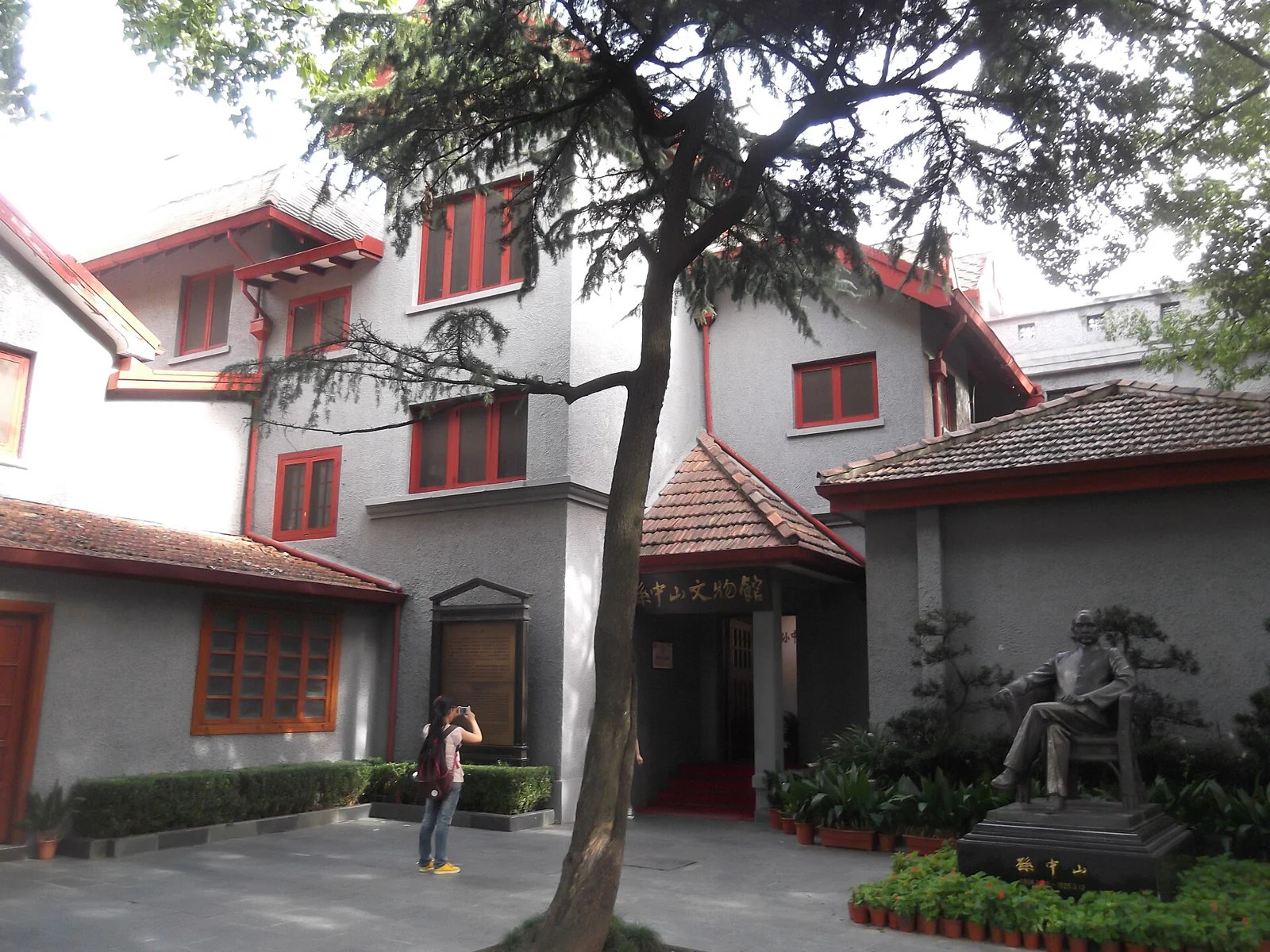

The useful version of a famous name
Sun Yat-sen can appear on a visitor's itinerary as a name attached to roads, parks and memorials. At 7 Xiangshan Road, I would make the question narrower: what kind of place supported his life and work in Shanghai? That change helps a house museum earn its time. Instead of another compressed biography, you are examining a particular setting where domestic routines and political activity occupied the same small plot.
The museum's Chinese name is 上海孙中山故居纪念馆. Show a driver 上海市黄浦区香山路7号. Xiangshan Road is the useful present-day address; older references to Molière Road belong to the site's history. I would keep that distinction clear on a map. The pleasure of old street names is that they reveal changing administrations and languages, but they are not a substitute for finding the entrance you need today.
Check the partial-opening notice before building the day
A museum-authored notice dated 28 June 2026 states that the historic residence reopened on 30 June with only that part of the site available and tickets at half price. It gives Tuesday–Sunday hours of 9:00–17:00, with ticket sales ending at 16:30. This is more specific than a general museum description listing the complete complex. I would check the current notice before coming and avoid promising a separate relics hall that may remain unavailable.
That limitation does not make the house unworthy of a visit. It changes the scope. Plan about an hour for the residence and allow a little flexibility for the day's circulation arrangements. If your main interest is a large artifact display, verify that it is actually open before travelling. If your interest is the working domestic setting, the house is the main subject. Matching the expectation to the accessible space is more important than counting how many rooms a ticket ought to buy.
A gift with a transnational history
The official biographical account records that overseas Chinese in Canada bought the house for Sun, and that Sun and Soong Ching Ling moved in during June 1918. I find that a useful detail to carry into the visit. A Shanghai residence was supported through a network extending far beyond Shanghai. Modern Chinese political history was being made through travel, money, family and overseas connections as well as through events within national borders.
As a Chinese American, I am interested in that movement between places because it makes a simple inside-outside division feel inadequate. Overseas Chinese were not merely watching a distant national story. Here the connection became a specific building in which work could happen. I would not let the gift become just a sentimental anecdote. It is evidence of the practical support required by political activity, and of the way diasporic relationships can acquire a very tangible urban form.
Read the house plan before reading the whole biography
The residence has two principal floors. The official description places the living and dining rooms downstairs, with the study, bedroom and smaller sitting room above. That is a useful starting diagram. Follow the difference between rooms for receiving, eating, working and withdrawing. A house organizes degrees of access. Politics conducted from a home does not abolish those distinctions; it gives them additional consequences.
I would pay particular attention to thresholds and sightlines. How does a visitor move from the street towards a reception space? How separate does a working room feel from the household rooms? I find the transitions revealing because they show how daily work occupied a finite domestic plan. The physical arrangement is already doing explanatory work. It shows why a house can be both intimate and public without becoming a large institutional headquarters.
The study is a place to think about political writing
A study can become a predictable museum image: desk, chair, books, famous occupant. I would use it to think about writing as work. Public programmes and statements begin with reading, drafting, revision and correspondence, much of it unphotogenic. The attraction of a room is that it gives those activities a physical scale. It places the production of ideas somewhere more specific than a timeline panel.
The 1923 Sun–Joffe Manifesto is associated with this house. You do not have to master every later alliance and rupture to appreciate why that matters. The address belongs to a moment of political negotiation whose consequences reached beyond the room. My advice is to read a concise account of the document before the visit, then use the setting to ask how national strategies depended on meetings, language and personal contact. The room should sharpen the question, not stand in for the answer.
Soong Ching Ling should remain a subject in her own right
Soong Ching Ling lived here with Sun and continued to live at the address after his death in 1925, until 1937 according to the official biographical account. I would resist treating that later period as a long epilogue to somebody else's house. The residence continued to support another public life. A museum named around a famous man can still be read with close attention to the woman whose work and decisions also shaped its history.
That is one reason I like pairing the Xiangshan Road house with her later residence on Middle Huaihai Road. The comparison separates periods and allows the domestic settings to have different meanings. It also discourages the habit of collapsing the Soong family into one political position. Family relationships are part of the story, but they are not an explanation for every choice. The more interesting visit leaves room for individual agency, disagreements and changing circumstances.
Furnished rooms require a little precision
When looking at a preserved or restored room, read the captions for what is original and what has been arranged to represent a period. A coherent interior can feel immediate even when its museum presentation has involved later decisions. I do not think that weakens the encounter. It tells you what sort of evidence you are seeing and keeps the emotional effect attached to something you can actually assess.
Choose one object or arrangement and ask what it establishes. A piece of furniture may indicate the use of a room, a book may connect to a particular intellectual interest, and a photograph may document a relationship. None automatically proves the atmosphere of an entire household. I prefer that slower reading to language about a house being frozen in time. The past is not frozen; it has been conserved, interpreted and made available to a visitor.
Pair a small house with another small question
Nearby Zhougongguan on Sinan Road gives you a different kind of political interior: an office publicly presented as a residence during the 1940 s. I would compare the practical work performed by the two addresses, rather than blending their occupants into one uninterrupted story. One question might be how meetings were received; another, how private space supported public organization. The two sites are close enough to belong to a manageable central-city itinerary.
If you add Soong Ching Ling's later home, allow a separate transfer and a real pause. This should be a history day with time to think, not a race among front doors. I would rather inspect two houses properly than photograph four plaques. And if you want someone to connect the periods, tell me which part interests you: the early Republic, the Soong family, political alliances or the everyday mechanics of public life. Those lead to quite different journeys.