Publication details
First published . Series dates place related notes together in the reading archive.
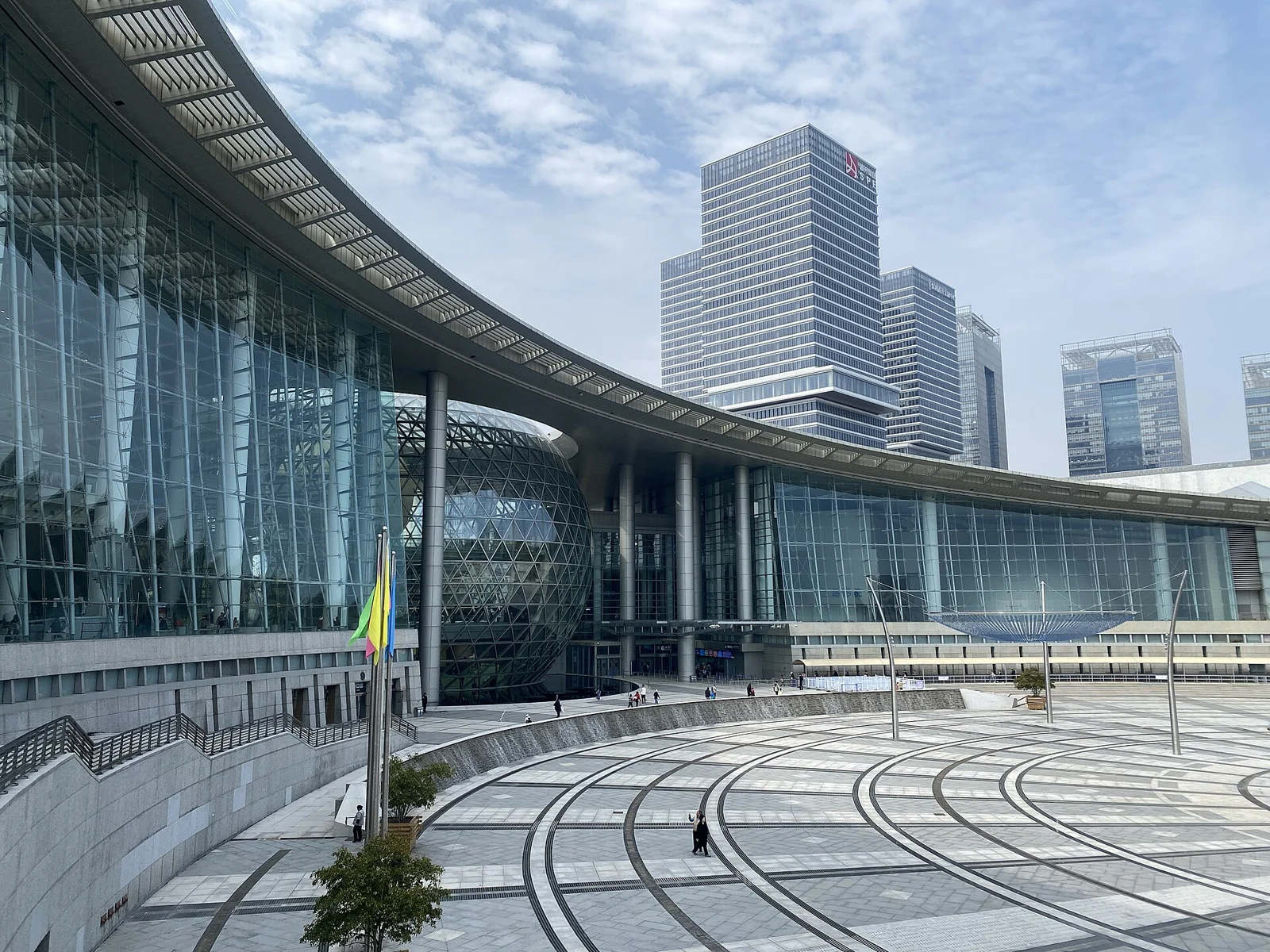

Back inside the reopened museum
The sequence is worth getting right. The main museum closed for renovation in 2023, began public trial opening on 17 February 2026, and formally reopened on 23 May 2026. Those are different milestones, which helps explain contradictory travel listings. By autumn 2026 it is an operating museum, not a future reopening to build a speculative itinerary around.
I would also be careful with photographs and descriptions of the old galleries. A room you remember from a previous Shanghai trip may have changed. Use the current museum map to choose your priorities, then let the objects and demonstrations in front of you determine the route. A reopening is a useful reason to reconsider a museum; it is not a reason to assume every new interactive deserves an hour of your day.
My first choice: a human body or an intelligent machine
The renewed museum includes areas such as Incredible Me, AI Pioneers and Aviation Adventures. I like these as starting points because they offer distinct ways into a large building. A child fascinated by movement can begin with the body or flight. Someone interested in modern China might prefer the development and application of intelligent machines. The point is to make a decision before the most conspicuous queue makes it for you.
For a body display, I would ask what is being measured: force, balance, reaction, perception or something else? For a machine, I would ask what it senses, what decision it makes, and what moves as a result. That small chain turns an entertaining demonstration into an intelligible system. It also gives adults something better to do than stand beside children checking their phones.
For flight, separate lift, propulsion and control instead of treating an aircraft as one miraculous object. A wing, an engine and a control surface are solving related but different problems. If an installation lets you alter a setting, say what you expect to happen before trying it. Then compare the result with the prediction. That little discipline is useful because an interactive can otherwise reward movement without explanation. You can enjoy the effect, understand part of it, and still leave with a question. I think an unanswered question that has become more precise is a perfectly good museum result.
Do one experiment twice
My rule for an interactive museum is simple: if a result surprises you, repeat the activity with one deliberate change. Move the control a smaller amount. Change the timing. Notice which part of the setup remains fixed. You do not need a classroom worksheet, but you do need enough attention to distinguish a principle from an effect produced for amusement.
This is also how I would decide whether to remain in a queue. If the exhibit offers a particular experience you genuinely want, wait for it. If the attraction is largely that everyone else is waiting, move on. An uninterrupted conversation about an accessible demonstration can be worth more than a short turn on a popular installation. There is no prize for completing the museum’s busiest circuit.
Give scientific history some room beside the future
A museum of technology can easily become a parade of the newest devices. I would deliberately balance the forward-looking displays with Gleam of Exploration, the area concerned with scientific breakthroughs. It is useful to ask not only what a technology can do now, but what somebody once had to establish before it could exist. The history of a question is often more revealing than a polished answer.
That is the perspective I would bring to Shanghai as well. The city’s interest in scientific infrastructure is visible, but a museum visit becomes more satisfying when you look for the process behind the ambition. Who needs the measurement? What problem is being solved? Which part of the demonstration is evidence, and which part is a prediction? You can be enthusiastic about technical achievement and still ask precise questions.
Admission does not settle the whole day’s schedule
Arrange general admission through the museum’s official channels, including the mini-program named 上海科技馆自然博物馆天文馆门票. The museum’s official WeChat account is 上海科技馆. Some interactive experiences and theaters have their own reservation process. A ticket that gets you through the entrance does not necessarily secure the specific activity you saw in a video.
I would secure the visit date first, then choose one timed experience around which to organize the rest. Stacking appointments can make a large museum feel like an airport connection. If a particular cinema or activity is the principal reason for your visit, check its availability before committing the group. International visitors should use the correct identity-document option and obtain official help if the booking form does not clearly accommodate their document.
The address and the station are straightforward; the scale is the issue
The address is 2000 Century Avenue, Pudong New Area: 上海市浦东新区世纪大道2000号. Metro Line 2 has a station named Shanghai Science and Technology Museum. I would save the Chinese address as well as the museum name; it is useful for a taxi, a mapping app or a conversation with station staff, and avoids confusion with the institution’s other two museums.
The real planning challenge is energy once you arrive. This is a substantial indoor visit with plenty of standing and walking. Start fed, allow a break, and choose a natural stopping point instead of promising to see every area. For families, I would rather finish while curiosity is still functioning than spend the final hour negotiating with an exhausted child beside an exhibit nobody is absorbing.
I would keep a second Pudong museum selective
Shanghai Museum East is a plausible nearby cultural pairing, but I would not sell two major museums as a casual afternoon. They ask for different kinds of attention: interactive science invites participation, while a collection of historical objects rewards slow comparison. Switching between them can be interesting; trying to complete both is an exercise in diminishing returns.
If science is the day’s purpose, let this be the main event. Add a short outdoor break or a single tightly chosen gallery elsewhere only if the group still wants one. If ancient Chinese art is your real priority, reverse the emphasis and make the science museum a different day’s outing. A sensible itinerary does not need to prove that everything geographically adjacent can be consumed together.
Who I would send here, and who I would send elsewhere
I would recommend this museum to families with specific scientific interests, visitors curious about engineering and technology, and people who enjoy testing an idea with their hands. It is also a good choice when a Shanghai trip needs an indoor day with more structure than shopping. The reward depends on engagement, so arrive with a question rather than a list of photographs to reproduce.
For someone primarily interested in fossils, animals and the natural world, I would look first at Shanghai Natural History Museum in Jing’an. For astronomy and an exceptional piece of contemporary architecture, I would consider the Astronomy Museum in Lingang, while accounting for the longer journey. The three belong to one institution, but they are not interchangeable branches of the same afternoon.