Publication details
First published . Series dates place related notes together in the reading archive.
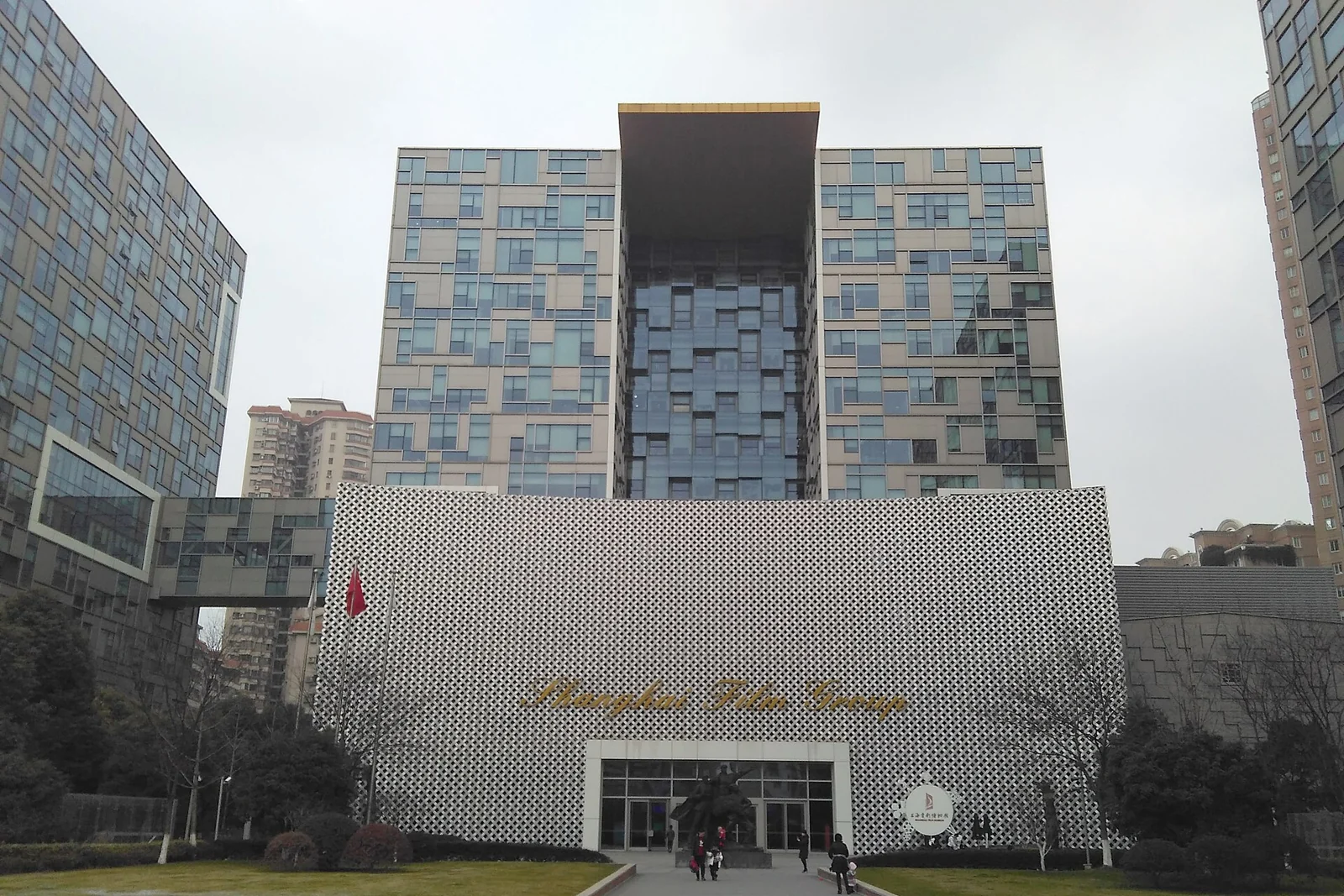

The museum and the film park are different places
Shanghai Film Museum is at 595 North Caoxi Road, Xuhui District: 上海市徐汇区漕溪北路595号. Save the name 上海电影博物馆 along with the address. Shanghai Film Park is a separate destination in Chedun, much farther from the centre. I would settle that distinction before discussing tickets, because a photograph of a period street can create an entirely different expectation of what this museum offers.
This is a museum within the Shanghai Film Group setting, on a former studio compound. The subject is the people, objects and processes of cinema. I would pair it geographically with Xujiahui rather than build a day around crossing the municipality. Use a current map for the entrance on North Caoxi Road; a general pin in the neighbourhood is less helpful than the exact Chinese street address.
I would start at the top and let the story descend
The published museum route begins on the fourth floor and works down through four levels. Broadly, it moves from screen memory and film personalities into history and production, then the institution’s record of achievements. That is a useful framework, but I would not let a formal route remove the freedom to choose what interests you. A biography you care about deserves more time than ten names you do not recognize.
The first question I would ask is what the display assumes you already know. If a famous face means little to you, look for the kind of work, the date and the wider production context rather than forcing instant recognition. A visitor unfamiliar with Chinese cinema can still have a serious visit. The objects do not become uninteresting because the film has not yet reached your watchlist.
A prop-design book can be more revealing than a finished scene
The municipal museum description identifies a prop-design book for Dream of the Red Chamber and production files for Hibiscus Town among its archival material. I like those kinds of object because they interrupt the illusion that a film simply arrives complete. A document can show how somebody translated an intention into instructions, costs, materials or practical decisions that other people had to carry out.
I would look for the relationship between an imagined world and an ordinary piece of work. A prop has to look right, but it may also need to fit a hand, survive repeated takes or behave consistently across scenes. A costume has similar obligations. Even when you cannot read every note, the existence and organization of the paperwork can tell you that production is a coordinated practice, not only a succession of inspired moments.
Give animation its own attention
The museum’s published account also points to character-design drawings for Nezha Conquers the Dragon King. I would make room for animation even if live-action cinema is your main interest. A design drawing exposes a set of choices that the finished moving image can make seem effortless: a silhouette, a proportion, the expression that needs to remain legible when a character moves.
Compare what is emphasized and what is left simple. Ask which features carry identity and which permit variation. That is a useful exercise for adults and children because it begins with looking rather than prior expertise. I would not present a single drawing as a complete history of Chinese animation; I would use it as a concrete entry into a tradition that deserves more attention than a passing glance at a familiar character.
Sound is not an accessory to the image
The production areas address dubbing, recording and postproduction as well as the visible jobs of costumes, makeup and studio work. I would give sound a deliberate share of the visit. A voice, a pause and the texture of an environment can change how the same image is understood. It is one of the clearest ways to recognize how cinema constructs a world that feels continuous.
If an interactive dubbing or editing station is available on the day, use it to notice a specific choice rather than merely to hear yourself in a film. What happens when a line arrives too early? What does a different rhythm do to the scene? Individual interactives may be busy or unavailable, so I would not make the entire visit depend on one. The underlying question remains worthwhile without a turn at a console.
Editing offers a similar way to think about meaning. Two fragments shown in sequence create a relationship that neither fragment contains alone. When an exhibit explains a production stage, ask what the audience is being encouraged to assume between one moment and the next. A museum cannot reproduce the concentrated experience of watching an entire film, but it can expose the decisions that the film normally conceals. I like that change of attention. The pleasure does not have to disappear once you recognize a technique; you can admire the scene and the careful assembly that allowed it to work.
Treat the studio history as a point of view
A museum associated with a film institution will naturally devote attention to its own people and achievements. I would read those sections as an account of how the institution understands its contribution. That can be revealing, especially when you notice which genres, eras and kinds of work are emphasized. It is not the same thing as a complete account of every strand of cinema produced in Shanghai.
Rather than try to settle the whole history during one visit, choose a title or filmmaker to follow up afterwards. A museum can supply a reason to watch a film more carefully. I think that is a better outcome than leaving with a broad claim about an entire national cinema based on a few rooms. The archive is an invitation to look again, not permission to stop asking questions.
Plan a real visit, not a quick indoor substitute
I would allow two to three hours if the subject appeals to you, with some flexibility for reading and any confirmed activity. The official municipal tourism listing gives Tuesday–Friday hours of 09:30–16:30, with last entry at 16:00; Saturday and Sunday run to 17:00, with last entry at 16:30. Monday is the regular closure, except for announced holiday arrangements. Check the museum’s current notice before setting out.
The 2026 municipal Science Festival information lists standard adult admission at 60 yuan, with a separate date-specific promotion. Do not confuse an expired festival discount with the regular price. Use the museum’s official WeChat account, 上海电影博物馆, for current ticket information. I would not promise an old film screening, a legacy 4D timetable or a specific workshop without a current program for your visit date.
Xujiahui is the useful continuation
For the rest of the day, I would keep the route in Xuhui. A walk through Xujiahui gives a change of scale after the museum: public space, everyday movement and buildings with other institutional histories. It is a more comfortable pairing than adding a distant studio attraction simply because both involve cinema. The right companion to a concentrated museum visit is often a neighbourhood, not another ticket.
If you want me to build a more particular day around film, architecture or a historical period, that is worth discussing directly. A good route could begin with a question from the archive and continue into the city that helped produce it. I would rather shape that connection around what you actually enjoy than send every film-interested visitor through an identical sequence of celebrity photographs and old streets.