Publication details
First published . Series dates place related notes together in the reading archive.
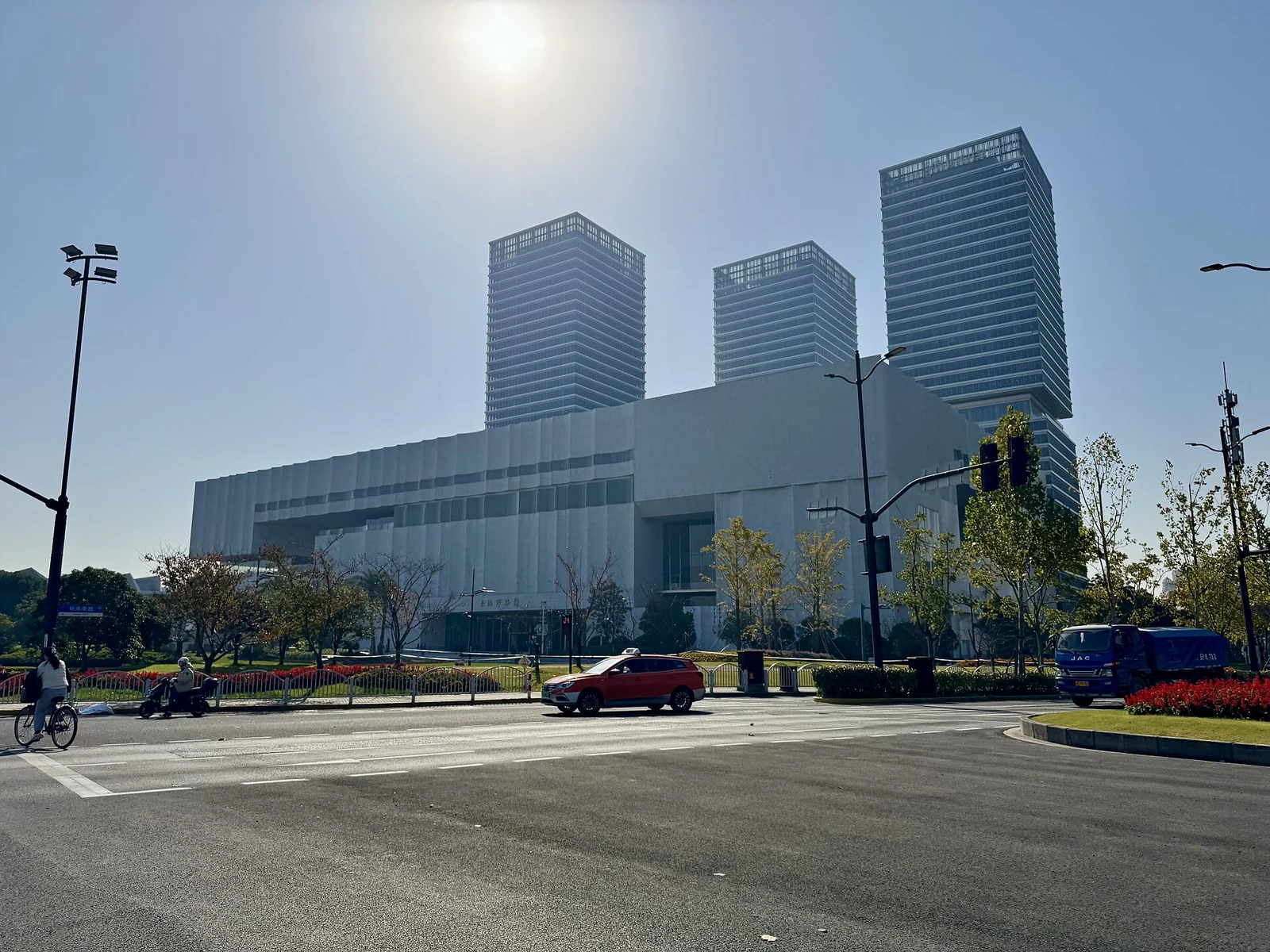

Two buildings, two very different visits
Shanghai Museum East is at 1952 Century Avenue in Pudong. For individual visitors, the museum directs entry through the B1 East Gate near Dingxiang Road; the ground-level North Gate serves reserved groups and certain priority visitors. The entrance distinction matters because the address alone leaves you facing a very large building. General individual entry currently needs no advance reservation. Bring your original valid identity document; a foreign visitor should bring the passport used for identification. The museum opens Wednesday to Monday, 10:00–18:00, with last entry at 17:00, and normally closes on Tuesdays.
The People’s Square museum is at 201 Renmin Avenue, with visitor entry through the south gate on Wusheng Road. From July 9, 2026 to November 14, 2027, its programme is entirely the ancient Americas exhibition, with no other exhibitions there. Its usual daytime hours are 09:00–17:00, last entry at 15:00, and Monday closure except national holidays. Those buildings are not interchangeable branches of the same day out. I would choose the subject before choosing the convenient location.
Start with bronze: an object that makes power tangible
The bronze galleries are where I would begin. A ding is a vessel, but calling it a cooking pot misses what makes the form consequential. Ritual food, ancestors, costly material, casting technology and elite authority belong to the same object. I find that a more productive way into early Chinese history than treating the cases as a parade of increasingly elaborate green shapes. Look at the legs, handles and the relationship between the decorated surface and the hollow interior. The design has to carry weight, receive contents and present itself to other people.
The Da Ke Ding is a useful object to read about before coming: a major Western Zhou ritual bronze in the museum’s collection. I would not build a visit on a promise that any single object is always in its case; collections move for conservation and loans. What interests me is the change of perspective it offers. An inscription is both language and a durable claim. Decoration can frame authority rather than merely embellish it. You do not have to memorise a succession of rulers to recognise that these objects were participating in social order.
Make a comparison before reading every label
I would choose two vessels of a related type and ask what changes. Is one more compact? Does an animal motif merge into the background or stand clearly apart? Where does the handle interrupt the silhouette? This small comparison gives you a task you can actually complete. A museum label then becomes an answer to a question you have formed, rather than another fact you are expected to absorb. It also keeps a non-specialist companion involved: everyone can see a difference before anyone needs to pronounce a dynasty.
There is a limit to this visual method. Similar-looking objects do not automatically share a function, and a striking pattern is not an invitation to invent a symbolic meaning. Use the label to check your observation, especially the object type, date, findspot and stated purpose. My preference is for one well-supported observation over an elaborate story that happens to sound ancient. An unfamiliar museum becomes much less intimidating when looking and checking can take turns.
Ceramics: put the base into the conversation
Ceramics make a useful second chapter because their questions are different. Instead of concentrating only on a painted scene, compare shape, wall, glaze and the transition at the foot. A bowl must rest somewhere. A vase has an opening that can be generous or tight. A surface can let the body show through or conceal it. Even when a museum display prevents you from seeing underneath, the edge nearest the base can tell you where a finish stops and how the object meets a table.
I would choose one restrained surface and one busier surface, then give them equal time. It is easy to reward the most colourful case with all your attention. The quieter object often asks for closer looking: a profile that changes gradually, a glaze whose colour depends on thickness, or an unpainted area that gives the rest of the form breathing room. That is my argument for slowing down here. The question is not which piece would look most expensive in a photograph; it is what the maker has chosen to make visible.
Jiangnan: bring the scale back to everyday life
The museum’s Jiangnan Gallery shifts the conversation towards the region south of the lower Yangtze, including the materials and craft cultures around Shanghai. I would use it after the larger historical galleries. It gives objects a more intimate setting in the mind: something handled, worn, collected or placed in a domestic environment. The museum’s published guide identifies a peace-dove-patterned scarf among its examples. The smallness of such an object is part of its value. Modern life and visual taste enter through things that can fit in a drawer.
My interest here is in how an object moves between usefulness and display. A textile can be clothing and a carrier of imagery. A crafted object can serve a practical purpose and communicate taste. Those categories are less separate than museum departments sometimes make them appear. If you are also visiting Shanghai’s designers or tailors, this is a useful bridge: material, labour, finish and the intended user are questions that travel from historical collections to contemporary shops without requiring you to pretend they are the same tradition.
Do not make the interactive rooms the default plan
East has special experience spaces, including the Curio-City and Digital Gallery, with their own reservation requirements. A general walk-in visit does not reserve those rooms for you. I would book one deliberately if it fits the interests and ages of the people coming. I would not substitute a digital attraction for the object galleries simply because it is easier to describe in advance. The original objects are already doing a great deal: they preserve material decisions, use and survival in a way a screen cannot reproduce.
The museum also offers Chinese and English audio-guide options and its own paid guided services. Those can be a good investment if you want a coherent introduction. There is an additional distinction for a private walk: the museum requires prior approval for anyone organising gallery tours. My outside architectural or city walk is not a promise of unrestricted guiding inside the collection. I would arrange the museum’s authorised interpretation separately and use our time together to connect what you have seen to Shanghai beyond the building.
My route for a visit that leaves room for lunch
Allow about three hours for a selective first visit, longer if an exhibition particularly interests you. I would give the bronzes the freshest part of my attention, choose a smaller ceramic sequence next, then finish with Jiangnan rather than racing through the remaining floors. Take a short seated break before deciding whether to add anything. Fatigue makes every case look equally important and equally forgettable. Leaving a gallery for another day is a curatorial decision, not a failure to get your money’s worth from free admission.
For a companion with different interests, agree on one shared gallery and one separate choice. Regroup with an object each of you would keep discussing over lunch. The museum has food and drink areas, but eating belongs outside the exhibition galleries. I would avoid pairing East with another large collection on the same day. Nearby Pudong can provide space and a meal; the Bund can wait until your attention returns. A good museum visit should improve the rest of the city, rather than consume your ability to notice it.
When I would choose People’s Square instead
If ancient American civilisations are the reason you want to come, choose People’s Square and give that exhibition its own visit. Its official notice directs international visitors towards Trip.com for advance ticket purchase, while the museum’s official WeChat mini-programme is the local booking route. Special evening sessions have separate arrangements. I would read the specific ticket product rather than assume an ordinary daytime ticket covers an extended opening. The museum’s new official domain is shanghaimuseum.cn; old .net links are being retired.
The practical lesson is broader than one museum. Shanghai’s cultural institutions change faster than old sightseeing lists. A building can keep the same name while its purpose for the visitor changes substantially. Here the decision is refreshingly clear: East for the regular Chinese collections, People’s Square for its current ticketed subject. I would rather help you make that choice properly than describe both as compulsory stops. One thoughtful visit is enough to begin a much longer interest.