Publication details
First published . Series dates place related notes together in the reading archive.
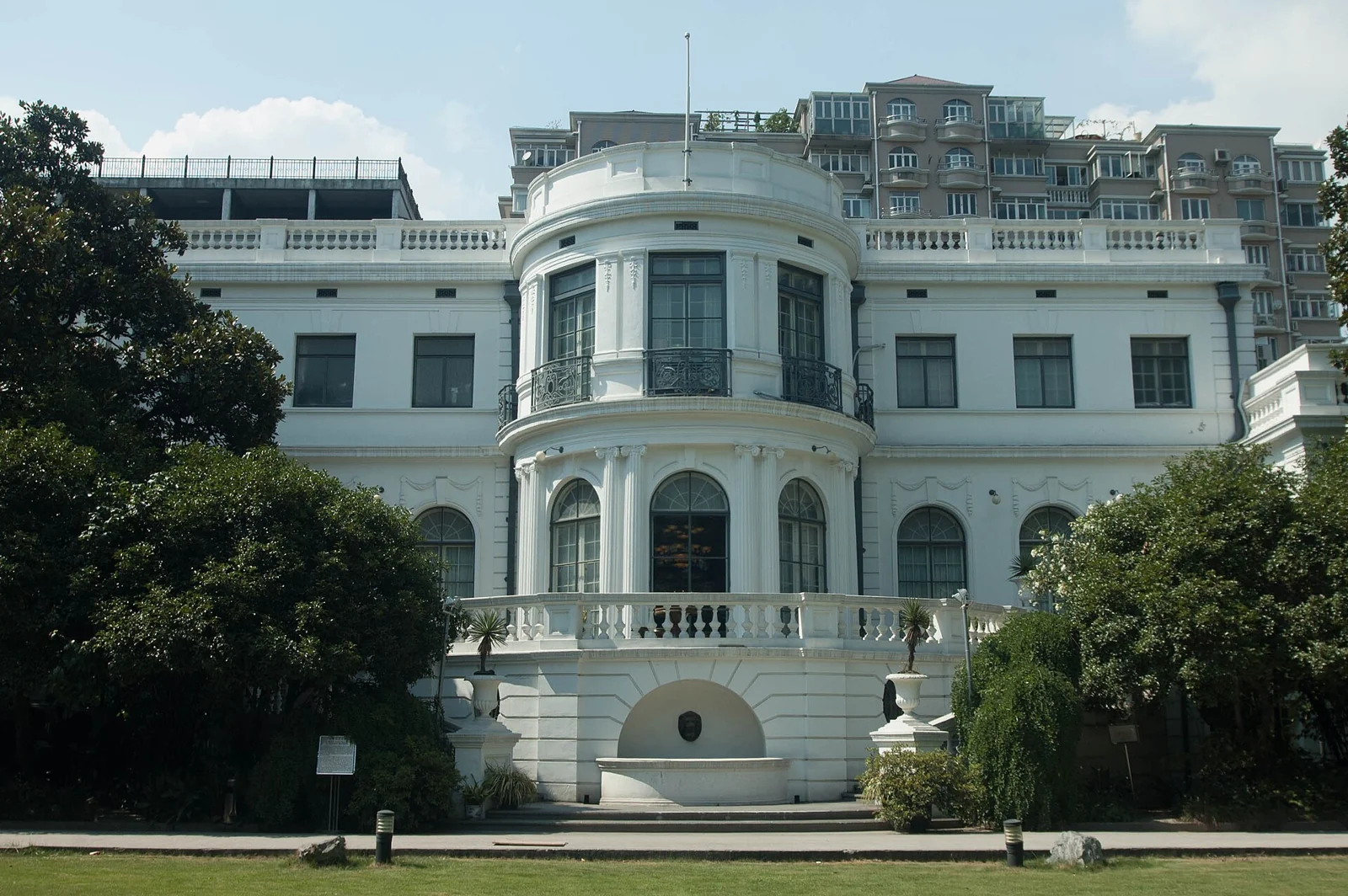

The practical detail is the lunch break
The address is 79 Fenyang Road, Xuhui District: 上海市徐汇区汾阳路79号. The museum is 上海工艺美术博物馆. Its own 2026 operating notices give two sessions: 09:00–11:30, with entry ending at 11:00, and 13:00–16:30, with entry ending at 16:00. Monday is the regular closing day, with holiday and special arrangements announced separately.
I would choose a full session rather than arrive just before the break and hope to hurry through. The September 2026 museum notice confirms normal operation after the National Day period, with normal morning and afternoon sessions. If you want a particular workshop or temporary show, check that program separately. Regular opening does not guarantee the presence of an artist you have seen in a photograph.
A mansion is more interesting when its uses remain distinct
The garden house was completed in 1905. Its French Renaissance vocabulary is visible in the balanced façade and the paired exterior stairs. I would look at the route the stairs create as well as the image they make: a ceremonial way of approaching a raised main floor, with the house presenting an orderly face to its garden. You do not need a long list of stylistic terms to notice that arrangement.
The Arts and Crafts Research Institute moved into the building in 1963, and restoration and museum development took place in 2001. Those dates tell different stories. I would resist treating every period of a building’s life as though it were one continuous museum visit. The interesting question is how a residence and an institutional workplace acquired their present public role, and which parts of the building help you recognize those changes.
Begin with the material before you admire the subject
Carved figures and decorative scenes invite you to identify what they represent. I would first ask what they are made of. Stone, wood, bamboo, lacquer and an inkstone do not permit the same actions. A difficult curve, a thin section or an apparent softness can become much more impressive once you have recognized the resistance of the material.
This is the place to slow down rather than collect a general impression that everything is intricate. Where has the maker removed substance, and where has it been left? Which surface has been polished, and which is meant to retain a texture? I find those questions useful because they turn admiration into an observation you can actually describe. They also connect museum craft to contemporary objects without pretending that all handwork belongs to a vanished past.
The Luo River screen is a lesson in surfaces
The official municipal guide identifies a screen depicting the goddess of the Luo River and describes an inlaid composition involving materials including mother-of-pearl, jade, ivory and rosewood. I would look at how light changes across those surfaces, rather than assume every colour is paint. The relationship between the dark ground and the inserted material is part of the object’s structure, not simply decoration placed on top.
For me, that is a good example of why a museum object deserves to be seen in person. A flat reproduction may convey the scene while flattening the differences that make the work interesting. Move your viewpoint within the permitted viewing space and let the material respond. I would not need to decode every narrative detail before appreciating the negotiation between line, depth, surface and reflected light.
An unfinished inkstone can explain more than perfection
Chen Duanyou’s Mushroom Ink Stone is another object singled out in the official guide. It is described as his final, unfinished work. I like the possibility of using an unfinished object to think about making: it interrupts the idea that craftsmanship is simply a magical capacity to produce a flawless result. You are looking at a process with decisions, limits and a point at which work stopped.
The mushroom subject also gives you a specific visual problem. How does a hard material suggest a soft, organic form? Look for the difference between the overall shape and the small transitions that make it convincing. I would compare those choices with another carving rather than seek a single verdict about technical difficulty. Two solutions to different material problems can make a better conversation than deciding which object took the longest to produce.
Textiles provide a bridge to the clothes people still make
The collection includes embroidery and opera costume, subjects that reward attention at two distances. From farther away, a garment establishes shape and stage presence. Closer in, the work lies in the stitch, the repetition, the edge and the relationship between ornament and movement. I would make both views part of the visit, rather than photograph the whole costume and assume the detail has been seen.
That is also the connection I would make to Shanghai’s contemporary tailoring and independent labels. The relevant question is not whether a new garment looks traditional. It is how a designer or maker understands material, construction and the intended wearer. Museum textiles can sharpen those questions without turning into a simplistic claim that all present-day design descends directly from a particular historical costume. Craft traditions are useful to think with; they do not need to become a slogan.
With embroidery, look at the direction of the stitch as well as its colour. A surface can change as threads catch the light differently, so an image that seems flat in a photograph may behave differently as you move. Do not lean over a barrier or seek the reverse of a garment that is not displayed; work with the view the case permits. The useful exercise is to distinguish the effect seen at a distance from the decisions that create it close up. That habit transfers directly to looking at a jacket, a lining or an altered hem in a contemporary workshop.
Look for working practice, without demanding a performance
Official museum descriptions include third-floor workspaces and opportunities to see aspects of making. I would welcome that if it is available during the visit, but I would not promise a live demonstration by a particular craftsperson. A workshop is a place of work before it is an entertainment schedule. Respect closed areas, photography rules and the pace of the person doing the job.
If you do get an opportunity to observe, watch a small repeated action. How is a tool held? What needs to remain supported? When does the maker pause and inspect the result? You may learn more from that than from a finished object placed under perfect lighting. If no one is working publicly, the collection still offers evidence of the process. The success of the visit should not depend on somebody performing their skill on demand.
Keep the historical materials in their museum context
Some historic works use ivory or kingfisher feathers. I would discuss those as part of the material history of the objects, not turn their presence into a shopping recommendation. The point is to understand a particular practice and its context. It is possible to recognize extraordinary workmanship while keeping separate the question of what somebody should buy or commission now.
After the museum, I would continue through the Fenyang Road and Hengfu area rather than immediately seek another large collection. The surrounding music institutions and historic streets give the day a useful change of pace. Allow roughly ninety minutes here, more if craft is a principal interest. For current admission and temporary exhibitions, use the museum’s own notice or telephone enquiry; the general municipal guide’s modest entry price should not be read as including every special program.