Publication details
First published . Series dates place related notes together in the reading archive.

Come to Chuansha for Chuansha
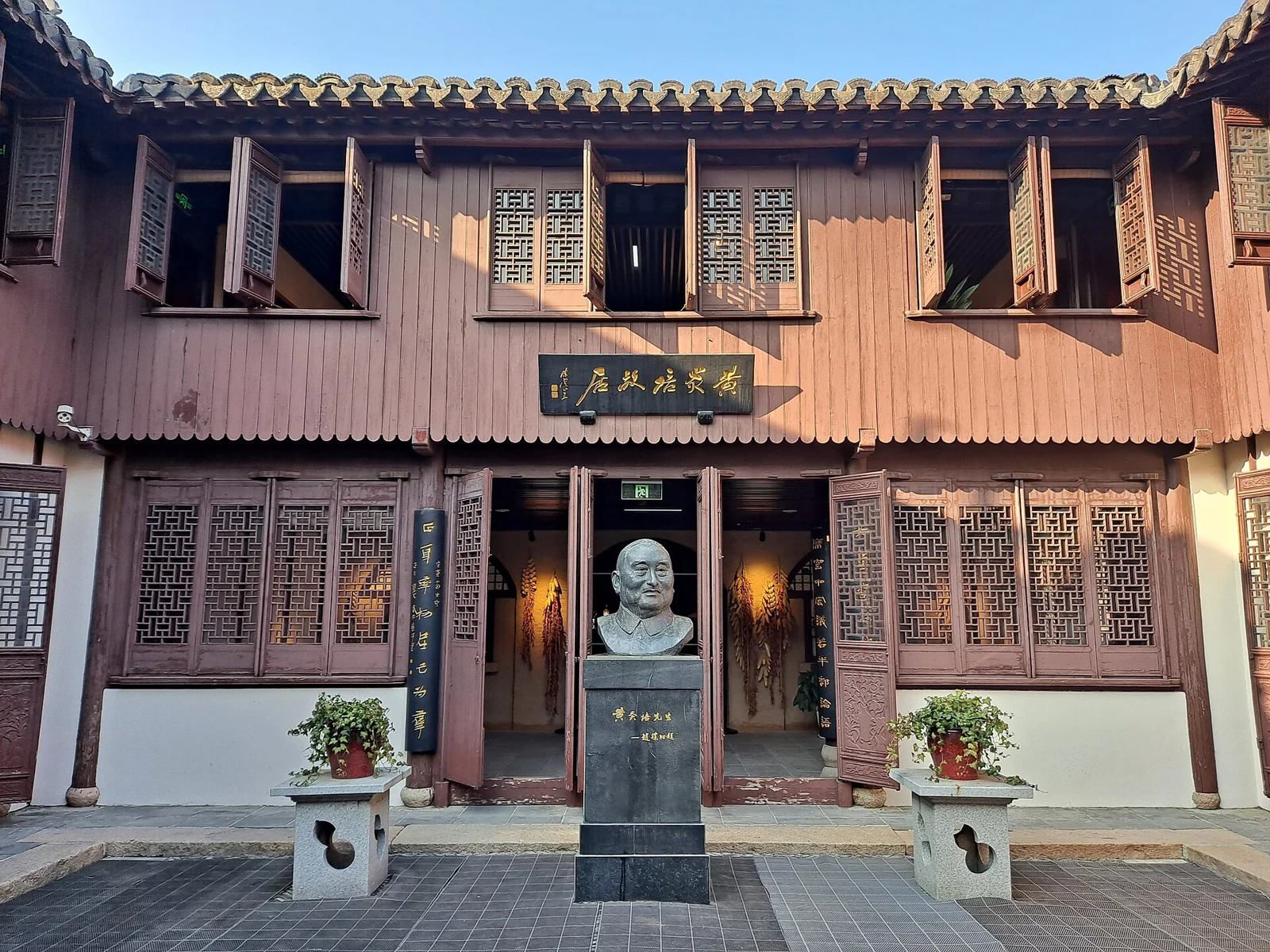
The house is 黄炎培故居, also known as 内史第, Neishidi. The protected address is 上海市浦东新区川沙新镇新川路218号: 218 Xinchuan Road, Chuansha New Town, Pudong New Area. I would save the complete Chinese line because an English search for a famous residence can be less useful than a precise local address. This is a Chuansha visit, not a small detour from a Lujiazui waterfront walk.
That distance should shape the day. Give yourself time to arrive, see the house and spend a little while in the surrounding town. I would not cross Shanghai solely to spend fifteen minutes photographing its entrance. A small museum can support a worthwhile excursion if you are interested in its subject and setting. It cannot compensate for an itinerary built around the mistaken idea that all of Pudong is one compact visitor district.
The surviving house is only part of the original compound
The Shanghai Museum's scholarly account explains that the original compound lost its first two courtyards during the widening of Xinchuan Road. The third courtyard survived, and rooms associated with Huang and his parents were restored. I think that is the most useful architectural fact to know before entering. What you see is not an intact miniature world untouched by the development of the town around it.
Read the surviving depth and sequence with that absence in mind. A courtyard house is an arrangement of approach, enclosure and successive thresholds. Losing its front sections changes how a visitor understands that arrangement. The remaining rooms still matter; they simply tell a more complicated preservation story. I would look for what can be read in the present plan and avoid reconstructing the missing parts with confident descriptions unsupported by a display or drawing.
Preservation is a choice about ordinary urban change
It is easy to admire a historic house and treat the road outside as irrelevant modern clutter. Here the relationship is central. A road project changed the compound, while later preservation retained an important part of it. That puts development and conservation into the same frame. The question is not whether a town should remain motionless. It is which physical evidence survives as streets and needs change.
I would use this visit to make preservation concrete. A facade, a room and a whole compound preserve different kinds of knowledge. An entrance plaque can keep a name visible while leaving the domestic sequence hard to understand. A restored room can communicate use while requiring explanation of the work involved. Once you begin noticing these differences, other Shanghai heritage sites become more legible too. You start asking what is being protected, rather than merely whether a building is old.
Huang Yanpei gives the house a subject beyond its architecture
Huang Yanpei was an educator and public figure whose work connects local life with larger debates about education and government. I would begin there rather than attempt a quick catalogue of his titles. A house can make the starting scale of a public life visible. Family, study and a particular town formed a setting from which wider institutional work became possible. That relationship is more interesting than assuming a famous person makes any room self-explanatory.
Choose one educational question to follow through the exhibition. What should learning prepare a person to do? How do institutions link intellectual development with practical work? A visitor does not need to have a specialist interest in Chinese educational history to care about those questions. They make the museum relevant without forcing a contemporary slogan onto every object. Read for the specific choices Huang made, then consider how the display connects them with its account of public service.
Read the restored rooms as evidence with a history
The official tourism account describes the preservation and restoration of the surviving residence. I would look at a room's function and then read the label for the basis of its arrangement. Is an object identified as an original possession? Is the setting reconstructed from records? Is a panel supplying information that the space itself cannot? Those different forms of evidence can work together, provided you do not silently turn them into the same thing.
A bedroom or study also gives a useful counterpoint to the larger public language of a biographical exhibition. There is a limit to what any room can prove about a person's beliefs, but it can show the conditions of daily life. A desk needs light and a surface; a household needs circulation and storage. I like letting those practical relationships remain visible. They make an influential person's life imaginable at a human scale without requiring invented intimate anecdotes.
The famous 1945 question belongs to another place
Huang is also associated with a 1945 conversation with Mao Zedong in Yan'an about the rise and decline of political organizations and the problem of escaping that cycle. If you are interested in Chinese government, that discussion can provide a serious thread to follow. Keep the geography clear, though. The conversation took place in Yan'an; this Shanghai house is not its original setting. A person's biography connects places without making them interchangeable historical stages.
My interest would be in the question rather than using the visit to declare that history has supplied a simple final answer. How can an institution remain responsive and avoid complacency? How does an individual take such a concern into public discussion? Those questions give the life a dimension beyond a chronological list. Let the museum establish the biographical evidence and take any larger claim about political systems to sources that can support its full complexity.
The opening pattern has a lunch break
The current official tourism directory lists 9:00–11:30 and 13:00–16:30, with last entry at 11:00 and 16:00, and Monday closure except legal holidays. The municipal cultural schedule lists free admission. I would plan around the split day rather than arrive at midday assuming a continuous museum session. Older pandemic-era information gives shorter hours; it should not replace the more recent directory. Check current notices if you are making a special journey.
Allow about an hour for the house, with more time if the educational and political material interests you. A small building may use capacity controls, so groups should confirm arrangements rather than arrive expecting immediate entry. I would bring identification and save the official page in advance. The public information verified here does not establish a passport-specific online booking process, so I would not invent a mandatory app sequence for foreign visitors.
Make the surrounding town part of the point
After the museum, I would take a modest walk in Chuansha and look at the relationship between the house, the road and the ordinary functions around them. This is not a demand to hunt for an untouched old China. A town can retain historic fabric while having current shops, traffic and routines. The comparison is valuable precisely because the place continues to work. Look for changes of scale rather than treating every recent surface as an interruption.
For a first Shanghai trip with only two free days, I would probably choose a central museum before this excursion. For someone returning, interested in education or curious about a less familiar Pudong, it is a stronger proposition. That is my recommendation, not a judgement about the site's importance. The right museum is the one whose subject justifies the journey for you. If it does, allow Chuansha enough time to be a place, rather than a distant address you briefly checked off.