Publication details
First published . Series dates place related notes together in the reading archive.
Make the local connection specific
A record can be connected to Shanghai through its artist, recording session, label, shop or performance history. Those are different claims. Ask which one applies rather than treating the city’s name on a price sticker as the whole story. An artist may have moved; an international collaboration can still have a substantial Shanghai chapter. Precision makes the purchase more interesting, not less local.
SVBKVLT’s JAC is a useful example of how to read that connection. The label documents a collaboration between Gooooose and DJ Scotch Egg, including a Shanghai studio session. The release is not valuable because it can be reduced to a souvenir slogan. Its credits offer a route through collaborators, production and a network extending well beyond one city. Use that model when another release catches your attention.
Uptown is a lead to confirm
A May 2026 City News Service report identifies Uptown Records among the businesses in the Yuyintown cluster at C-Park. That makes it a researched lead for an outing, not a promise of current opening hours or stock. Older Shanghai record-shop directories also circulate other Uptown addresses, so do not combine every old listing into a confident multi-stop route.
Before travelling specifically to buy records, seek a current shop post or confirmation of where and when to visit. If you are already attending a verified show at Yuyintown, browsing nearby is a sensible optional addition. It should remain optional until the shop itself is confirmed. A livehouse ticket can establish your gig destination without establishing the hours of a neighbouring record business.
Ask a question someone can answer
“Show me something local” is a beginning; “a Shanghai-connected electronic release with a physical edition I can buy today” is easier to work with. You can also ask for music related to an artist you enjoyed at a gig. Give a sense of what you listen to, then leave room for an answer that differs from your usual taste. Staff knowledge is most useful when it is invited into an actual conversation.
Do not expect an impromptu guided listening session while a shop is busy. Ask whether a record can be played, whether there is a listening station and how it should be handled. If the answer is no, find an authorised preview on your own device. A shop visit can produce a title to investigate later; buying is not the only acceptable way to leave.
Hear enough to choose the record
One striking introduction does not tell you whether an album belongs in your collection. Sample more than one track if the format allows, and try at least part of a complete piece. A release can contain contrasting work, while a short preview may be chosen to make its most immediate impression. The better question is whether you want to return to it at home.
For a compilation, read the artist list and ask what holds the selection together. A label sampler can be a strong first purchase because it opens several paths. It can also be a poor match if you only like one contributor. There is no requirement to buy a full object to prove cultural interest. Buying a digital track from the artist may be the more direct and satisfying choice.
Used vinyl: sleeve and disc are separate
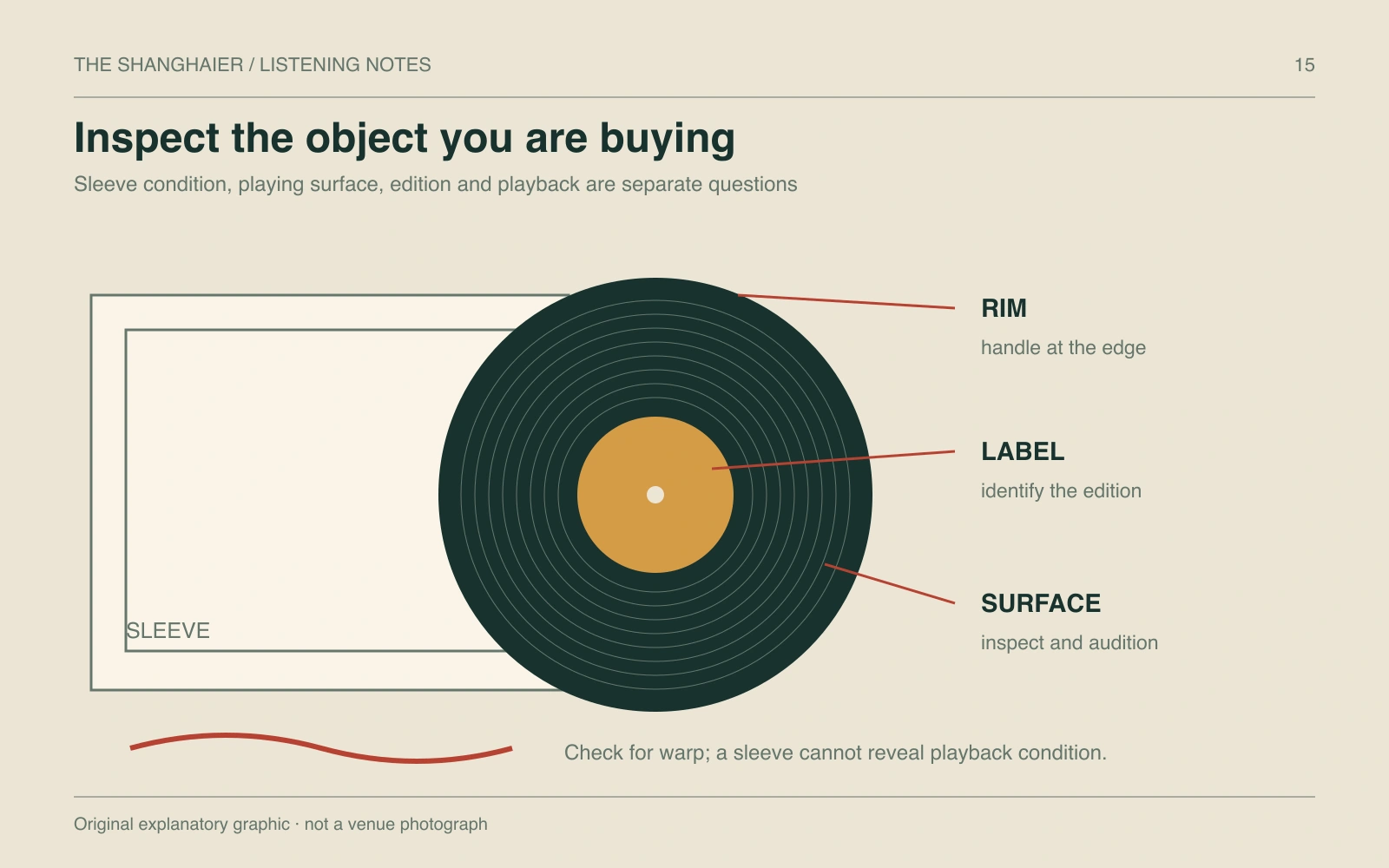
For a used record, inspect the sleeve and the playing surface separately. A handsome cover does not guarantee a quiet disc, and an imperfect sleeve can contain a record you would happily play. Ask how condition is graded and whether a listening check is possible. Under good light, look for obvious warping, deep scratches and damage around the centre or edge.
Hold a disc by its edge and label, and do not drag it against a rough sleeve for the inspection. If you are unsure what you are seeing, ask rather than performing expertise. Surface marks differ, and a visual check cannot reveal every playback issue. The shop’s description, any audition and the return terms all matter. A seller’s clear answer is more useful than a bargain made difficult to question afterwards.
Check the edition, speed and format
New pressing, older pressing, reissue and original issue do not mean the same thing. Read the label and release details, especially if price or historical interest depends on the edition. A contemporary reissue with reliable notes may be a better visitor purchase than a costly object whose provenance neither you nor the seller can establish. Age is not a guarantee of quality or legitimacy.
Also confirm the format your equipment can use. A seven-inch single, a twelve-inch record, a cassette and a CD require different playback arrangements; a vinyl release may run at a speed you should check before playing. Ask whether a download is included rather than assuming the physical purchase supplies one. Buying a record you cannot yet play is a valid choice, but make it knowingly.
Give the object a sensible journey home
Keep records away from heat and pressure, and use a protective sleeve if available. Do not leave a purchase in a sunlit car while continuing a long afternoon. For air travel, think about how the record will fit into hand luggage without bending or taking the weight of other objects. If you are buying several, ask the shop about appropriate packing before deciding how to carry them.
My ideal music souvenir is one record, with the artist and release details saved, that I expect to play more than once. It can continue a conversation begun in Shanghai without pretending to contain the whole city. The shop supplies a meeting point, the credits supply directions, and your listening supplies the reason to keep the object after the holiday is over.