Publication details
First published . Series dates place related notes together in the reading archive.

Write down both addresses
Shanghai Concert Hall is at 523 East Yan’an Road, Huangpu district: 上海音乐厅,黄浦区延安东路523号. Shanghai Symphony Hall is at 1380 Middle Fuxing Road, Xuhui district: 上海交响乐团音乐厅,徐汇区复兴中路1380号. Save the Chinese names with the addresses. “The concert hall” is too vague for a taxi destination, a map search or a message to somebody meeting you after dinner.
A sponsor’s name may precede a venue’s established name on a programme or ticket. Translate the whole venue field, then compare the street address. Do not decide that two listings refer to the same place because both include Shanghai, music and hall. Equally, a different English branding does not necessarily mean a new building. The address is the stable point around which to make your plan.
A former cinema and a purpose-built hall
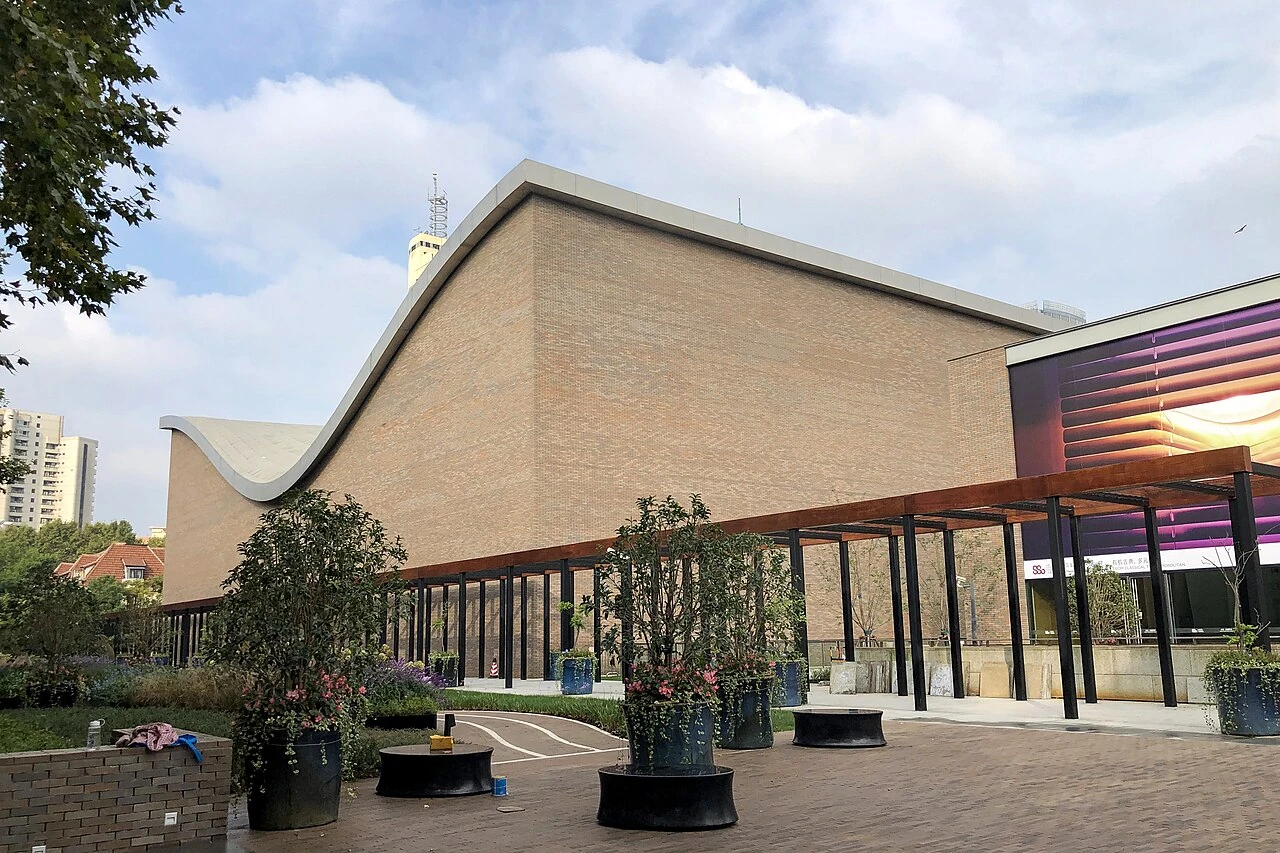
The municipal account identifies Shanghai Concert Hall’s earlier identity as the Nanking Theatre and credits Chinese architects Robert Fan and Zhao Chen. That history makes the building an interesting part of an architectural evening as well as a place to hear music. The city describes a programme spanning several genres; its name does not confine it to one orchestral institution or one kind of repertoire.
Shanghai Symphony Hall opened in 2014 and houses the orchestra’s performance life on Middle Fuxing Road. These are useful distinctions, but they are not an automatic ranking. A historic building does not make a performance old-fashioned, and a newer hall does not guarantee an adventurous programme. Read the current bill. Architecture supplies context; it cannot tell you how a particular conductor, ensemble or soloist will approach a particular work.
Make the programme do the choosing
Begin with what you actually want to hear. If one familiar piece is the reason for booking, check whether it is the main work, an arrangement, a short selection or only a reference in the concert title. A composer’s name can cover a very different evening depending on the forces involved. A piano recital and an orchestral programme containing a piano concerto are not interchangeable ways to hear “piano music.”
Then read the names below the large type. Who is performing? Is there a guest ensemble, a student presentation, a narrated family event or a chamber group? A festival can place different events in several venues. One ticket may cover one performance rather than a full day. These details have more influence on your experience than choosing the more famous building and hoping the programme will suit you.
The room within the venue matters
A venue can contain more than one performance space, so carry the room name as carefully as the street address. Seat plans may look very different between spaces within the same institution. For a small ensemble, closeness can be part of the attraction. For an orchestral concert, seeing the whole stage might matter more to you than watching one player’s hands. Neither preference requires an expensive seat by default.
Check any restricted-view label and the position of the stage on the actual plan. The centre of a diagram is not always the acoustic or visual centre of the event. A piano lid, a music stand or the angle to a soloist can change what you see. I would compare a few clearly described seats within the budget rather than assuming that front row means best. Price is a category, not a personal listening preference.
Do not outsource acoustics to a slogan
It is tempting to rank halls with a single adjective: warm, precise, intimate, world-class. Those words conceal the seat, repertoire, instrumentation and production involved. An amplified event changes the problem again. A useful visitor decision is more modest: do you want a close view of the performers, a broad view of the ensemble, or the least complicated ticket within your budget?
If sound is a serious priority, read the venue’s own seating information and ask about the specific event configuration. Avoid treating somebody’s report from one row at one concert as a permanent property of every seat. You can have a strong preference after an evening; before booking, the honest approach is to work with the information available. I would not promise you an acoustic revelation simply because a hall photographs well.
A first unfamiliar classical programme
For a visitor who does not regularly attend classical concerts, length and format are useful filters. Check whether there is an interval and whether the programme is presented as a continuous work. An unfamiliar composer is not a reason to stay away. Several short works can make an inviting first evening, but a single large work can also be absorbing when you are rested and have given it enough time.
Listen to a short authorised sample beforehand if you want orientation. Do not judge the live event by whether it reproduces one celebrated recording. Different players, instruments and interpretations are part of the point. Read enough to recognise the broad shape of the programme, then put the phone away. The ticket is permission to attend, not an examination in recognising every musical reference.
What the ticket includes
Before payment, identify the performance date, start time, seating category and whether the price includes anything beyond admission. A concert ticket should not be assumed to include a building tour, exhibition access or a drink. If there are concessions, check eligibility rather than selecting the cheapest available category and hoping an overseas identity document will qualify. Booking rules belong to that particular event and sales channel.
For international visitors, the important unresolved questions are practical: accepted identity document, name format, phone verification, payment method and how admission is retrieved. These can differ between platforms and events. If the form will not accept the document you actually carry, contact the official box office before paying. Do not substitute a fictitious Chinese ID number or another person’s details to get past a field.
Arrive as if the music starts on time
Build dinner around the venue you have actually booked. Both addresses sit in central Shanghai, but a cross-city transfer in the last half-hour is an unnecessary wager. Give yourself time to locate the right entrance, pass any checks, find the room and settle. Late seating may be held until an appropriate pause; there is no useful general promise that an usher can put you in your seat immediately.
Inside, follow the event’s photography and recording rules. Silence the phone fully, including alarms, and keep its light off during the performance. If you are unsure when to applaud, watching the conductor and the rest of the room is enough. There is no need to make a first concert feel socially hazardous. Quiet attention and consideration for other listeners solve most of the etiquette.
Give the building a second, separate look
If architecture is part of the attraction, allow daylight time outside before the concert or make a separate public-street visit. Do not assume the auditorium is available for casual daytime photography. A hall can be rehearsing, changing a stage or closed between events. The building’s cultural value is partly that it is still being used; visitor convenience does not override that work.
My choice would therefore begin with two open programme pages and a map, not two exterior photographs. Choose a performance you want, confirm the exact hall and address, and place a manageable meal or walk around it. You can compare the buildings another day. On the evening itself, the most valuable difference between them is the music your ticket will actually let you hear.