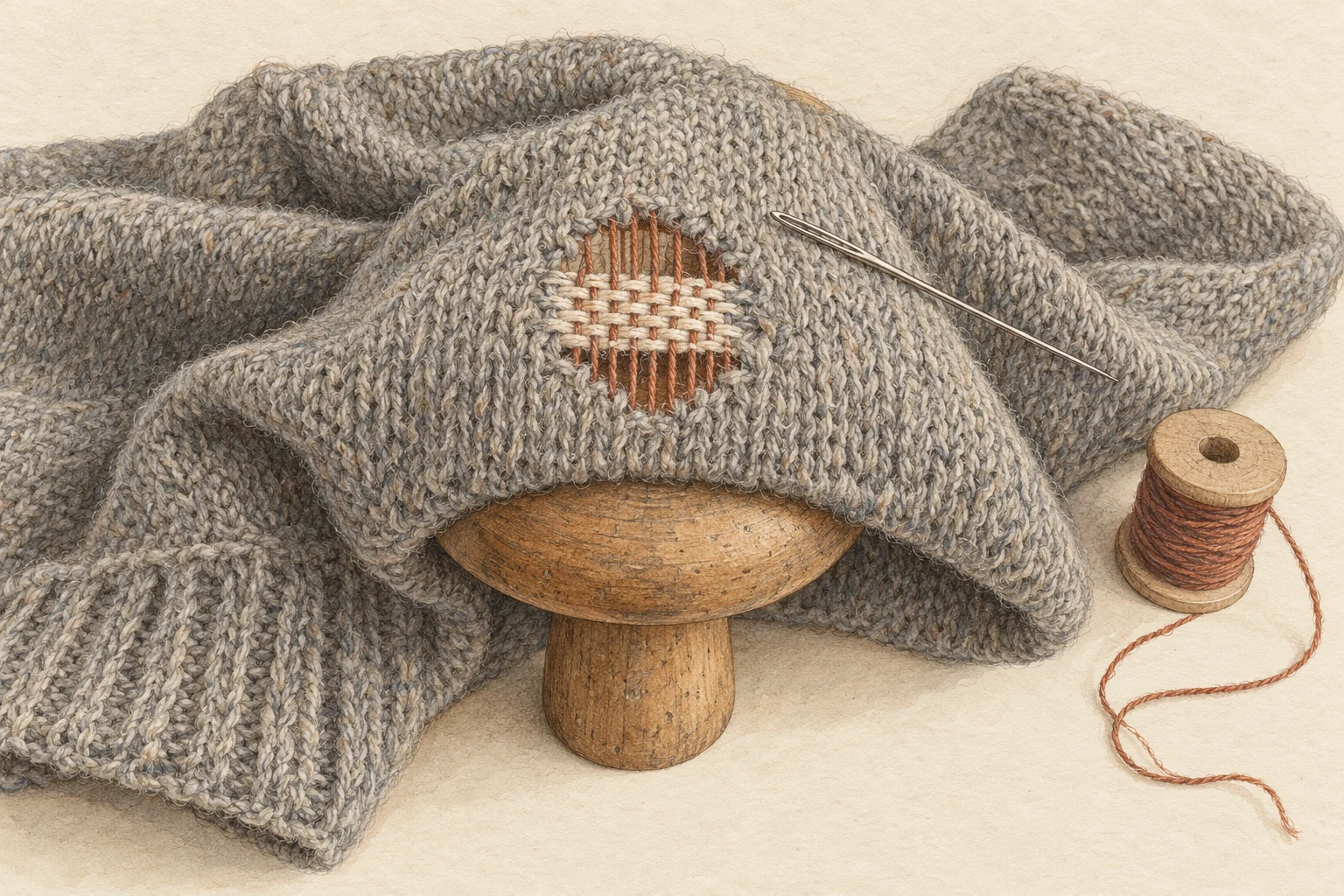
How a darn crosses a hole
V&A Dundee’s Sewing Box for the Future resources make repair concrete. The museum supplies illustrated cards for darning, needle-felting, buttons and zips alongside care and customising activities. The project’s resource page records communal stitching sessions in February and March 2020. The cards offer a useful starting point for looking closely at repair.
Its darning card describes supporting the damaged area on a darning mushroom, securing the surrounding cloth and stitching around the hole. Threads then span the opening in one direction; a second set is woven across them. The card advises matching thread thickness to the garment and avoiding a tight finish that puckers the repair. Follow the original illustrated card for the full sequence.
The patch changes the surface
That little crossing of threads is a useful design lesson. A repair can restore an approximate visual continuity, or deliberately introduce another color and texture. Before asking for invisible mending, decide whether invisibility is what you want. A visible repair may suit a favorite everyday knit; it may feel wrong on a formal garment whose uninterrupted cloth is central to its appearance.
The important comparison is between the damaged piece and the result you would willingly wear. Bring a photograph of the whole garment as well as the hole when discussing a job. Ask the repairer to explain what will remain visible, whether the handle will change and whether the surrounding area needs attention too.
Look for the next repair before buying
A Shanghai shopping visit can include questions about a garment’s future. Is a spare button supplied? Can the lining be accessed for work? What does the shop recommend if a seam or fastening fails? Ask whether repairs are done by the brand, a named outside workshop or whoever you find yourself.
Treat an aftercare promise as a service with details: location, possible charge, shipping and eligibility. The word repairable does not establish a repair service available to an overseas customer. Keep the receipt, composition label and any care guidance together so a future repairer starts with useful information.
Begin with a piece you already own
For a first experiment, use the museum’s card on a practice textile before taking a needle to something precious. For a valuable or delicate garment, show it to a specialist and agree on the appearance first. The point is to learn to see construction and wear, rather than to turn every damaged item into the same decorative project.