Publication details
First published . Series dates place related notes together in the reading archive.
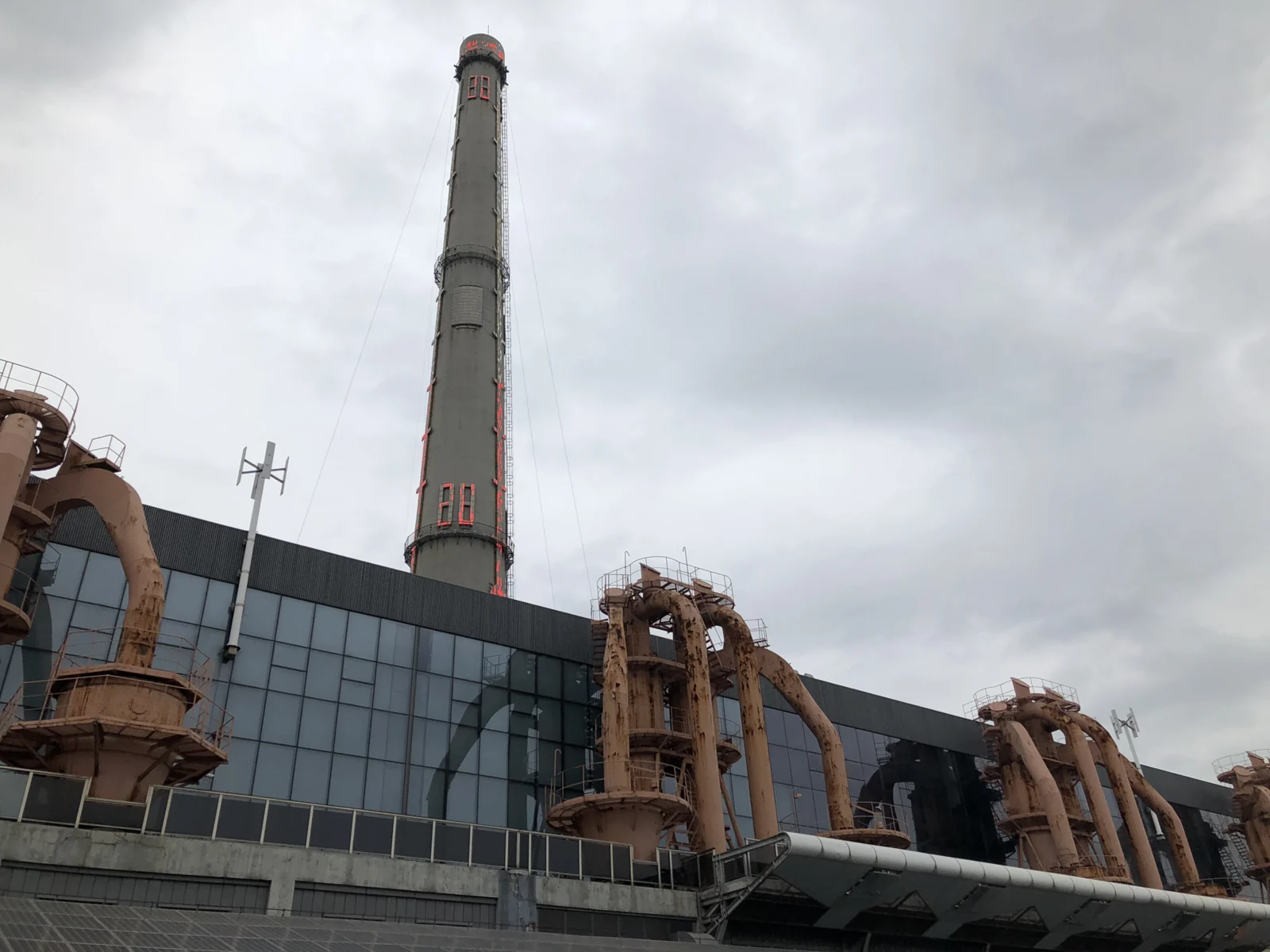

A power station with several lives
PSA opened as a museum on October 1, 2012. Its own history places the building in the story of the Nanshi Power Plant, then the Pavilion of Future at the 2010 Shanghai World Expo. Those changes are more useful than the simple phrase converted factory. A power plant, an expo pavilion and a public contemporary-art museum organise people differently. Production, an international display of the future, and a space for looking each ask something different of the same site.
I would keep those successive uses in mind while walking through. The question is not whether every surface looks old. It is what the scale allows now, and which traces remain legible. Industrial heritage can become a convenient visual style: a little concrete, a large window, a suggestion of grit. Here the former utility is inseparable from the building’s proportions and its river setting. That gives you something to examine even if the exhibition’s vocabulary is unfamiliar.
The chimney is a marker, not an automatic viewpoint
The 165-metre chimney is the easiest element to recognise from outside. It locates the museum in a city where so much cultural architecture competes through a dramatic outline. I prefer it as an industrial marker to another freestanding decorative icon. It tells you the structure once had to discharge something into the air. The museum describes the chimney as an independent exhibition space; that does not mean its interior or summit is part of every ordinary visitor route.
Look at the relationship between the tall vertical element and the broad museum below. A photograph that includes both explains more than a close crop of the chimney alone. The former suggests a system of work and volume; the latter can become an anonymous tower. I would also look back from the riverside public route, where the building joins the larger story of the Huangpu. Its importance is not that it stands apart from Shanghai, but that it makes an earlier version of the riverfront visible within the current one.
Scale should change how you look
PSA’s official description gives an interior height of up to 27 metres and around 15,000 square metres of exhibition space. Those figures explain why an artist can work here with distances that a small gallery cannot supply. They are not an instruction to walk every possible metre. I would start by asking where a work expects you to stand. Does it become clearer from a doorway, or only once you have moved around it? Does the surrounding emptiness strengthen it or simply make it look expensive?
My bias is towards works that repay a change of position. Stand back, move closer, then look again from the side if the route allows it. An installation may arrange a relationship between objects rather than offer one best view. Sound can also move beyond the thing that appears to produce it. These are straightforward physical questions. You can test them before reaching a conclusion about what a work means, and they keep contemporary art from becoming a contest in recognising theoretical terminology.
Ordinary materials can carry difficult histories
The city’s account of PSA’s collection includes Zhang Enli’s A Pile of Balls (I), Liang Shaoji’s Listen to the Silkworms and Vinu V.V.’s Noon Rest. They are examples of the institution’s holdings and programme, not a promise that all three will be on display during your visit. I find the range useful because each begins with something materially comprehensible: balls held in a net, the activity of silkworms, or sickles placed into an unexpected arrangement. The difficulty comes from what is done with the familiar.
I would read the object and material information before the curator’s larger claim. With a work involving labour, ask whether the maker is representing work, using its tools or exposing a system of value around it. With sound, ask what the piece requires you to do before you can hear it. None of this makes interpretation automatic. It gives an interpretation something to attach to. A small, precise observation is often a better beginning than deciding whether contemporary art as a whole is for you.
The Biennale is a programme, not a permanent room
PSA is home to the Shanghai Biennale. The word biennale means a recurring exhibition, not a set of galleries that remains permanently installed. I would avoid a trip planned around a photograph from a past edition without first identifying the exhibition title and dates. A museum of this kind changes substantially when its programme changes. That is part of its appeal, especially for a return visit, but it also means an old list of highlights may describe a museum you cannot currently see.
What I would look for in a large group exhibition is an argument that becomes more interesting as you move through it. A good pairing of works can change your understanding of each one. A weak one leaves you with a wall text trying to hold unrelated things together. You are allowed to decide which is happening. Read the exhibition’s main proposition, choose a few works that test it, and notice where your own response departs. Agreement is not the admission price.
Contemporary art does not require endless patience
I would give a video or sound work an honest chance, including finding out its running time. Entering halfway through a long film and leaving after thirty seconds tells you little. Equally, a gallery afternoon does not need to become an exercise in endurance. Choose one work to sit with properly, then make quicker decisions about the rest. That produces a more credible opinion than either dismissing every screen or feeling obliged to finish every loop in the building.
For a family or a mixed-interest group, the architecture can supply a shared structure. Compare how two rooms make you move, or how one work uses a corner that another leaves empty. The point is to keep the encounter concrete. I would not tell a child an installation is interesting merely because the label says so. Ask what changed, what repeated, what was surprising and which part could be removed without losing the work. Those are serious questions at any age.
The useful arrival details
Use 678 Miaojiang Road, Huangpu District, or 上海市黄浦区苗江路678号, for your destination. The museum’s current Chinese visitor information lists Tuesday–Sunday 11:00–19:00, with last admission at 18:00; Monday is the normal closure day, except national holidays. Its official directions give Metro Lines 4 or 8 to South Xizang Road, Exit 2, followed by roughly fifteen minutes on foot. I would treat the walk as part of the riverfront outing rather than describe PSA as directly above a metro exit.
Tickets for paid exhibitions are sold at the first-floor service desk and through the museum’s official WeChat service account, 上海当代艺术博物馆. Admission conditions belong to the specific exhibition. I would not promise that everything is free, or that an old Tuesday promotion covers the current programme. There is no museum car park. The practical information is sufficient to make a plan without turning the whole visit into an exercise in hunting for a supposed bargain.
Pair the museum with the river, not four more museums
I would leave time afterwards for the Huangpu riverside. It gives the exhibition a different scale and lets the architecture re-enter ordinary city life. A former industrial site is easier to understand when you see how its edge meets the public route, where a person can pause, and what has been kept between the building and the water. That outside sequence is also useful for anyone in the group whose attention for gallery art has ended.
PSA is in Huangpu; the Long Museum and West Bund Museum are further along the wider riverfront cultural geography in Xuhui. They are not three doors along the same block. My preference would be one serious exhibition and a substantial walk. If you want an architecture-focused day connecting several sites, I can shape that around the distance and your interests. If you want a museum afternoon, let it remain an afternoon. The strongest reason to come here is to look with some freedom, not to complete a riverfront collection of logos.