First, identify the exact models
Songmont's Luna family includes several sizes and materials, alongside versions described as hobo bags. The comparison here concerns the classic Luna Bag and the leather Medium Song Bag, not every item carrying those family names. The current official Medium Song Onyx page identifies a full-grain leather bucket bag with a removable pouch.
Do not transfer specifications from a small size, vegan version or older listing to a different piece on the shelf. Ask staff to identify the model, material and version you are handling. A measurement or strap description is only useful once those are fixed. Color can also affect how the same volume reads against an outfit.
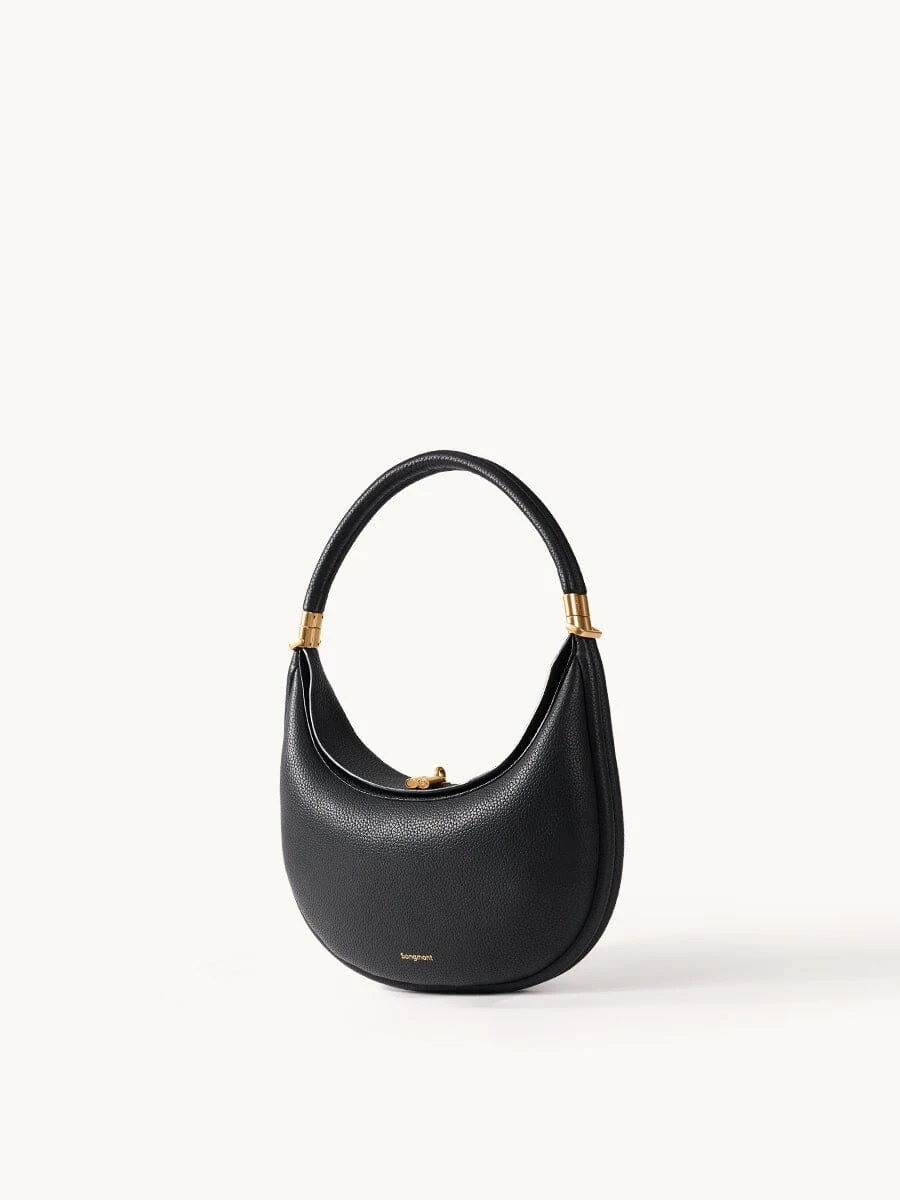
The Luna makes the curve do the work
The classic Luna's distinguishing idea is its crescent-like outline and ability to change carrying configuration. Songmont describes two shapes and four ways to carry it using the detachable strap. That is a design proposition worth testing rather than accepting as four equally useful bags in one.
Ask for a demonstration, then try the arrangements you would actually use. If you always carry crossbody, the evening hand-held configuration may add little for you. If you want one small bag for dinner and daytime use, that change might be the reason to choose it. Count useful modes, not theoretical ones.
The Song gives its volume a different outline
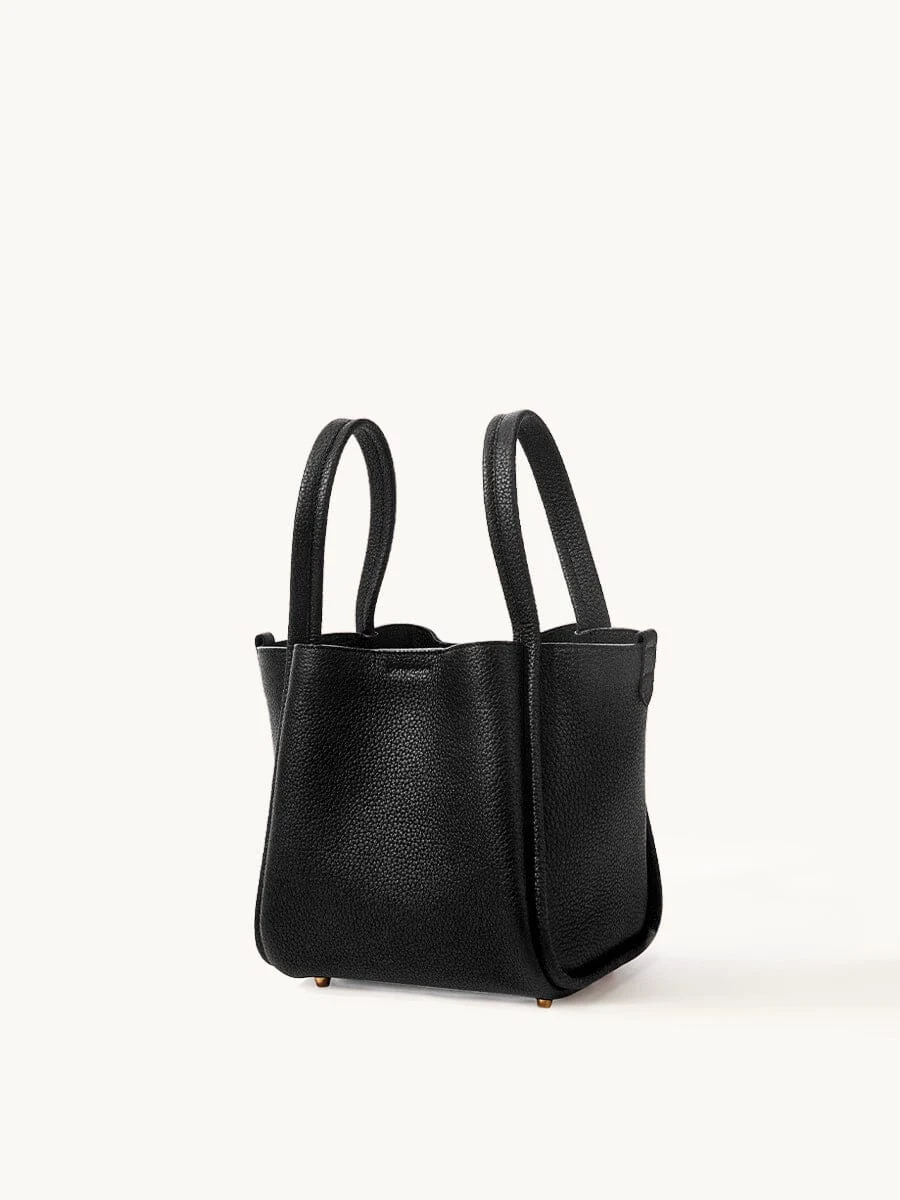
The Medium Song has top handles and a bucket form; its official description includes a wide opening, magnetic closure and removable inner pouch. Those features suggest a different packing conversation from the Luna. Examine where you would put small loose objects and how you would retrieve them with the bag already on your arm.
A pouch can be useful for keys, cards or other small items, but it is still another thing to open and manage. Decide whether you want that division or prefer fixed compartments. Look at the actual interior before concluding that more visible volume necessarily means better organisation. A bag can hold a lot and still make one small item difficult to find.
Test your objects, not an imaginary capacity
Bring the phone, glasses case, wallet and other items that genuinely travel with you. Ask permission to test clean belongings inside the display sample. Put them in together, close the bag and retrieve one while the rest remain inside. A list of individually compatible objects does not tell you how the full arrangement behaves.
Curved edges and narrow openings can make a rectangular object less convenient than external dimensions suggest. A bucket can accept a taller object while still feeling awkward when loaded. Neither is automatically a flaw. The relevant question is whether your objects enter, settle and come back out without turning a daily action into a small negotiation.
Try the strap over your own clothes
The useful length depends on your height, torso, coat and preferred carrying position. Ask to adjust the actual strap and walk a few steps. Try reaching the closure while wearing it. A model photograph shows one body and one styling decision; it does not establish where the bag will sit on yours.
If you expect to use it through winter, consider the extra bulk of a coat. If you plan to hold the Song by its top handles, assess that mode rather than testing only crossbody. Remove any protective packing that staff permit so you can judge the real handling. Do not infer all-day comfort from a few seconds, but use those seconds carefully.
Compare closure and access honestly
A magnetic closure is different from a fully zipped opening. Look at what remains exposed when the bag is naturally loaded, rather than closing an empty sample into its most flattering shape. Think about public transport, bending to pick something up and placing the bag beside a chair.
For either model, decide where valuables would sit and whether access matches your routine. No bag shape is a complete security strategy. If your essential requirement is a particular zipped compartment or one-handed retrieval, make that a pass-or-fail requirement before color and hardware absorb the conversation. A beautiful compromise repeated every day can become irritating.
Material and service questions come after the shape works
Read the exact composition and care information for the selected version. Ask how the brand recommends handling water marks, surface wear and hardware care, without assuming a leather finish is impervious because it feels substantial. A material description is not a guarantee that a bag will age in the same way for every owner.
Clarify after-sales arrangements for the place of purchase, especially if you live outside China. The international website and a local store may use different ordering and return procedures. Keep the product code and receipt. Confirm the actual policy instead of assuming that an overseas online offer applies to a Shanghai shop purchase.
Which would I choose?
I would begin with the Luna when the main requirement is a compact, visually distinctive bag whose changes in shape solve real occasions in the week. I would begin with the Medium Song when the bucket format and internal pouch suit the way the belongings are grouped. Those are starting preferences, not quality rankings.
Try both with the same contents and outfit. Set aside the configuration you would never use, and choose the remaining version that makes ordinary actions easiest. If neither works, move to a different shape rather than trying to justify a famous model. The strongest purchase is the one whose design still makes sense after the photograph has been taken.