A size code is a starting point
Chinese garments may carry a height-and-circumference designation as well as a familiar letter size. GB/T 1335 is the national sizing-system family; the standards registry identifies separate men's, women's and children's parts. That framework does not turn every small, medium and large from every business into interchangeable clothes. A brand still chooses the shape it is offering.
When you encounter a code such as 165/88A, ask staff to show the brand's own explanation and size chart. The height, reference circumference and body-type designation describe a sizing framework, rather than a promise about each finished edge. In particular, do not interpret the A as a cup size or as an international letter size.
Keep body measurements and product measurements apart
A body chart describes a person. A garment chart describes a thing. The difference between them allows room for movement and creates the intended silhouette. A shirt made to the exact circumference of a torso would not behave like an ordinary shirt; a roomy shirt may be deliberately much larger than the body chart suggests.
UNIQLO China's product tables offer a useful visible example by separating product dimensions from recommended body measurements. Some listings even show different tables for different item codes or colors. Read the headings before copying the numbers. If the chart says garment waist, establish whether it is measured relaxed, stretched or in another specified way.
| Term | What it describes | How to use it |
|---|---|---|
| Body measurement | The person wearing the garment | Follow the maker’s measurement method |
| Garment measurement | The finished item laid out as instructed | Compare with a similar item that already fits |
| Ease | Room between body and garment | Judge it against intended movement and silhouette |
| Size label | The brand’s named size | Consult the exact item’s chart and try the garment |
Bring a successful comparison
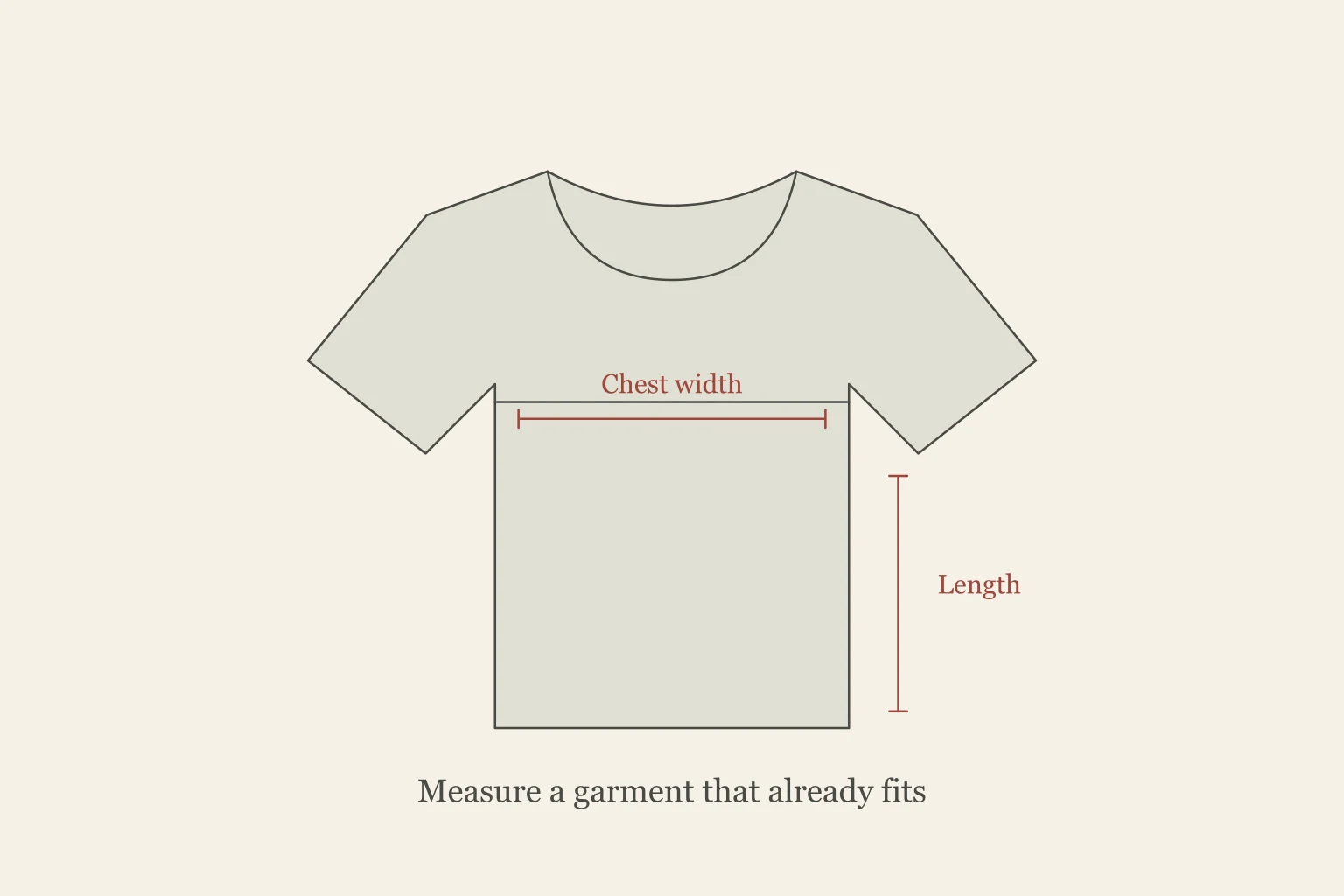
Before a shopping day, measure a few garments that fit the way you like. Lay them flat without stretching and note the method: chest width, shoulder width, sleeve and body length for a shirt; waist, rise and inseam for trousers. A flat width and a full circumference are different numbers. Write the unit beside each one.
This comparison is especially useful for gifts or online follow-up, but it cannot replace a fitting. A dropped shoulder changes how a sleeve measurement works. A curved waistband is difficult to compare with a straight one. Take photographs of where the tape sits if you intend to ask someone else to repeat the measurement later.
Shoulders and rise are not minor details
In a fitting room, start with the areas that determine how the garment is built around you. On a conventional jacket, assess the shoulder and collar before discussing sleeve length. In trousers, assess the rise and seat before getting absorbed in how the hem meets the shoe. A size can close around the waist and still be wrong elsewhere.
Do not assume alterations will cheaply transform any near miss. Shortening a plain hem is a different undertaking from rebuilding shoulders, changing a rise or moving shaped pockets. Ask the person who would do the work to assess it before purchase. The fact that a shop offers alterations says little about which changes are sensible on this garment.
Try the movement you will use
Stand naturally, sit and reach forward. Button the shirt or jacket as intended. For trousers, check whether the waistband remains comfortable when seated and whether the pockets pull open. For a qipao or fitted dress, take a normal stride. A garment that works only while you hold a pose is buying a photograph rather than clothing.
Wear or bring the layers and shoes that affect the decision. A winter knit tried over a thin T-shirt may fit differently from the one you need over a work shirt. Take a moment outside the close fitting-room mirror when the shop allows. Proportion is easier to judge when you can see the full outfit from a little distance.
Oversized is a design, not an absence of fit
A generous coat or shirt can be the intended size even when several people could close its buttons. Examine where its volume is meant to fall. Does the shoulder line look deliberate? Does the sleeve preserve movement? Does the body settle when you let your arms down? Sizing down may remove the relationship between those parts.
Ask to try the neighboring size, then compare rather than assuming the smaller one is more flattering. The larger piece may have the correct length but the wrong opening, or the smaller one may lose the shape that attracted you. The question is which version behaves convincingly on your body, not which label carries the smallest number.
Ask about the range before planning around it
Stock on a rail is not necessarily the entire size range. Staff may be able to check another color, a stockroom or another store. Ask early if you need a particular sleeve length, circumference or accommodation. A long shopping route is frustrating if none of its stops carries a plausible fit.
A brand that does not fit you is offering a product that does not fit you. It is not delivering a verdict on your body. Move on rather than repeatedly accepting discomfort because the size label appears to be the largest available. If commissioning is an option, discuss the specific problem with a maker rather than asking for an abstract “bigger size.”
Keep the exact item information
Once something works, photograph the care label and record the product code with permission. Keep the size, color, composition and season where available. Even within one label, a later design may not use the same block. A successful medium in one cut is evidence about that garment, not a permanent conversion formula.
Before leaving, clarify the store's actual alteration and return arrangements. Do not infer a physical-shop policy from an overseas website. Keep receipts and inspect the piece you are taking home, rather than only the display sample you tried. The most useful souvenir from the fitting room may be a precise understanding of the dimensions you like.