Publication details
First published . Series dates place related notes together in the reading archive.
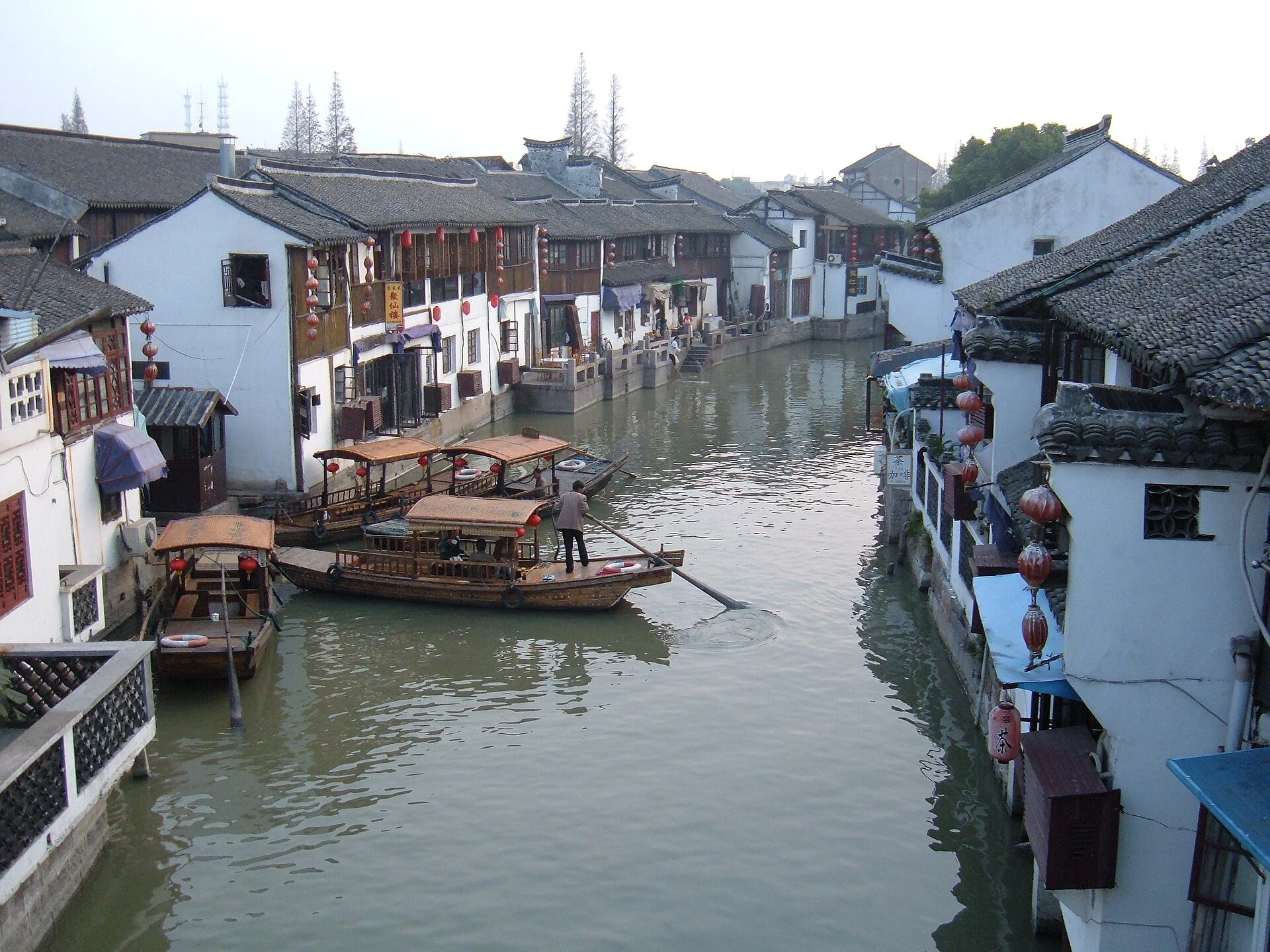

The travel is part of the decision
Zhujiajiao is in Qingpu, well beyond the compact central neighbourhoods many visitors picture as Shanghai. Metro Line 17 can be part of the approach, but the station is not the same thing as arriving in every lane of the old town. Check your full journey, including transfers and the final walk or local connection.
If you have only a short gap between appointments, choose somewhere closer. A water-town trip works when the time spent getting there is proportionate to the time you can enjoy on the ground. I would rather give Zhujiajiao a generous half-day or longer than race through it to prove it was included in the itinerary.
Save the visitor centre separately
The municipal destination listing gives 555 Kezhiyuan Road / 课植园路555号 as the visitor-centre lead. That is useful for orientation, not a universal entrance address for every attraction. Save 朱家角古镇 as well, and identify the specific garden, bridge or ticketed building you intend to visit.
A large-area map pin can land you at a car park or a service point. Before ordering transport, check the endpoint and the pedestrian approach. Keep the Chinese name of your first actual stop ready. This is especially helpful when a taxi driver understands the town perfectly well but needs to know which side you want to reach.
Start with one canal and one bridge
Walk a short stretch before choosing where to linger. Watch how a bridge links the lanes on either side and how buildings address the water. Avoid treating every waterfront facade as the same scene. A change in level, an opening onto a landing or a narrow passage can tell you something about how the town is organised.
Do not feel obliged to photograph every bridge. Choose one from which you can look without blocking circulation, then move aside when others need to cross. A popular viewpoint is also part of somebody else’s route. The most useful comparison may be between a crowded crossing and a quieter stretch a few minutes away, rather than between twenty nearly identical pictures.
Tourism is part of the present town
Shops, snacks and ticketed experiences are part of the town you visit today. There is little value in declaring the whole place inauthentic because visitors are visible. Equally, a commercial display should not automatically be treated as an unchanged local custom. Ask what you are actually looking at.
You can enjoy a pastry or a tea stop without inventing a centuries-old story for it. Check the menu, price and seating arrangement, and choose something you want rather than something a crowd appears to require. The question is whether the stop adds to your day. It does not have to prove that you have discovered the last untouched corner of Jiangnan.
Kezhi Garden can be the substantial stop
Official Qingpu guidance identifies Kezhi Garden as a manor-style garden within Zhujiajiao. If you want an interior destination, it can provide a different pace from the lanes. Confirm its current entrance, admission and hours separately from the general town area. An old combined-ticket recommendation may not describe today’s choices.
Inside a permitted garden, look at how views are framed and how a path reveals one space after another. You do not need to memorise the name of every pavilion to notice a change in scale or direction. Leave time to revisit a view from the opposite side. A garden is designed for movement, and one photograph from the entrance rarely explains much.
Free lanes and paid rooms are different
A visit to the town’s public spaces is not automatically the same purchase as entry to individual attractions or a boat ride. Read the actual offer before paying, and ask which places are included. If your interests are narrow, a large bundle may save less than it appears to.
The same applies to boats. Confirm the boarding point, duration, route and total price for your party before agreeing. Do not assume that an image of a long canal journey describes every short ride. If the terms are unclear, walking is a good alternative. The water is still present in the town even when you are looking at it from land.
Look after the shared lanes
Some lanes are visitor-heavy, while others remain close to people’s homes and daily routines. Keep doors clear, avoid photographing through domestic windows and do not enter a courtyard because its gate happens to be open. Laundry, deliveries and a neighbour carrying shopping are signs of ordinary life, not props for an image.
Comfort matters too. Wet stone and crowded steps deserve attention, especially around bridges. Choose shoes for the walking surface rather than the photograph. If a member of your group needs a gentler route, build that route from confirmed public paths instead of assuming that every picturesque lane is accessible. The best itinerary is the one the whole group can use.
Leave before the return becomes the whole story
Allow a margin for the return trip, particularly if you have a train, flight or evening reservation. Check the last service relevant to your journey and the time needed to get back to the station. A pleasant seat beside the canal is easier to enjoy when you are not secretly calculating whether you can still make a tight connection.
My preferred version is deliberately modest: a short walk, one substantial garden if it suits you, something to eat and time by the water. You will leave parts unseen. That is not a failure of planning. It is the choice that lets the parts you do see become more than another set of images on your phone.