Publication details
First published . Series dates place related notes together in the reading archive.
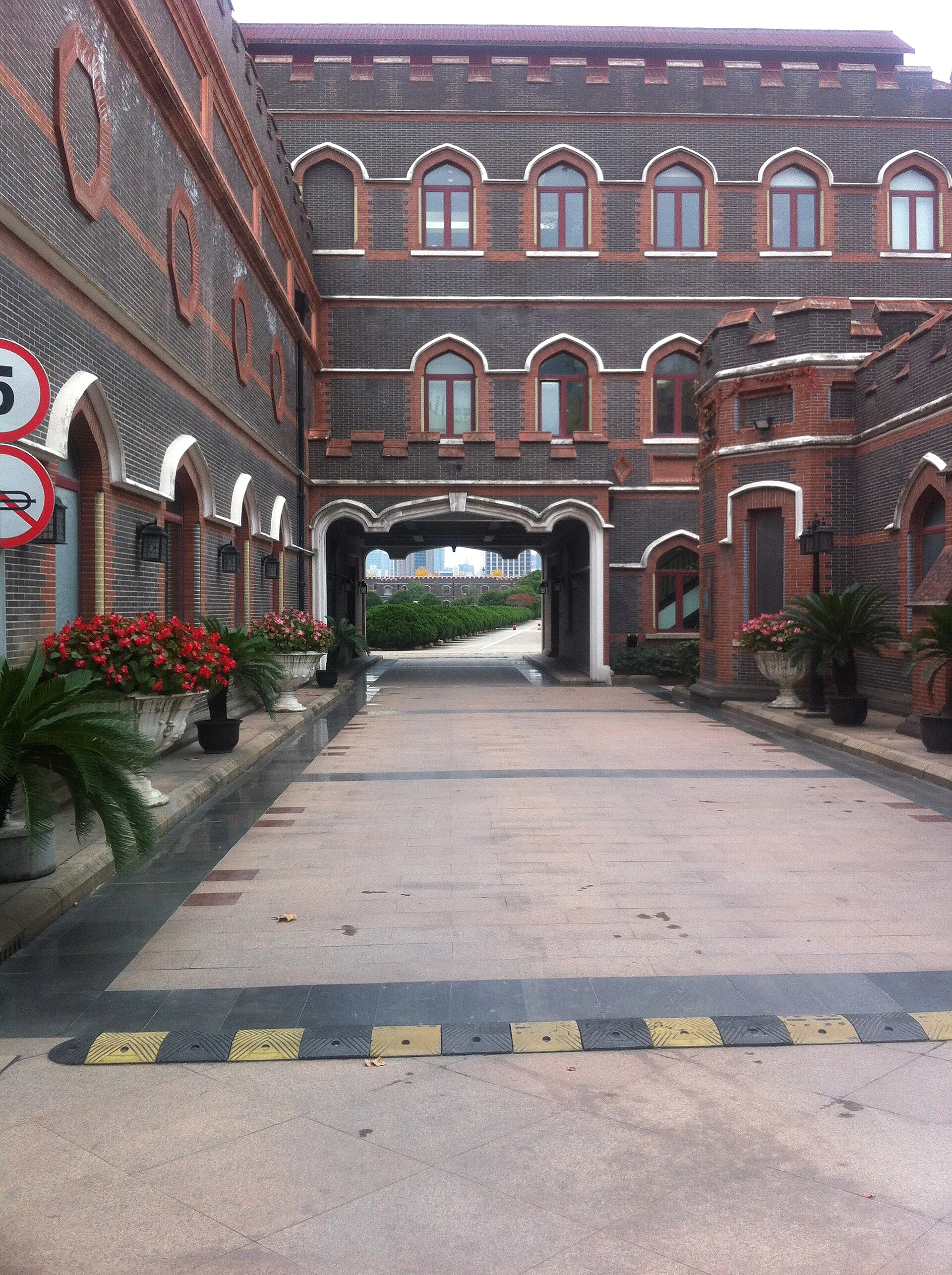

Choose a section, not the whole river
The official Yangpu industrial itinerary spans a substantial stretch and was published as a cycling route. It should not be copied into a casual walk without adjustment. For a first visit on foot, choose one public waterfront section, one industrial building and a clear way out. The distance between two appealing photographs can be much less appealing at midday in July.
My preference would be to decide on the main question first. Are you interested in the waterworks, the conversion of a warehouse or the traces of power production? Each can anchor a good walk. Trying to visit every named project tends to make the industrial history disappear behind the logistics of reaching the next one. Save an alternative exit before you begin.
A public pier beside working infrastructure
Yangshupu Water Plant’s riverside viewing pier is included in municipal visitor guidance. That is an opportunity to look at the waterworks from a public route, not permission to enter the operating plant. Keep that distinction clear when planning the visit, approaching a fence or writing a caption afterwards.
Water infrastructure has a different relationship with visitors from a converted gallery. Its useful work continues whether or not the architecture is photogenic. Look from the designated path, respect security instructions and avoid treating a service opening as a shortcut. The public viewpoint is valuable precisely because it permits a relationship with a working site without requiring that the site become an attraction throughout.
Follow the materials back to their job
A warehouse wall, a factory roof and a plant enclosure solve different problems. Ask what needed to enter, what needed to stay dry, where light was useful and what kind of load the floor might have carried. You do not have to identify every piece of equipment to begin reading the building through its purpose.
Large openings might relate to loading or machinery, but do not label one confidently without evidence. A useful photograph can record a question as well as an answer. Compare the scale of an old opening with a new entrance, or the rhythm of structural bays with the size of later shops. These relationships often reveal more about conversion than a polished plaque explaining that history has been preserved.
See what reuse keeps in place
The waterfront contains several kinds of industrial reuse. Municipal guidance identifies Green Hill as a former machinery warehouse, the WorldSkills Museum within former warehouse buildings and the power-plant relics park as another distinct site. Do not treat those descriptions as interchangeable or assume that all their interiors follow the same visitor arrangements.
When you arrive at a converted building, ask which elements still organise the space. Does a column grid shape the circulation? Does a deep floor plate require a new opening for light? Is an old structure carrying a new function or mainly framing a view? These are more useful questions than whether a development has kept enough red brick to look industrial in a photograph.
Then ask what has disappeared
Reuse is not a neutral process. A building can retain a chimney while losing almost every trace of the routines that once surrounded it. That does not automatically make the project worthless; it does mean that a visitor should distinguish preservation of an object from preservation of a working system.
Look for the relationship between a retained machine and its original setting. Is the sequence of work explained? Can you understand how people and materials moved? If not, say that the object remains but its function is not immediately legible. An honest question is better than an invented story about a crane or conveyor. The most useful heritage interpretation lets us recognise both continuity and loss.
The promenade is part of the architecture
A waterfront path is not just the empty interval between buildings. Its width, shade, seating and connection to surrounding streets determine who can use the river. Notice whether a route brings people close to the water, takes them around an operational site or rises to clear an obstruction. A detour may be an important design decision rather than an inconvenience to crop out.
At the same time, do not read a smooth surface as a guarantee of accessibility throughout. Check ramps, steps, temporary barriers and the actual exit you intend to use. If someone in your party needs a continuous step-free route, verify that sequence specifically. A photograph of one accessible-looking segment cannot certify a whole afternoon’s walk.
Keep the working city in the picture
Cargo movements and functional river traffic can make this stretch feel different from a waterfront designed mainly for sightseeing. Watch from safe public positions and keep clear of service activity. A vessel passing once is not evidence of a scheduled spectacle, and a working berth is not a public boarding point.
I would include the ordinary elements in a photograph: a fence, a sign, a maintenance door or a path used by commuters. They explain the relationship between the city and its infrastructure. Cropping everything down to brick, steel and sunset may produce an attractive image, but it can also turn an industrial landscape into a vague style detached from the labour and systems that made it.
Plan for shade, water and a shorter version
There are exposed sections along the river. Check the forecast, carry drinking water and choose a sensible time of day. In heat, a shorter walk with an indoor break is more useful than an ambitious line on a map. Do not assume a cafe or exhibition room will be open simply because the promenade is accessible.
Save the Chinese names of your main destination and exit, then check a local map for current walking connections. Construction, flood management and event arrangements can change a waterfront route. If a path is closed, use the signed diversion rather than climbing a barrier to preserve a plan you made at home. The city has no obligation to stay still for an itinerary.
How to leave with a better account
Before leaving, write down three things: what the original site did, what it does now and one physical detail that connects the two. If you cannot answer the first question, keep the description modest. A former industrial building is not automatically a power station, and every tall cylinder is not the same kind of chimney.
This is the difference between a useful walk and a collection of atmospheric pictures. You may only see two sites in depth, but you will have a way to compare them. Pair that with a clear record of where you actually walked and which areas were public. Yangpu’s industrial waterfront does not need an exaggerated superlative to justify the trip; it needs enough time to be read.
Keep your own route record too. A photograph of the building name and a note of the public entrance make the account useful to somebody following later.