Publication details
First published . Series dates place related notes together in the reading archive.
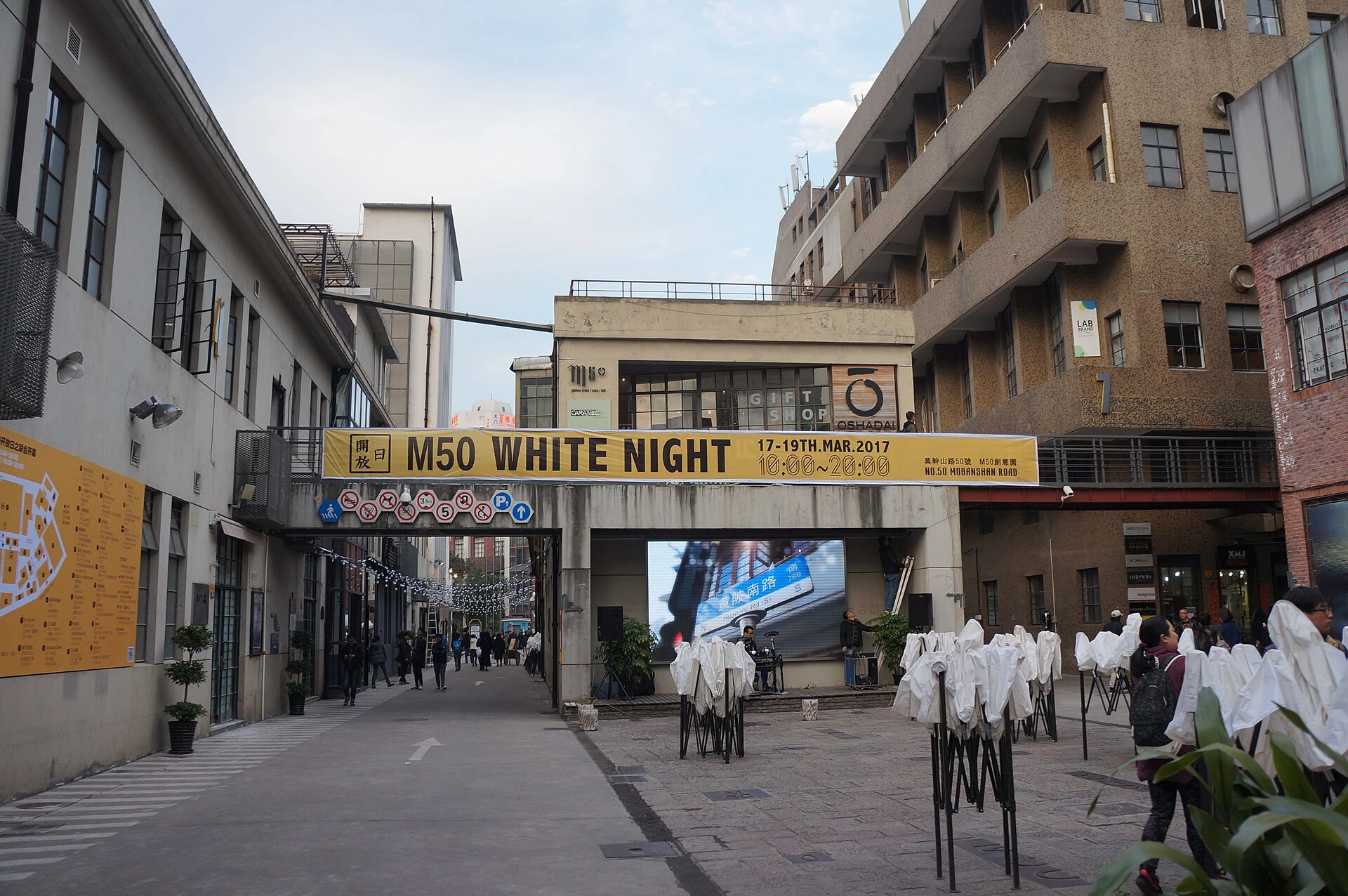

An address, not a museum ticket
Save M50创意园 and 50 Moganshan Road / 莫干山路50号, Putuo district. M50 is a cluster of independent spaces within a reused industrial site, not a single museum with one collection, one ticket and one universal timetable. A general opening listing for the compound cannot tell you whether a particular exhibition room will be available.
That is the first useful piece of planning. Choose a day when the gallery you most want to see is open, confirm its location within the complex and leave the rest flexible. If you arrive with no exhibition in mind, begin with the current signs and information rather than an old list of “must-see” tenants copied from a travel blog.
Let the textile site explain the setting
The municipal account identifies M50’s textile-factory origins and its later use by galleries, studios and creative organisations. Evidence of the industrial site gives the visit a framework, but it should not become the only thing you notice. Brickwork and boilers are a setting for present cultural work, not a guarantee that everything inside is interesting.
Compare the size of a former working space with the way an exhibition uses it. Does a partition make a smaller room? Does a high ceiling change the scale of a painting? These questions connect the industrial structure to what is happening now. They also make the architecture more specific than the familiar description “old factory turned creative hub”.
Find one current exhibition
ShanghART maintains a dedicated M50 exhibition archive. It is a useful example of how to check a gallery: read the location and the date together. An exhibition in the archive is evidence that it happened, not an invitation to see it today. A gallery name can also appear at more than one address.
Use the operator’s current exhibition page before travelling, then verify the building or unit on site. If the dates do not cover your visit, choose another show instead of assuming the installation will remain in place. The gap between exhibitions can involve closed rooms and physical work. An art space is allowed to need that time.
Give a work a little resistance
Inside a permitted gallery, pick one work that does not immediately explain itself. Spend a few minutes with it before reading every word of the statement. What do you actually see? What is the material doing? Which part of your first response changes once you know the title or context?
You do not need to like the work to have a useful encounter. In fact, a precise reason for disliking something is often more interesting than a quick declaration that it is beautiful. Try to separate a response to the object from a response to the room, price or reputation around it. That small discipline makes a gallery afternoon feel less like consuming approval.
Commercial galleries welcome looking differently
A commercial gallery is a place where art may be for sale. That does not mean every visitor must be a buyer, but it helps to understand the setting. Ask staff a clear question about a work or the artist rather than apologising repeatedly for not being a collector.
If a door looks private or a studio is occupied, do not assume the compound’s tourist visibility makes it open for inspection. Working artists need boundaries too. A workshop may require a booking or fee even when a nearby exhibition is free. Ask before entering, touching tools or photographing someone’s workspace. The distinction between public display and private work is part of what makes a living art district possible.
Look beyond the first attractive wall
Graffiti and outdoor surfaces can draw cameras quickly. Check whether a work is intended for photography and whether the path is also a delivery or access route. Do not stand in an entrance while arranging a long sequence of portraits. Other people may be trying to get to work.
Walk a little farther before deciding you have seen the whole compound. At the same time, resist treating every doorway as an invitation. A useful afternoon can consist of two galleries, one conversation that staff have time for and a break. More rooms do not automatically mean a better understanding of the artists you encountered.
Photograph exhibitions with permission
Ask about photography, especially where artworks are involved. Permission to take a personal photograph does not automatically cover reproducing it commercially. A visitor’s image of an installation can contain copyright interests in both the photograph and the work shown. Keep the title and artist’s name with any image you intend to discuss later.
Avoid identifiable close-ups of other visitors and never move a barrier, object or light to improve a picture. If a room asks for phones to stay away, enjoy the unusual chance to look without composing. A short written note about the work may preserve more of the encounter than a hurried photograph you never open again.
A creek continuation, if you still want it
Suzhou Creek is a reasonable continuation, but check the actual public walking connection from the exit you use. M50’s riverside location does not mean every edge of every building is a continuous public promenade. Do not improvise through a loading area because a map line looks close to the water.
Allow roughly two hours for a selective M50 visit, more if a particular show holds you. Have a second gallery option, keep the transport home straightforward and avoid adding another museum simply to fill the afternoon. Art has already given you something to think about. A walk afterwards can be a place to do that thinking.