Start with three meals, rather than a checklist
The usual first-visit list mixes breakfast food, restaurant dishes, seasonal ingredients and sweets as if they were interchangeable stops. They are not. A bowl of noodles fills the same stomach you were saving for dumplings. A sticky-rice roll can be a substantial breakfast. Ordering everything in miniature does not necessarily solve the problem: some foods only make sense freshly cooked, seated, and given a few uninterrupted minutes.
My recommendation is to choose one thing each meal is meant to explain. Breakfast can introduce the contrast between rice, fried dough and soy milk. Lunch can answer whether you prefer a steamed dumpling or a crisp-bottomed bun. Dinner can show how a Shanghai table balances a rich centerpiece with vegetables and simpler dishes. Leave a fourth slot unplanned. That is where a pastry, a return visit or a genuinely tempting special can go.
This approach also makes the day easier to adapt. If you arrive late, begin with lunch. If your breakfast is larger than expected, shorten lunch. A useful food itinerary should survive a changed appetite without feeling as though the visit has failed.
Breakfast: choose one solid and one bowl
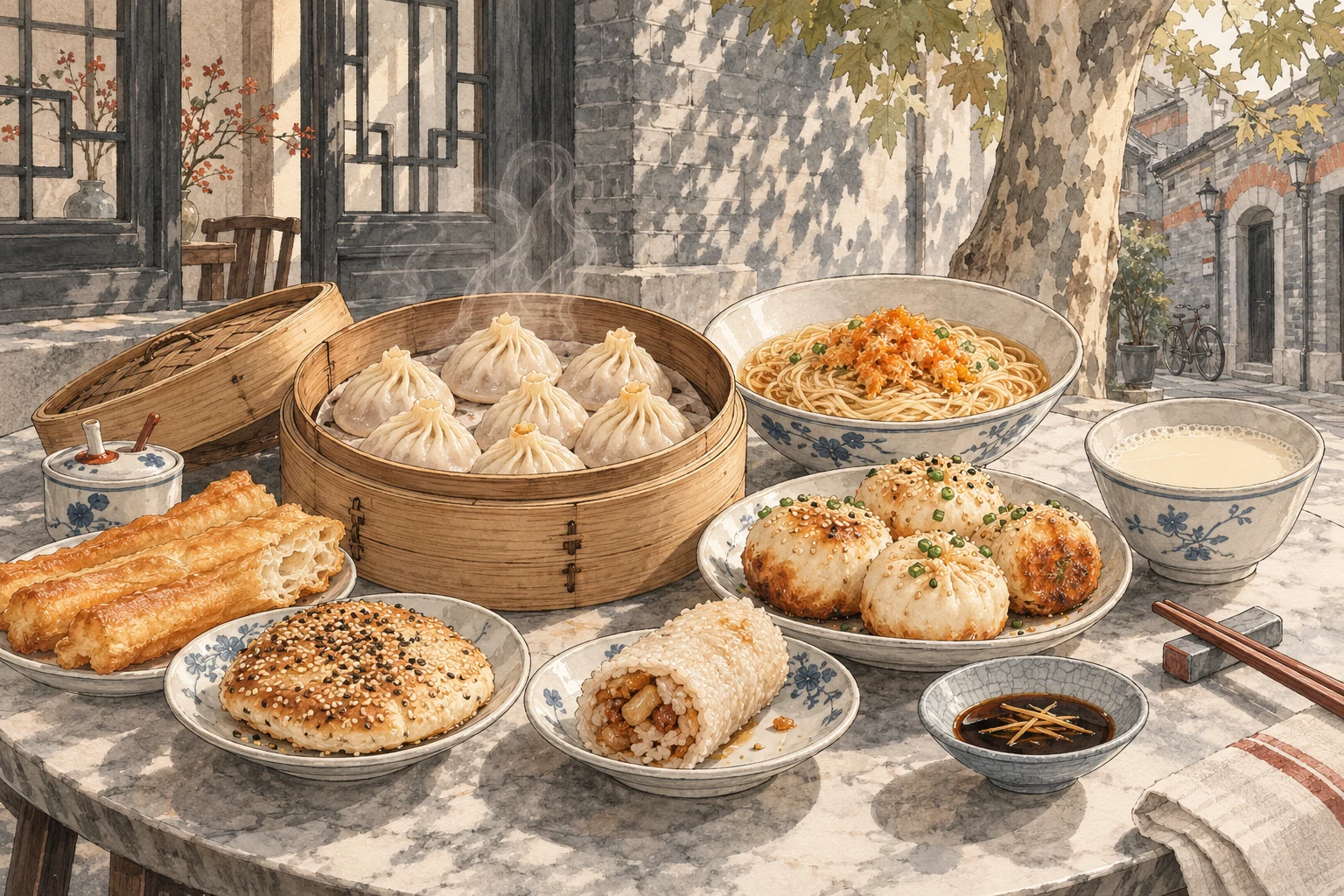
The classic breakfast group known as the Four Heavenly Kings includes dabing flatbread, youtiao fried dough, cifantuan sticky-rice rolls and doujiang soy milk. Treat it as a set of possibilities, not an instruction to order four full portions. A cifantuan already wraps rice around fried dough; adding a second large serving of youtiao repeats part of the meal.
For a first breakfast, choose a rice roll with soy milk, or flatbread with a separate youtiao. Ask whether the soy milk is sweet, plain or savory. The savory version, xian doujiang (咸豆浆), belongs in a bowl with a spoon: the toppings make it closer to a breakfast dish than the carton of soy milk you may have in mind.
The meaningful comparison is texture. Does the fried dough still have some resistance? Does the rice hold together without becoming a solid plug? Does the liquid make the solid food easier to enjoy? You do not need to pronounce a verdict on the entire neighborhood. Decide whether this particular combination suits the morning you want.
| Dish | Chinese name | What to notice |
|---|---|---|
| Xiaolongbao | 小笼包 | Thin steamed wrapper and hot broth |
| Shengjianbao | 生煎包 | Raised dough and a pan-fried base |
| Scallion-oil noodles | 葱油拌面 | Aroma, coating and noodle texture |
| Red-braised pork | 红烧肉 | Fat, lean meat and sauce reduction |
| Savory soy milk | 咸豆浆 | Soft curds against crisp additions |
Lunch: one dumpling family is enough
Xiaolongbao (小笼包) are steamed soup dumplings; shengjian (生煎) have a fried base. They are useful first choices because the cooking methods give you an obvious comparison. They also have considerable internal variety. Some shengjian are breadier and less soupy; others have thinner wrappers and more liquid. A dramatic burst of broth is not the sole measure of quality.
For two people, begin with one small order and confirm how many pieces it contains. Share before adding another. An individual bowl of noodles for each person plus a large steamer of dumplings can turn a tasting lunch into the day's main meal. That is perfectly reasonable if you planned it; less useful if you are still chasing three snacks on a list.
With a hot soup dumpling or soupy bun, use the spoon and make a small opening before a large bite. Taste a little without a full bath of vinegar or chili first. Condiments should give you a second version to compare, rather than erase the first one before you have tried it.
Noodles: make them a meal, or make them the next day
Congyou banmian (葱油拌面), scallion-oil noodles, are a good choice when you want a focused bowl instead of a table of shared dishes. They are also easy to underestimate. A simple appearance says little about portion size or richness. Check whether the menu lists a plain bowl, an added topping or a larger combination.
Do not order noodles merely because the dumplings took less time than expected. Being able to sit with one bowl is part of their appeal. If lunch is already satisfactory, put the noodles into tomorrow's plan. Repeating a simple format with a different topping is often more revealing than accumulating another famous dish.
For dietary needs, clarify the sauce, stock and garnish. The absence of a visible chunk of meat is not an ingredient list. This matters especially with dried seafood, cooking fats and pre-made sauces. Choose a different dish if the kitchen cannot give an answer specific enough for your requirements.
Dinner: one rich dish needs a supporting table
For a first benbang-style dinner, I would make hongshaorou (红烧肉), red-braised pork belly, the rich centerpiece if everyone eats pork. Then ask what vegetable dish is good that day and choose a contrasting preparation. Add rice according to appetite. A light soup can be worthwhile, but check its size before placing the order.
The mistake is to surround the pork with three more glossy, rich dishes simply because all four names are familiar. A dinner made entirely from signature dishes can be less satisfying than one excellent signature with a useful supporting cast. The vegetable is doing real work. It changes the next bite of pork and makes a second helping more appealing.
Two visitors should ask about portions before copying a banquet menu. Tell the server what you intend to share and whether you have already eaten snacks. There is no need to order the complete dinner at once if the restaurant is happy to add a dish later. Leave room to decide from the food in front of you.
Let the season supply one exception
In autumn, a crab dish may deserve the spare slot. A whole hairy crab and a bowl of crab-roe noodles offer different experiences: the first involves dismantling the shell; the second concentrates the kitchen's work into a ready-to-eat topping. Choose between them according to interest and time, rather than assuming noodles are a lesser substitute.
Seasonal wording on a menu is a reason to ask a question, not evidence of a particular source, harvest date or recipe. Ask what the dish contains and how it is prepared. Do the same with a spring soup or an osmanthus sweet. A seasonal story should help you understand what you are eating, rather than act as a premium you accept without discussion.
If your first day already includes a demanding dinner, keep the seasonal extra small. There is no obligation to eat an autumn crab dish, a rich braise and an elaborate dessert in the same sitting. A second day is allowed to have its own reason to exist.
What I would leave out
I would skip any cross-city detour made only to reproduce a photograph. I would also skip an hour-long queue when a nearby, clearly described meal better suits the time available. An old business, a crowded doorway or an impressive social-media clip can suggest a lead. None tells you whether the food is right for this particular lunch.
Keep the Chinese names of two dishes you enjoyed and note what you liked about them. That gives the next restaurant something useful to work with: thinner skin, a crisper base, less sauce, a simpler bowl. If you want a guided food walk, send the foods you already know and the things you would rather avoid. A route built around those answers has a better chance of becoming your Shanghai food day.