A local cooking tradition, rather than the whole city's menu
Benbang (本帮) refers to Shanghai's local cooking tradition. It is a useful distinction in a city whose restaurant tables also reflect other regions of China and many places beyond it. A dish being available in Shanghai does not automatically make it benbang.
Read a menu with that distinction in mind. A Shanghai meal can include a regional guest, a local staple and a contemporary interpretation. Asking what each contributes is more interesting than testing whether the entire restaurant is sufficiently 'authentic'.
Compare a braise with a broth
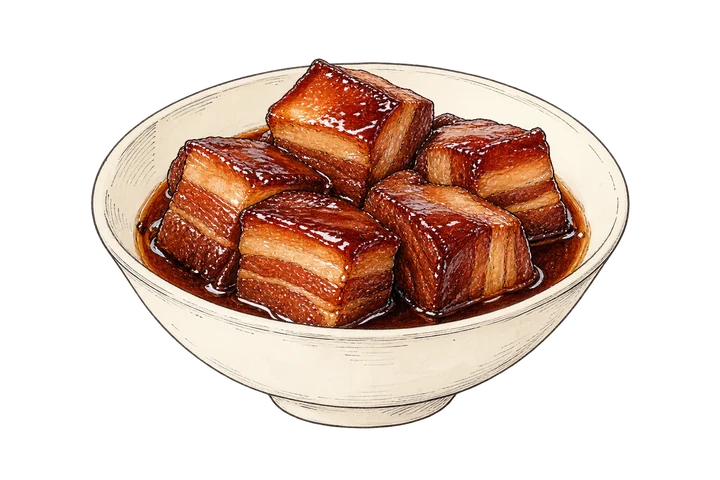
Red-braised pork, hongshaorou (红烧肉), offers one starting point: compare the sauce, the fat and the lean meat, rather than searching only for sweetness. A glossy sauce can carry several sensations at once. The useful question is whether you still want the next bite.
Yanduxian (腌笃鲜) offers a different reference. Shanghai's municipal food guide describes this spring soup through fresh pork, salted pork and bamboo shoots. The contrast between fresh and preserved ingredients gives you another way to understand local cooking. It is a seasonal example, not a promise that every kitchen serves it all year.
Build a meal with contrasts
For a shared table, avoid ordering several rich dishes simply because they are the names you recognize. Think about what you already have: a sauce-heavy centerpiece, something with a cleaner broth, a vegetable dish and rice or another staple. Let the restaurant advise on portions.
This is an ordering method, not a rule about how a Shanghai family must eat. It works because a contrasting dish changes the next mouthful. Sharing also lets two visitors explore more than two separate main courses would.
Ask about the particular kitchen
A familiar dish name does not fix the recipe. Ask about pork, seafood, stock, cooking wine and sauces when they matter to you. For allergies, discuss shared preparation as well as the named ingredients. A picture or translation app cannot settle those questions alone.
Take away a few Chinese names and one comparison you enjoyed. That is more useful for your next meal than a city-wide verdict about sweetness. If a dish surprises you, ask the restaurant what is different about its version.