Decide what kind of dinner this is
Before opening the menu, agree on appetite, time and what you have already eaten. A dinner after a full afternoon of snacks needs a different order from the first proper meal after a flight. Say so to the server. Two people is useful information; two people who have just eaten dumplings is better information.
Then choose the evening's center. It might be a rich pork dish, a fish you intend to share, a seasonal crab preparation or a simpler meal after a long day. One center is usually enough. Ordering two expensive centerpieces because you cannot decide can leave the meal with more weight than either diner wanted.
My starting principle is that each added dish should contribute a new role. More protein is not automatically a new role. A different sauce on another rich meat dish may repeat much of the first. A vegetable or a simple bowl of rice can change the meal more effectively while attracting less attention on the menu.
Use a flexible first order
For many moderately hungry pairs, one main shared dish, a vegetable and rice can provide a sensible starting point. A cold dish or soup may be worth adding, depending on portions. This is a planning framework, not a claim that every restaurant serves the same sizes or that every couple wants the same amount.
Point out the proposed order and ask whether it is enough for two. Where the restaurant allows additions, leave a slot open and see how the first dishes land. This is particularly helpful when photographs give no sense of scale. A shallow dish and a deep casserole can appear similar on a phone screen.
Ask about half portions if they would solve a problem, but accept that a kitchen may not offer them. A whole fish or a particular braise may not divide neatly into a small tasting size. Choose another dish when the format does not fit, rather than asking the restaurant to undermine its own preparation to satisfy a generic itinerary.
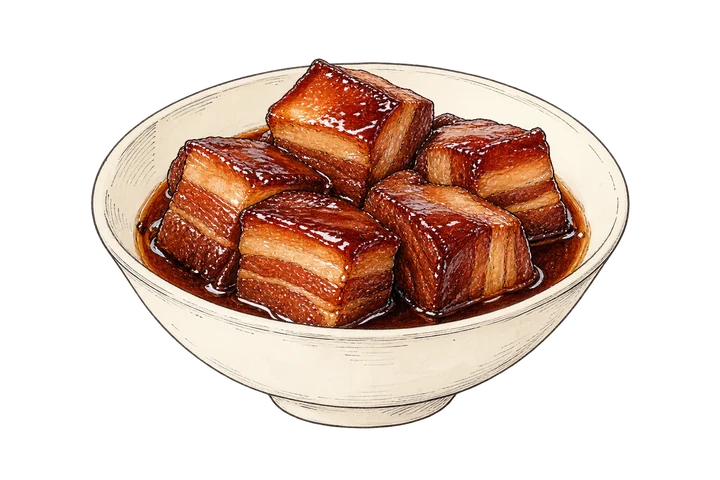
If the centerpiece is hongshaorou
Red-braised pork belly makes a strong center when both diners enjoy the cut. It already supplies richness and a substantial sauce. I would give it plain rice and a vegetable prepared in a contrasting way. Ask what greens are available and how they will be cooked, rather than selecting only from a translated list of permanent names.
Avoid surrounding it with other dishes chosen for the same dark gloss. The meal may look consistent and taste repetitive. A cleaner preparation gives you a reason to return to the pork. Even a small change in texture can be useful: something with bite beside meat that yields slowly.
If one diner wants only lean meat, be honest about the mismatch. Pork belly's layers are part of the dish's construction. Another protein may serve the table better. A shared dinner requires a center both people want to eat, not a famous dish one person picks apart while the other works through the remainder.
If the centerpiece is crab
A whole hairy crab and crab noodles ask different things of the evening. Shell extraction takes time and attention; a prepared topping lets the kitchen do that work. Discuss which experience you want before choosing. A whole crab is not automatically the more serious choice, and noodles are not automatically the quick inexpensive one.
Ask how the restaurant prices the specific order and what it includes. A displayed price may refer to a size, a serving or a set. Confirm before the kitchen begins. If the menu uses a source or seasonal claim, ask the server to explain it in relation to the dish you are buying.
One crab preparation can be enough for the dinner. Adding crab dumplings, crab tofu and crab noodles may be a deliberate themed meal, but do not mistake repetition for range. If you want to understand one concentrated crab flavor, give it a companion that changes the pace rather than another version competing for attention.
A vegetable is a preparation, not a moral gesture
Order a vegetable because you want its texture and flavor in the meal. Do not add one as an afterthought and then ignore how it is cooked. A glossy, heavily seasoned eggplant dish and simply cooked leafy greens play different roles beside rich pork or fried food.
Ask about the sauce and cooking fat if those matter. A dish's main ingredient does not describe every component. The municipal language guidance specifically cautions that the presence of the character for vegetable does not establish a vegetarian preparation. For dietary requirements, discuss the details rather than relying on the menu category.
This is one area where the server's knowledge can improve the order substantially. Ask which vegetable is good now and which preparation would suit what you have already chosen. You are inviting advice about a specific table, which is more useful than asking for the restaurant's most famous vegetable regardless of context.
Rice, noodles and soup should solve a real need
Plain rice is often the easiest starch to adjust to appetite. Start with an amount you expect to eat and ask whether more can be added. Fried rice, fried noodles and rice cakes are dishes with their own seasoning and weight. They can be excellent, but they are not interchangeable with an unseasoned companion.
Soup deserves a portion question. A large pot may suit a group, while two people might prefer smaller bowls if available. Ask what the stock contains and whether the soup repeats ingredients from the centerpiece. You are deciding what the meal still needs, rather than checking a compulsory category called soup.
Dumplings create a similar trap. They are compact enough to look like an extra, but a full order can become another main component. If lunch was already about dumplings, dinner does not require a second steamer merely to feel recognizably Chinese. Let the dinner have its own structure.
Set a budget through specific questions
Agree on a comfortable total before ordering if cost matters to the evening. Then ask for prices where the menu is unclear. Include rice, drinks and any supplements in that conversation. There is no universal bill for a Shanghai dinner: restaurant type, ingredient, portion and location all change what the meal costs.
A set menu can simplify the decision, but read what it actually includes. More dishes do not necessarily make it better for two. Check whether the number of people, serving sizes and available choices fit your table. A discounted package is poor value if most of it is food you did not want.
Do not turn an unclear price into an authenticity test. Asking calmly before ordering is ordinary and useful. It also gives the restaurant a chance to recommend something within the amount you want to spend. Clear constraints can make a meal more personal, rather than less adventurous.
Leave room for the meal to change
When the first dishes arrive, notice whether the order still makes sense. If the portions are smaller than expected, add something that contributes a different role. If they are larger, stop. The menu does not need to be completed just because you circled another dish ten minutes earlier.
Dessert is optional. A small osmanthus sweet or another local preparation can be a good ending if there is appetite for it. Two people can also finish with tea or simply finish. A meal need not grow another course to validate the earlier choices.
For a private food evening, send the foods you enjoy, anything you avoid, how much time you have and whether you want a single shared dinner or several smaller stops. Those answers are enough to start a useful conversation. The result should feel like a meal chosen for two particular people, rather than a standard list reduced by half.