Publication details
First published . Updated . Series dates place related notes together in the reading archive.
The practice behind the building
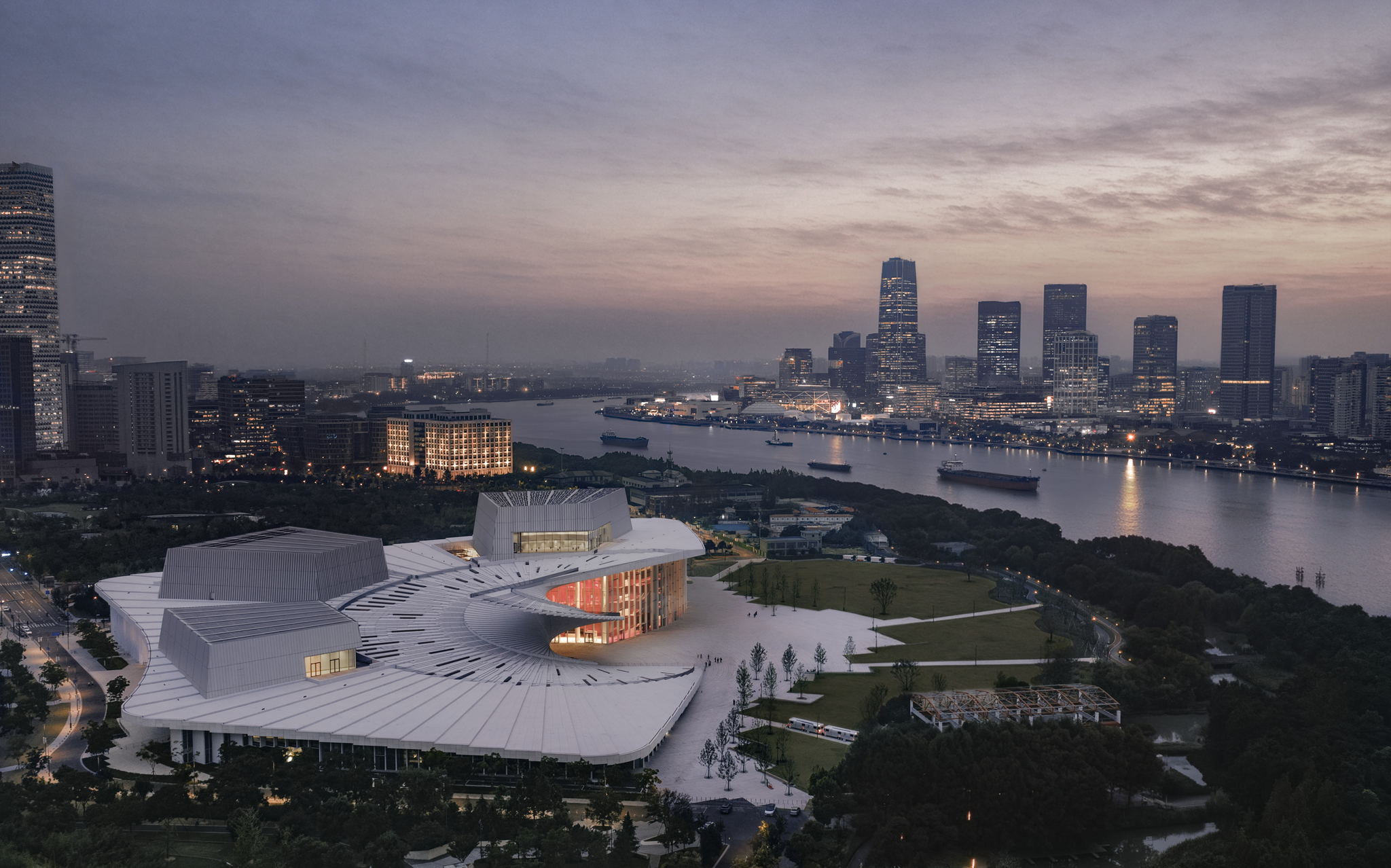
Snøhetta takes its name from a mountain in central Norway. The practice works across buildings, landscape, interiors, art and product design; its first major commission was the Bibliotheca Alexandrina in Egypt in 1989. The Oslo Opera House and the September 11 Memorial Museum Pavilion in New York followed. Kjetil Trædal Thorsen, Craig Dykers and Christoph Kapeller are its co-founders.
That range helps explain the Shanghai building. The commission includes the surrounding ground, the routes up to the roof and the rooms inside. Snøhetta won the international competition in 2016. The consortium formally commissioned in 2019 brought it together with the East China Architectural Design & Research Institute, Theatre Projects and Nagata Acoustics. ECADI is a co-author of the completed building; this is a substantial Shanghai–international collaboration.
A family resemblance to Oslo
The Norwegian National Opera and Ballet, completed in 2008, rises from Oslo’s former industrial waterfront at Bjørvika. White Carrara marble covers its walkable sloping roof. A visitor can climb above the auditorium without attending an opera; street-level windows also reveal work happening behind the performances.
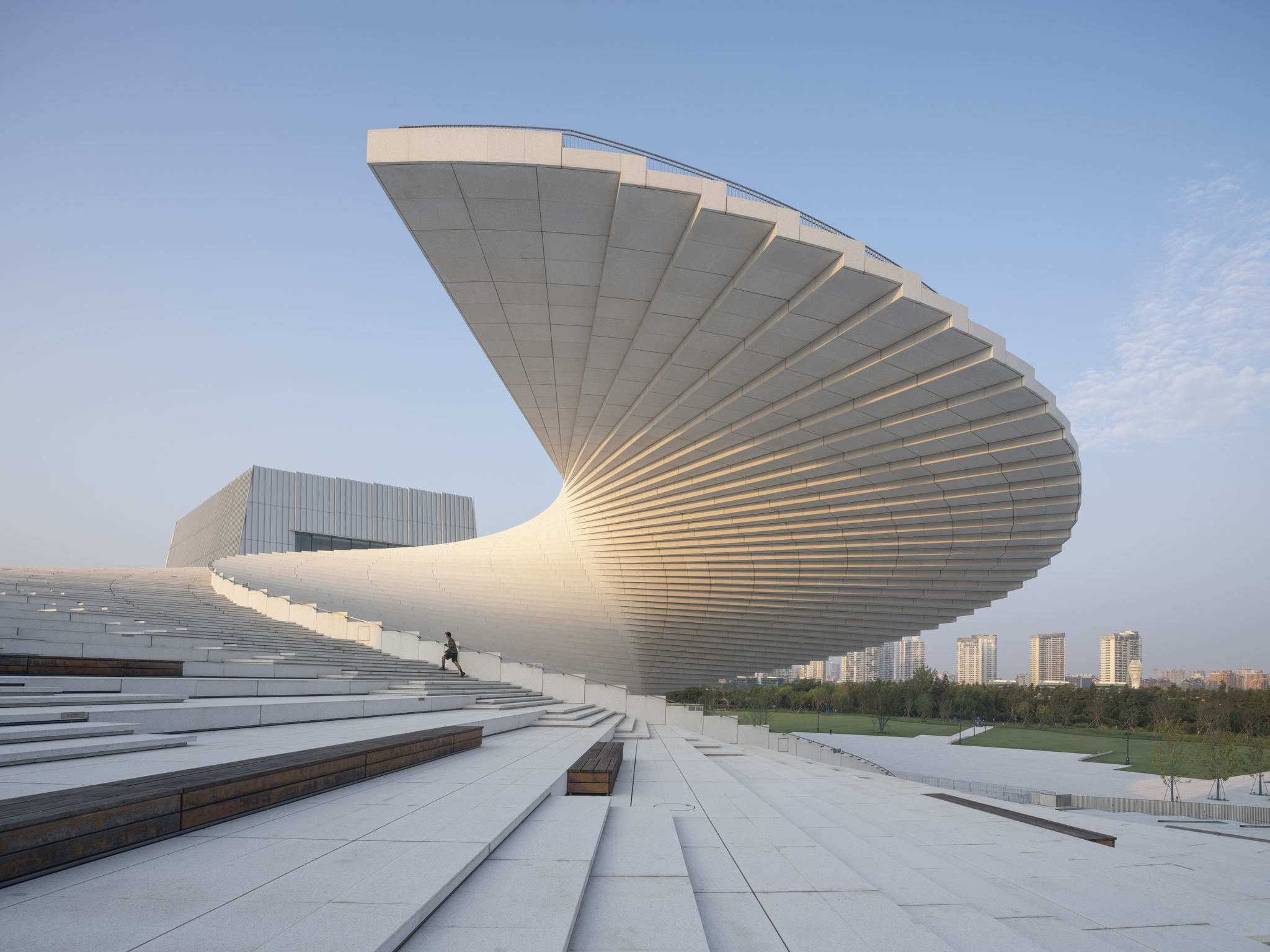
In Shanghai, the climb coils upwards beside the glass-fronted lobby. The roof spreads in pleats, like an opened fan, over the Expo Houtan waterfront. I like the decision to give so much of that roof to people on foot. A large performance building can make a long stretch of river feel closed; here, the public route is one of its main architectural features.
Three halls under the fan
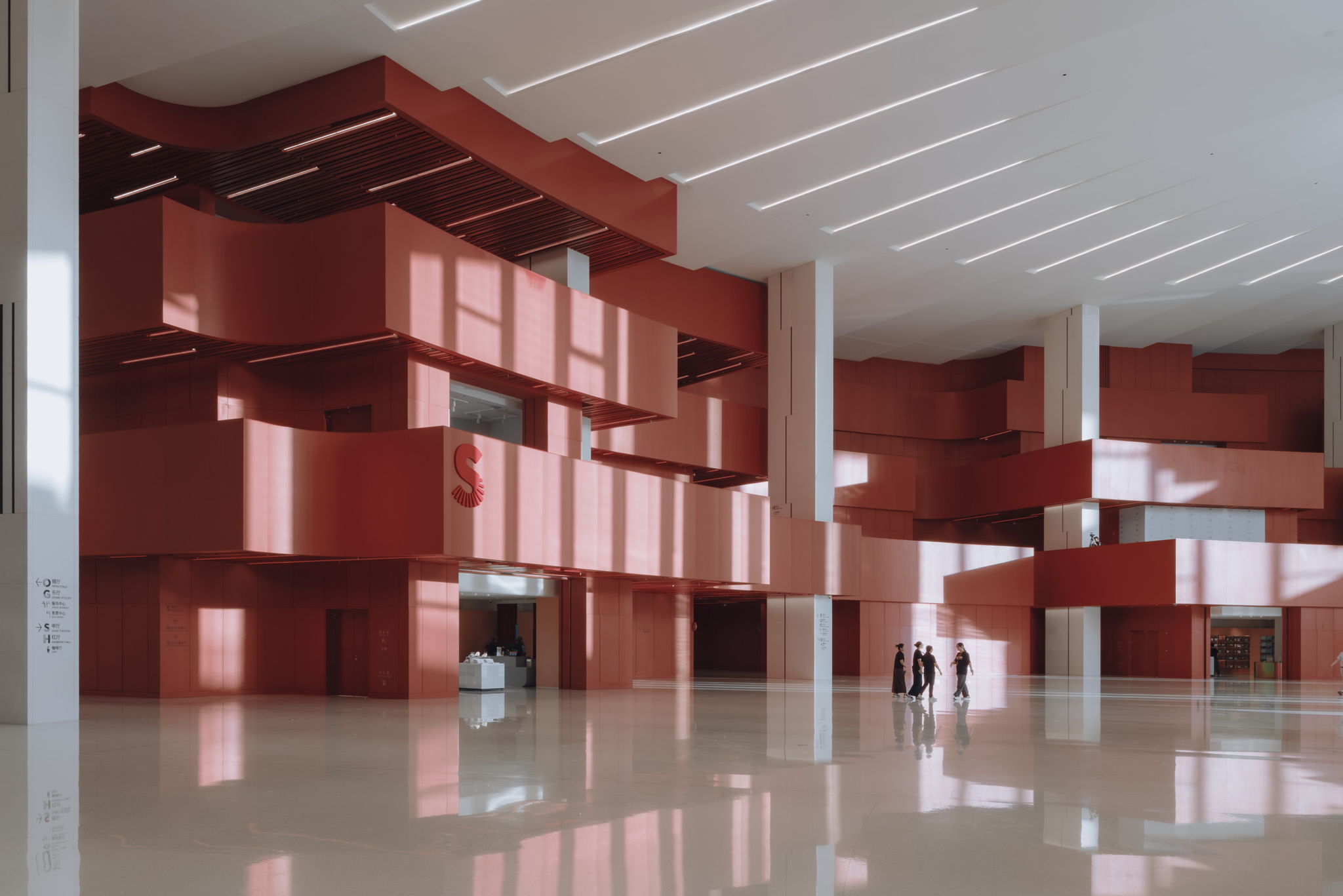
The 2,000-seat Harmony Hall, labelled 红厅 on Chinese programmes, is the deep-red main auditorium. Its five levels bring balconies and small side boxes around the stage. The 1,200-seat Soar Theatre, 申厅, is the smaller opera and theatre space. Open Stage, 镜厅, has 1,000 seats and adaptable stage and seating arrangements, with views towards the park.
Nagata Acoustics worked on the sound and Theatre Projects on theatre planning. The distinction between the rooms is already apparent in the opening programme: large staged opera occupies the Red Hall, while the Mariinsky’s Shostakovich symphony cycle is scheduled in Shen Hall.
What is playing in the first weeks
The opening concert on 17 October also launched the 25th China Shanghai International Arts Festival. The first opera was La Fenice’s Tosca, scheduled on 22 and 24 October. Next come the Mariinsky’s Aida on 30 and 31 October and 1 November, then the Berlin State Opera’s Der Rosenkavalier on 8, 10 and 12 November.
The concert programme includes Valery Gergiev and the Mariinsky Orchestra’s complete Shostakovich symphonies, running 23–28 October. Rudolf Buchbinder and Staatskapelle Berlin play all five Beethoven piano concertos over 7 and 9 November. American Ballet Theatre brings Swan Lake on 12–15 November. The companion opening-season note has the performance times.
Address and public visits
Shanghai Grand Opera House · 上海大歌剧院. 1 Yongzhan Road, Pudong New Area, Shanghai · 上海市浦东新区咏展路1号. It stands in Shanghai Expo Culture Park, on the Pudong bank of the Huangpu. Shanghai Grand Theatre, 上海大剧院, at People’s Square is a different venue.
Daytime public visits continue after the opening, with the available indoor and outdoor areas adjusted around rehearsals and performances. Public-visit sessions and rooftop access follow the opera house’s current arrangements; the roof should not be treated as an unrestricted 24-hour promenade. The official WeChat mini-programme is 上海大歌剧院. A performance ticket and a daytime visit reservation serve different purposes.