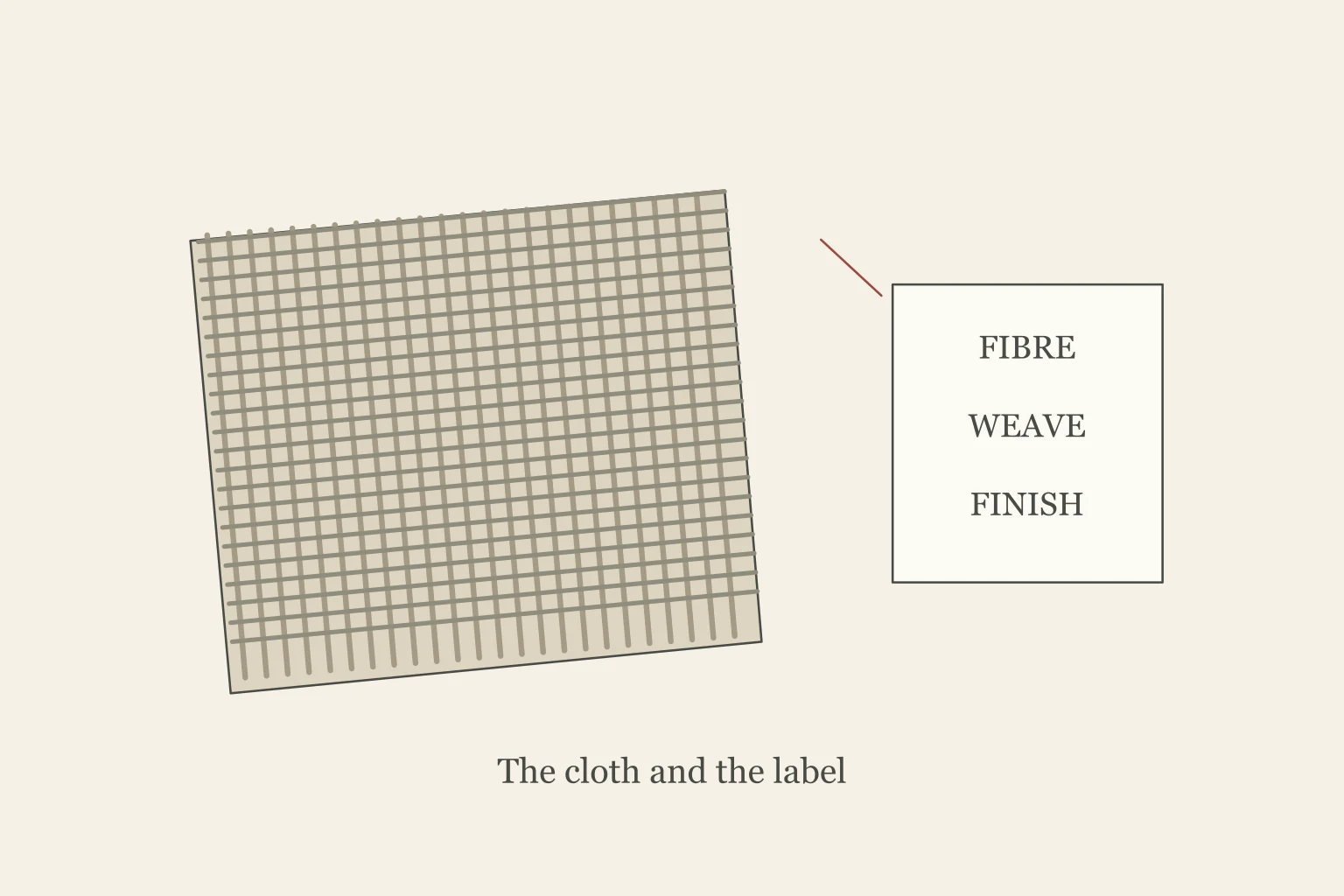
Name the fiber and the fabric separately
The V&A's textile records distinguish material from technique: a silk textile can be satin-woven and embroidered, with those details recorded separately. Keep that distinction when shopping. A smooth, lustrous cloth may be made from silk, another fiber or a blend. “Satin” does not give you a complete fiber composition.
Ask to read the sewn-in label on a finished garment or the written composition for the cloth being cut. Useful Chinese terms include sangcansi (桑蚕丝), mulberry silk; juzhixianwei (聚酯纤维), polyester; and zhannianxianwei (粘胶纤维), viscose. Translation helps identify the words. It does not authenticate the accuracy of the seller's claim.
A blend can be a reasonable choice
Decide what you want from the cloth before treating a percentage as a score. A silk blend may be chosen for structure, stretch, price or a particular surface. The important point is whether it is described accurately and works for the use. A falsely labelled pure silk item is a problem; an openly described blend is a different proposition.
Ask which part of a garment the percentage covers. The shell, lining, trim and embroidery can use different materials. A silk dress may have a synthetic lining, and the layer against the body may influence comfort as much as the outer one. Read all available components rather than stopping at the most appealing word on the hangtag.
| Question | Example | What it answers |
|---|---|---|
| Fiber | Silk, cotton, wool or a blend | What the material is made from |
| Weave | Satin or twill | How yarns are interlaced |
| Finish | Surface treatment and handle | How the surface has been treated or feels |
Judge the cloth at a useful scale
A small swatch can show color and surface without showing how a whole blouse or skirt will fall. Ask to see a larger length and, with permission, let it drape. Look at it in more than one light. A brilliant shop spotlight can exaggerate sheen and conceal how transparent a pale cloth will look over skin or a darker underlayer.
For a scarf, try the actual fold or knot you expect to use. A square displayed flat presents a different balance of pattern and weight from a narrow band at the neck. Inspect the edges and corners without pulling. The printing, finishing and handling matter alongside composition; pure silk does not automatically make every design well executed.
Weight is information, not a medal
Momme is a unit used to express silk fabric weight. A bigger number does not automatically mean a better purchase: a floating scarf, a shirt and a substantial skirt ask different things of cloth. Ask whether the quoted weight applies to this exact fabric and what effect it has on the proposed garment.
Compare like with like. A heavier satin and a light, textured weave are not competing to perform the same job. If you cannot see the cloth in the intended design, discuss examples with the maker. Ask about opacity, seam treatment and whether lining is planned. Those answers give a weight figure a practical context.
Do not make a counter demonstration do laboratory work
Touch and shine can help describe a fabric. They cannot establish every fiber percentage or explain a complex blend. The V&A's textile research describes specialist examination, including microscopy, to distinguish materials. That is a useful corrective to the certainty of a quick rub, ring or flame demonstration.
Do not burn merchandise or perform destructive tests in a shop. If composition is central to an expensive commission, ask for credible documentation or discuss independent testing before committing. A seller's confidence and a customer's confidence are not substitutes for evidence. For an ordinary purchase, an established seller, a clear label and an identifiable receipt are more useful than theatre.
Fabric shopping includes a cutting problem
If you are buying by length, agree the usable width as well as the quantity and price. A narrow cloth and a wide cloth can require different amounts for the same garment. A directional print, a large repeat or pattern matching can add to the requirement. Ask the person making the garment to calculate what is needed before the seller cuts.
Inspect the selected length with the seller for visible flaws and color differences. Clarify whether preparation before cutting is required and who will do it. A bargain piece that leaves no margin for matching, testing or a mistake can become expensive when making begins. Keep the fabric code or identification alongside the receipt if it is available.
Care belongs in the buying decision
Read the actual care instructions rather than applying one rule to everything called silk. Dye, finish, lining, interlining and construction can change how a piece should be treated. Ask about the whole garment. A seller recommending dry cleaning should be able to explain whether that recommendation concerns the fabric alone or its finished construction.
Consider your routine honestly. If the item will be worn often but you will not arrange its required care, choose something else. Ask how it should be packed and stored for the journey home. Keep any care card in a language you understand, and avoid improvising stain treatment on a new purchase before checking the maker's advice.
Make the final question about use
For a silk scarf, I would favor a convincing print, appropriate size and careful edge over an elaborate purity performance. For tailoring, I would favor cloth selected with the maker for the particular garment. Those priorities keep the material connected to what it has to do.
Shanghai offers both finished textile shopping and tailoring conversations. Treat them as related but different activities. A few well-chosen questions can be enough for a scarf; a dress commission needs a fuller specification. If you want help planning a shopping visit, say whether you want cloth, ready-to-wear or a made piece. “Silk shopping” alone leaves too much undecided.