The scent is only half the order
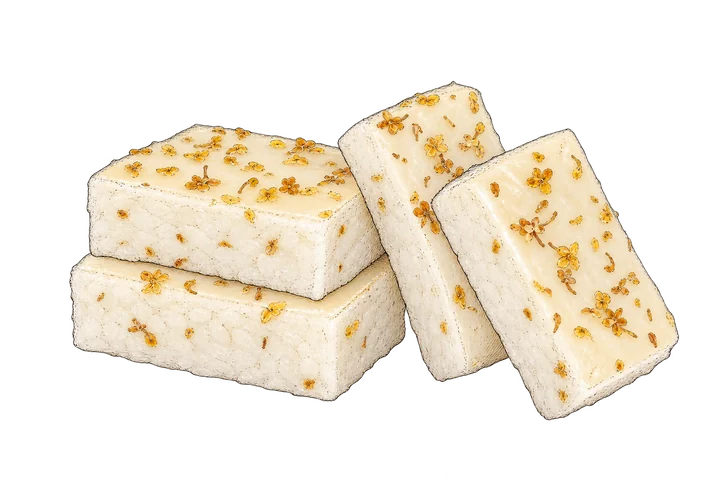
Osmanthus flowers give many Jiangnan sweets their aromatic identity. Shanghai's seasonal food guide includes osmanthus cake alongside syrup, sticky-rice sweets and other preparations. That range is useful: one flavor can appear in foods that behave very differently in the mouth.
A sticky version and a looser steamed rice-flour cake are different pleasures. Regular rice flour can be blended with glutinous rice flour to produce a less adhesive crumb; a higher-sticky-rice approach moves toward chew. The balance of flour, water and steaming matters as much as the flowers scattered on top. Look at a cut edge before choosing.
Ask whether the piece is sticky and chewy, softer and more crumbly, or another style entirely. A familiar fragrance does not require one preferred texture. If you dislike a particular version, it may be the cake's structure rather than osmanthus itself that failed to appeal.
Buy one piece before buying the gift box
A decorative box can make a modest sweet look like a commitment. For your own tasting, ask whether a smaller quantity is available. One piece eaten at the intended temperature tells you more than a shelf of packaging. If the shop offers samples, accept a small one rather than treating the counter as a free dessert course.
Start with a small bite and wait a moment before the next. Does the floral note remain distinct from the sugar? Does the cake need a drink immediately because the texture is dry, or is the resistance part of its appeal? These are practical questions rather than a demand that every sweet be light.
My preference is for fragrance that survives beyond the first smell of the box. Heavy sweetness can make a striking first impression and leave little else to return to. A restrained cake may be more interesting across a full piece, especially after a rich lunch.
Do not confuse the whole osmanthus family
Osmanthus can accompany sticky rice inside lotus root, appear with small rice balls and fermented rice, or flavor a filled rice roll. These are separate dishes. A photograph showing a translucent roll with red-bean filling should not be used to promise the texture of a layered cake.
Choose by the eating experience you want. A plated dessert makes sense when you have somewhere to sit; a small cake can suit a short stop. A syrupy preparation may be less convenient to carry through a walk. None needs to become the definitive osmanthus dish for the entire city.
This is also a reason to keep the Chinese name with the photograph when saving a recommendation. A broad translation such as sweet rice cake can erase the distinction between a roll, a steamed square and a bowl of little rice balls. The exact item matters when you return to order it.
Autumn atmosphere is not a shelf-life statement
Osmanthus is closely associated with autumn in the city's seasonal food writing. That does not make a packaged cake a fresh seasonal product by default. Ask when it was made, how it should be stored and when the maker recommends eating it. Read the printed label on a packaged product.
If you want a gift, explain the journey it must survive. A delicate sweet intended for eating today may be a poor choice for a long day out followed by a flight. Attractive packaging does not tell you whether the food suits that plan. Buy according to the producer's storage and use instructions.
A soft steamed cake and a chewy rice roll also behave differently as they cool. The texture that suits a tea stop now may be less appealing many hours later. For a takeaway purchase, ask whether the maker intends it to be eaten at room temperature or refreshed before serving, and follow the instructions for that particular product.
Choose a drink that leaves the cake audible
A plain tea can make a useful companion if you already enjoy it. Start without adding a very fragrant sweet drink on the side: otherwise you may be comparing two perfume-like aromas rather than understanding either. Water is perfectly adequate when the point is to taste a cake.
You do not need to perform a formal pairing. Eat a little, take a sip, and decide whether the next bite improves. If the tea is bitter enough to dominate everything, change the drink rather than forcing the cake to prove it can compete. A good afternoon stop should be enjoyable at the pace you actually have.
I would buy the cake for a specific pleasure—its chew, its softness, its floral finish—rather than because autumn demands an osmanthus photograph. Remembering that preference will help you choose the next sweet. It is also a better souvenir than a large box chosen before anyone at the table had tasted a piece.