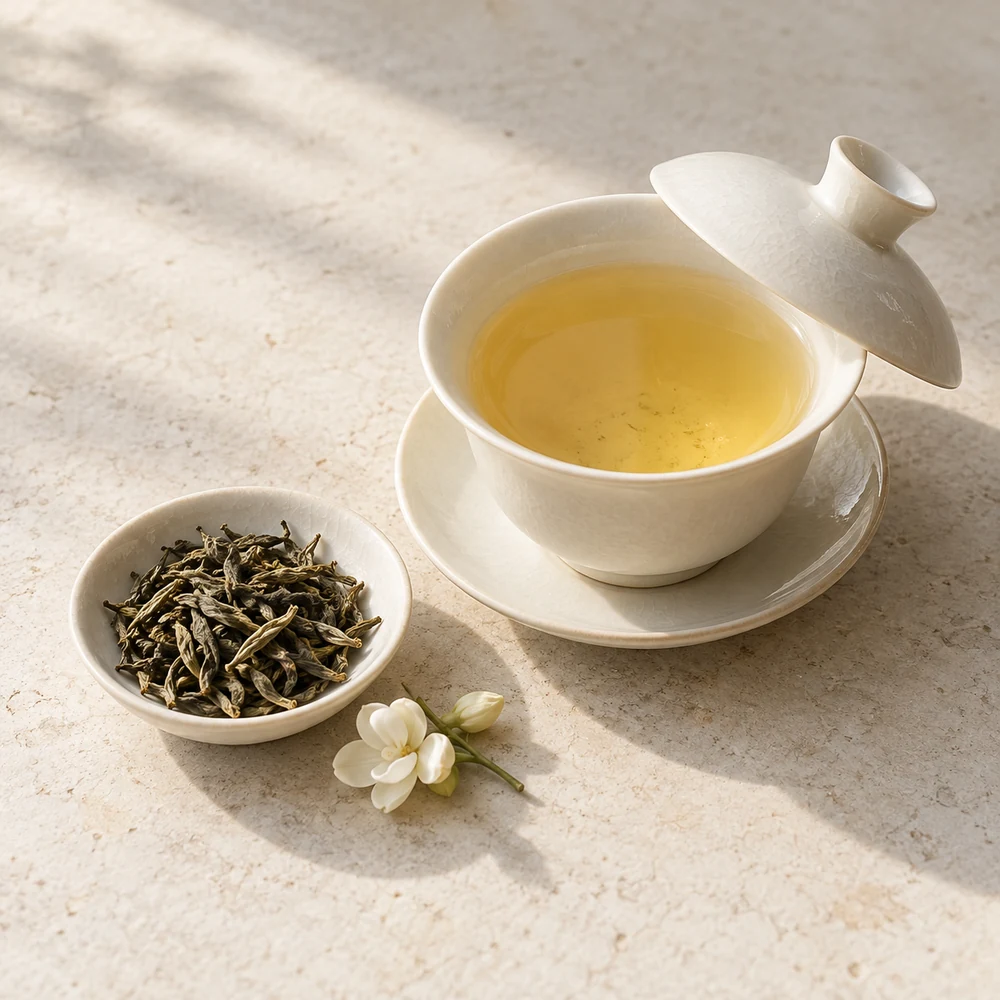
Make room for the table
Set aside a stretch of the afternoon instead of squeezing tea between two timed attractions. A tasting loses its point if every pour competes with a departure deadline. Choose a venue from its own menu and location, then establish whether you are buying table service, a guided tasting or a retail demonstration.
Tea is a social practice as well as a product. UNESCO's 2022 inscription includes drinking and sharing alongside growing and processing leaves. That is a useful starting point in Shanghai: the conversation and the act of hosting deserve some attention too. You are allowed to enjoy the pause without becoming an expert.
Begin with a name you can take away
Ask the host to write down the tea's Chinese name, its producing region and the particular product being served. A label such as green tea or oolong is a broad category, rather than a complete description of what is in your cup. Keep those details together if you later decide to buy the same leaves.
For your first tasting, let the host choose a manageable brewing method. Ask what they are changing between pours: the amount of water, the steeping time, or something else. There is no universal timer for every tea and vessel. Understanding the choice is more useful than copying a number without its context.
Follow the second pour
Try the tea before accompanying it with a strongly flavored snack. Let a hot cup cool enough to taste comfortably, then notice one thing: perhaps the aroma, the texture or the finish. At the next pour, return to that same feature. Has it softened, become clearer or disappeared? Your answer can be simple.
A comparison across pours also keeps the afternoon from becoming a test of how many tasting words you know. Write what you actually perceive. 'Lighter than the first cup' is a useful observation. Repeating a supplied description that means little to you does not make the experience more sophisticated.
Keep the tasting and the purchase separate
Before service begins, confirm the charge, the number of people covered and what refills or snacks include. If buying leaves, establish the weight, package and total price separately. A pleasant conversation creates no obligation to purchase a souvenir. A clear bill lets everyone relax.
Leave with the tea's name and one detail you noticed changing. That gives you a small, specific memory to return to at another table. Tea-house stops and leaf purchases are arranged separately from the advertised food-tour tastings; discuss them when planning your afternoon.