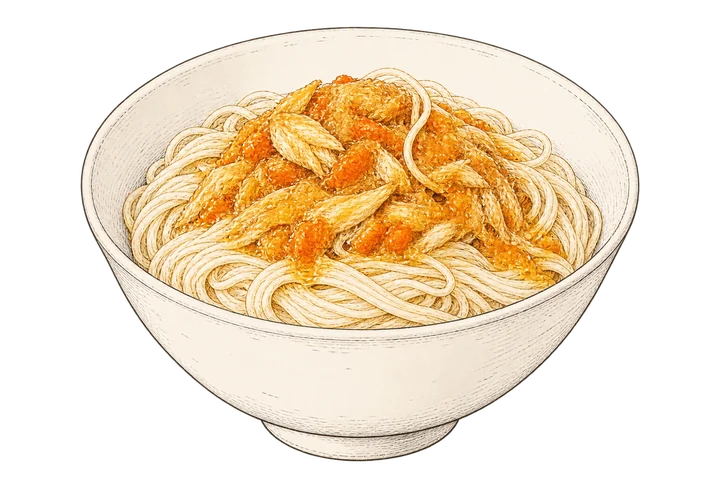
Three names that deserve three questions
Xiehuang mian (蟹黄面) is commonly translated as crab-roe noodles. You may also encounter xiefen mian (蟹粉面) and tuhuangyou mian (秃黄油面). The terms point toward different crab preparations, but an English menu can flatten them all into the same phrase. Keep the Chinese dish name visible when asking the server to explain a bowl.
Xiefen refers to a picked-crab mixture rather than a powder. Tuhuangyou traditionally emphasizes the rich yellow and paste from female and male crabs, rather than the white meat. Contemporary recipes and menu descriptions can differ. The useful question is what this kitchen includes: meat, roe, paste, and the fat and seasonings used to cook them.
This is not a vocabulary exam. A clear explanation matters more than reciting the most expensive term. If you prefer identifiable pieces of white crab meat, the most concentrated paste may not be your best order. If you want richness, a generous-looking meat topping may not deliver the intensity you had in mind.
The noodles should remain part of the meal
The sauce is the headline, but noodles are more than a pedestal. Take a small bite from the topping, then mix enough into a few strands to judge the combination. Do the strands separate? Is there enough moisture to distribute the topping without a puddle of oil? Can you still distinguish the noodle's texture after the mixture settles?
A huge topping on a tiny portion of noodles can be photogenic and difficult to finish. A modest amount spread evenly may give a better run of mouthfuls. My preference is for a bowl that remains interesting after the first three bites. Maximum intensity is only one kind of value, and it is not always the kind you want at lunch.
If the topping arrives separately, ask whether it is meant to be poured in all at once. Some bowls are designed around a specific ratio; others leave the diner more control. Do not add the entire accompanying liquid before finding out whether it is soup, sauce or a drink.
Taste before the vinegar
Vinegar can make a rich crab preparation easier to return to, but a heavy pour changes the bowl quickly. Start with a small unseasoned mouthful. Add a few drops to a separate portion, then decide whether the sharper version suits you. The same applies to ginger and chili if they are offered.
Ask for the condiment separately when you want to control the comparison: cu fen kai (醋分开), vinegar separately. Pointing to the actual condiment is better than relying on the phrase alone. You are trying to make one clear request, not perform a fluent conversation.
A bowl that needs aggressive seasoning before it becomes pleasant deserves scrutiny. That does not mean a restrained sauce is automatically better. It means the dish should have a coherent flavor before you begin adjusting it, and the adjustment should serve your taste rather than an imagined rule about local eating.
Season, provenance and the price on the menu
Shanghai menus offer crab preparations in more than one season. A bowl available in spring or summer is not evidence that the kitchen is serving the same freshly picked autumn crabs you imagined from its photograph. Equally, year-round availability alone does not establish poor quality. Ask how the topping is prepared and what the menu actually promises.
Confirm the price of the specific bowl and any optional premium topping before ordering. Ask whether the displayed number is for one portion, a set or an add-on. A photograph with several bowls may illustrate a range rather than everything included. There is little benefit in arguing about value after eating a more expensive version than the one you thought you selected.
I would choose a bowl with a clear ingredient description over one sold mainly on a prestigious lake name. Pay attention to whether the topping is mostly meat, roe and paste, or a more concentrated sauce. These are different reasons to order crab; the richest one need not be the one you enjoy most.
How to fit the bowl into the day
For two curious eaters, a bowl may be a useful shared course if the restaurant allows sharing and can provide small bowls. Confirm that before ordering. Pair it with something that changes the pace, rather than automatically adding more crab dumplings and crab tofu. One concentrated crab dish is often enough to establish what you like about the flavor.
If your priority is the ritual of cracking shells, order a whole crab on another occasion. If you want to spend the meal talking rather than extracting meat, noodles make sense. Neither choice needs to pretend to be the other. A kitchen doing the extraction is part of what you are paying for.
Crab is shellfish, and the sauce may contain additional ingredients such as pork fat or cooking wine. Discuss those details when they matter. A label saying crab-roe noodles cannot answer every dietary question. The bowl is worth ordering when the explanation, the portion and your appetite agree.