Publication details
First published . Series dates place related notes together in the reading archive.
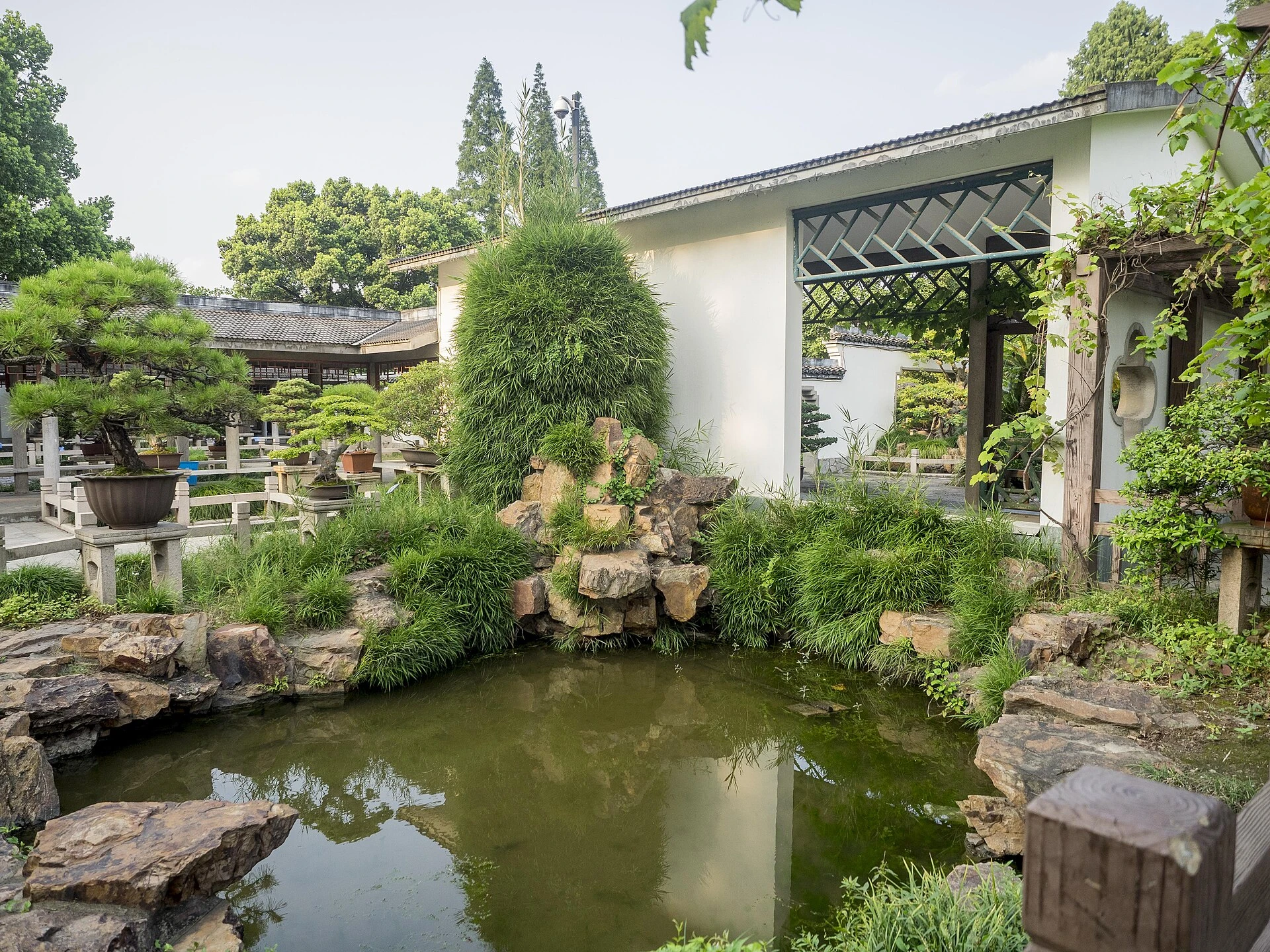

Choose the correct botanical garden
Shanghai Botanical Garden is at 1111 Longwu Road / 龙吴路1111号 in Xuhui district. Save 上海植物园 in your map. It is different from Chenshan in Songjiang, and a search for “Shanghai botanical garden” can easily produce photographs or directions for both. Check the full Chinese name before arranging transport.
The Longwu Road address identifies the garden, not a guarantee that every gate is open or closest to the collection you want. Look at the current garden plan, confirm the permitted entrance and check whether the penjing collection has separate admission arrangements. A general park ticket or free outer area should never be assumed to include every specialist garden or house.
Penjing is more than a small tree
Penjing can bring plants, stone, containers and implied landscape into a deliberately composed relationship. Instead of starting with the question “How old is it?”, begin with what the arrangement makes you notice. Where does a branch direct the eye? What does the open space contribute? How does a container change the apparent weight of the planting above it?
These are questions you can ask without pretending to be a specialist. The useful distinction is between a living composition and a miniature ornament. A shaped tree continues to grow. Its form is a negotiated result of horticultural care, time and the limits of the material, not simply the execution of a static design.
Look at one specimen in stages
First stand far enough away to see the whole composition. Then approach, without crossing a barrier, and look for the relation between trunk, branch and foliage. Finally step back again. The second whole view often becomes more interesting because you have noticed how a small detail contributes to it.
Read the label before naming the plant to someone else. If a label gives a species, a maker, a date or a style term, keep those pieces of information separate. A date attached to a work does not automatically tell you the biological age of the plant. The discipline of reading a label closely is useful far beyond botanical gardens.
Notice the work, not just the result
Shanghai Botanical Garden’s 2026 staff-training reports discuss autumn care and repotting. They are a reminder that the collection is a workplace as well as a display. A visitor sees a selected moment in a continuing process of maintenance, training and plant health.
Look for evidence of that work without touching. Supports, pruning decisions, soil surfaces and the fit between root mass and container all invite questions. You do not need to turn a gardener’s task into a demonstration on demand. If staff are available and welcome a question, ask one specific thing. If they are occupied, let the work continue.
Spring is one reading, not the only one
Flowers can draw attention away from structure. In a flowering specimen, try looking at the branching first and the blossom second. In another season, the balance may reverse. Seasonal change is part of the reason to think of these as living works rather than objects that should always match an online photograph.
The garden’s February 2026 notice described plum penjing in bloom, but that is a dated report, not a permanent calendar. An autumn programme is equally specific to its dates. Check current displays if a particular plant is your main reason for travelling. If you come without a single seasonal target, you have more room to appreciate what is actually present.
This is a research garden too
The wider garden’s remit includes plant introduction, botanical research, education and horticultural display. That context is worth keeping in mind when choosing what to see next. A labelled collection can help you compare relationships among plants rather than simply find the most colourful background.
After the penjing area, choose one other collection. Conifers, magnolias or ferns raise different questions of structure and growth. Trying to cover every named area tends to turn a garden into a distance challenge. I would rather leave with one useful distinction between two plants than a long list of sections I technically passed through.
Photograph slowly and leave the composition alone
Do not rotate a container, lift a branch, move a label or shift a stone for a picture. The detail that appears inconvenient may be part of the work or part of its care. Keep to visitor paths and respect the distance set by barriers. A plant can be damaged by a casual adjustment that seems trivial to a photographer.
A wide photograph followed by one detail is usually more informative than many near-identical close-ups. Record the label for your own reference so you can caption the image accurately later. If you cannot identify a specimen, say so rather than attach an attractive name from another photograph. Accuracy is a form of appreciation.
Build a small, comfortable visit
Allow two hours for a focused garden visit and leave more time if you want a second substantial collection. This is a suggested pace, not an official walking duration. The garden is large enough that an entrance choice matters. Check the current plan, weather, specialist-area admission and closing arrangements before going.
Bring water and shoes suitable for outdoor paths. In heat or heavy rain, shorten the circuit rather than collecting every viewpoint. A notebook can be more useful than another lens: draw the line of one branch or write down a question you could not answer. That is a better souvenir than a photograph of fifty plants you cannot distinguish.