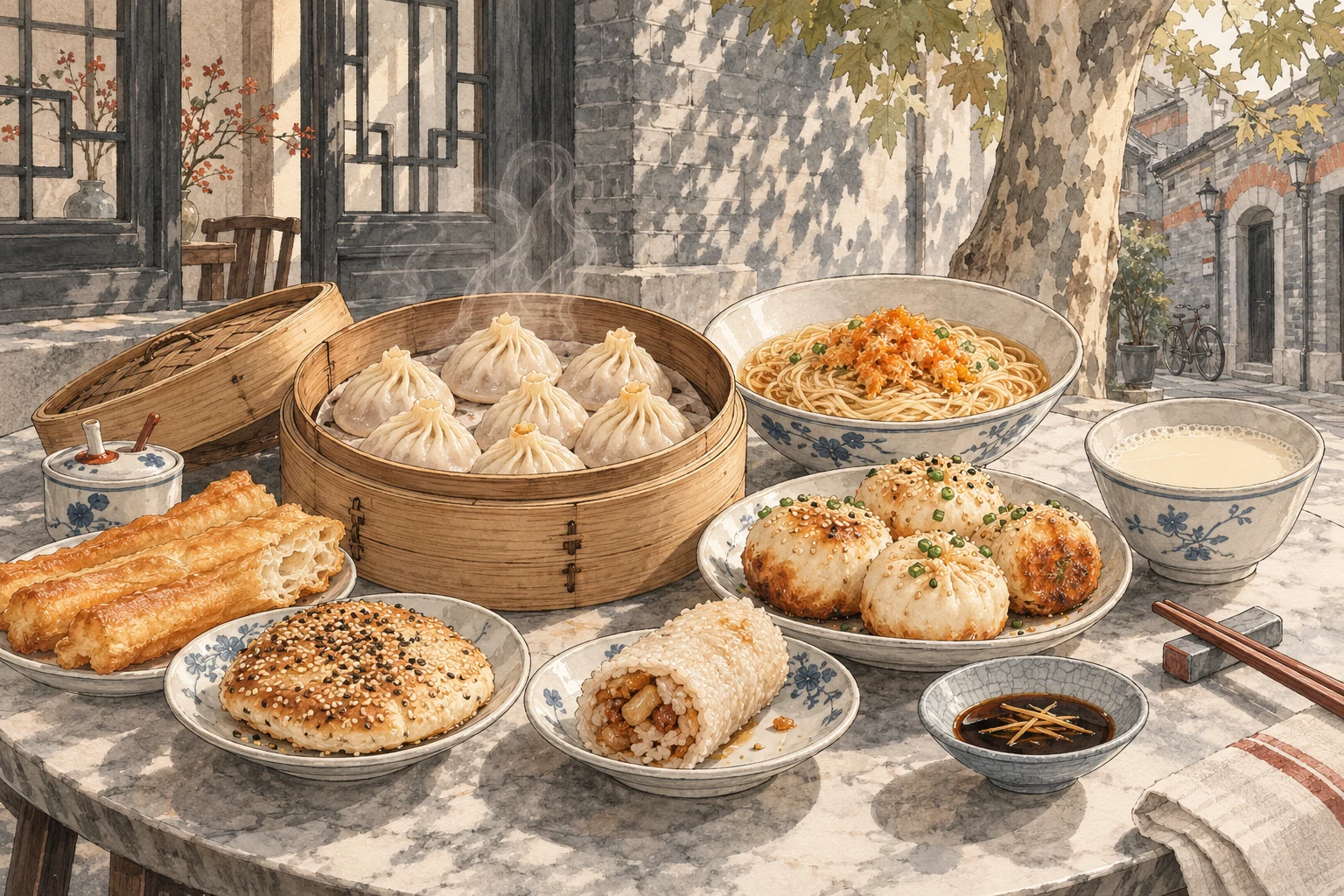
Start with a dish name and a quantity
A photograph helps identify an idea, but the Chinese menu name is usually the better anchor for an order. Save both when you research a dish. A picture of dumplings can point to steamed, boiled or pan-fried versions with very different fillings. A name with one extra character may describe an added topping rather than the bowl you meant to buy.
Point to the menu entry and confirm quantity with fingers or a written number. Yi fen (一份) means one portion. It does not mean one piece, and it does not tell you how many people the portion feeds. That distinction is particularly useful with dumplings, pastries and shared dishes.
Order the first few items clearly before adding modifications. A screen full of translated questions can make it difficult for a busy server to see which sentence needs an answer. Show one request, wait for the response, then move on. Brevity here is a service to both sides of the table.
Ask about portion size before building a banquet
Use liang ge ren chi (两个人吃), for two people to eat, while indicating the dishes you intend to share. Then ask whether the quantity is appropriate. The phrase explains your situation; it does not establish that every restaurant offers half portions or tasting sizes.
A useful first order for two might be one central dish, one vegetable and rice, with the option to add something. That is an editorial starting point, not a fixed local formula. A large fish, a deep casserole or an individual noodle bowl changes the calculation. Let the actual menu and the server's explanation override a generic rule.
Do not assume everything visible in a menu photograph comes with the dish. Rice, soup, garnishes or drinks may be shown as a suggested combination. Point to anything you consider essential and ask whether it is included. This small clarification prevents much of the confusion later described as a language problem.
Keep preferences separate from ingredient requirements
For a preference, a short request can be enough: bu yao fang xiangcai (不要放香菜), do not add coriander, or shao fang la (少放辣), less chili. The city government's language guidance uses the same basic patterns of not adding or adding less. A finished sauce may not be adjustable, however. Ask whether the request is possible before assuming the kitchen accepted it.
For a dietary restriction, write the specific ingredient and the consequence of including it. Saying vegetarian, no meat or not spicy answers different questions. A vegetable dish can still contain animal stock or cooking fat; a mild sauce can contain chili. Asking about the garnish alone leaves the preparation unresolved.
If an ingredient must be avoided, discuss stock, sauces, oil and shared preparation where relevant. Translation software can carry your question, but it cannot verify the kitchen's answer or its working practices. A polite smile is not a detailed confirmation. Choose another dish or restaurant when the exchange remains unclear.
Use the translation app as a turn-taking device
Translate one short sentence rather than a paragraph containing six requests. Show the Chinese text at a readable size. Keep the original English available so you can check whether a new translation has changed what you meant. If possible, let the server speak or type a reply into the same exchange.
Avoid idioms such as on the side, a little bit of everything or nothing too heavy. Write the concrete action: put the sauce in a separate dish; one portion; no additional topping. Chinese dish names are also more reliable than repeatedly translating their English nicknames back and forth.
Photograph a paper menu only with permission, and keep your phone clear of the working counter. If the shop is extremely busy, make the basic order first or step aside to finish the discussion. You can be careful without holding a queue hostage while debating every possible version of lunch.
Confirm the order, then the cost
Before the server leaves, point to the agreed dishes and quantities once more. If you requested a change, repeat that change as a separate item. Ask the total when the menu uses market pricing, add-ons or a combination you do not fully understand. There is no need to wait for a surprise to become a dispute.
Do the same with a QR ordering screen. Read the selected item and variant, not only the photograph. A default option may include a size, a topping or a set. Review the basket before submitting it, and show the staff the screen if the wording is unclear. An app is still a menu; it does not remove the need to understand your choice.
Keep the order confirmation until the meal is finished. If a dish seems different from what you agreed, ask before dividing it across the table. The earlier the question, the easier it is for the restaurant to explain a variation or correct a genuine mistake.
A small vocabulary is enough to begin
The most useful words for a first meal are often ordinary ones: mifan (米饭), cooked rice; mian (面), noodles; tang (汤), soup; zhurou (猪肉), pork; xia (虾), shrimp. Save the exact dish names you want beside these words. A handful of specific nouns gives the server more information than a long speech about wanting something authentic.
At the end of the meal, keep the name of the dish you would order again and one note about it. Perhaps you preferred the less soupy bun or wanted the vinegar separate. That record makes tomorrow easier. A guided food walk can help build this vocabulary in context, but independent ordering becomes more manageable as soon as the requests become concrete.