Publication details
First published . Series dates place related notes together in the reading archive.
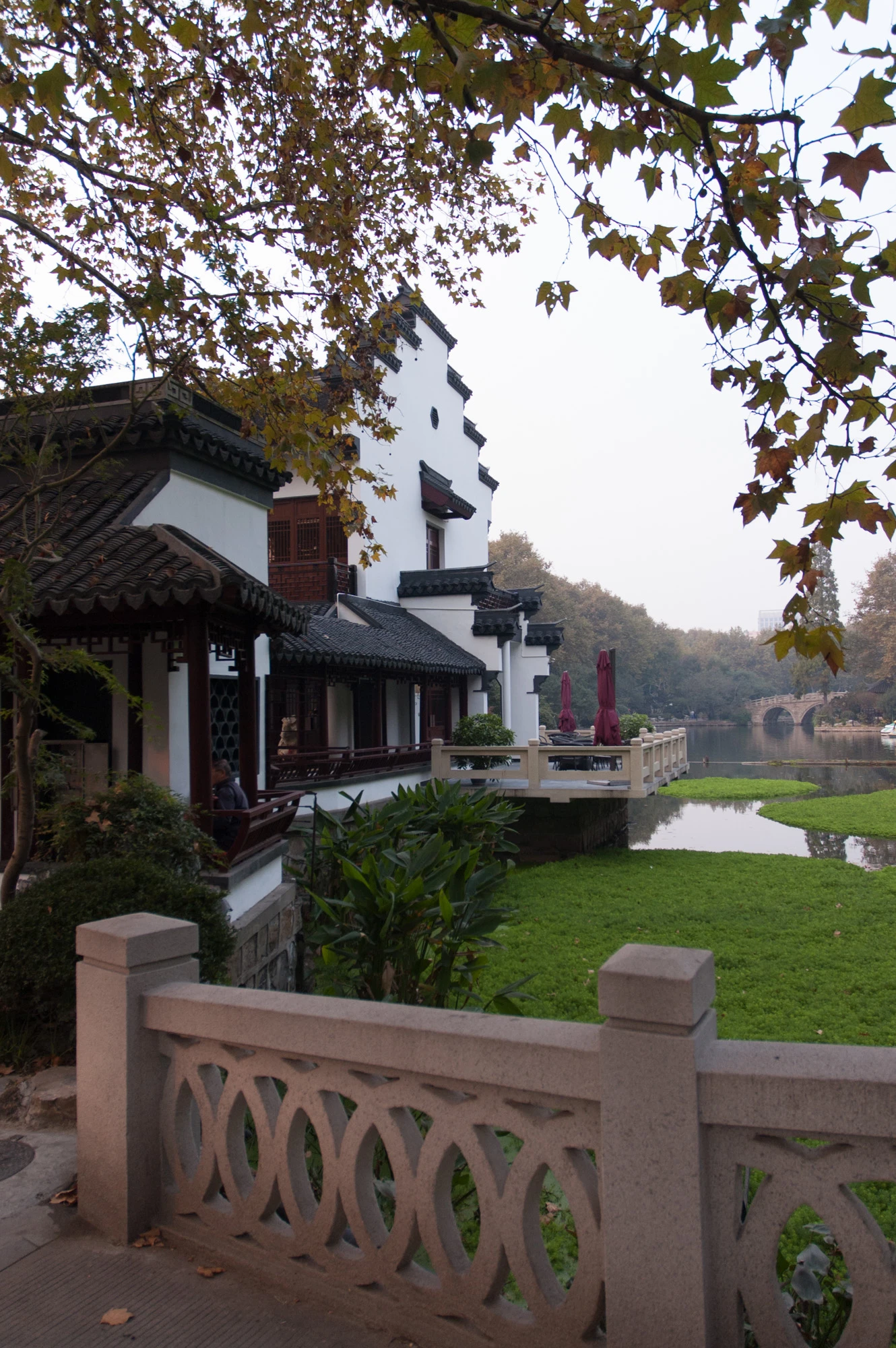

Begin with a public park
Lu Xun Park is in Hongkou, north of the city centre. Its official address is 2288 North Sichuan Road / 四川北路2288号. The district describes a park organised around memorial spaces, public recreation and the landscape around Tian’ai Lake. General park admission is free. That makes it a good place to spend an unhurried morning, but “free” does not mean the people using it have volunteered to entertain us.
A useful first decision is to put the camera away for ten minutes. Notice where people choose to stand, which paths carry through traffic and where a bench becomes a small social room. You do not need to understand every conversation to recognise the difference between a shared activity and a private exchange.
Listen without expecting a show
Music, conversation, exercise and games are part of how many Shanghai parks work. They are possibilities, not a published programme. A group you have seen in a video might gather on another day, use another corner, or simply decide to stay home. Build the morning around being in the park rather than finding a particular scene.
If you come across singing, listen from the edge first. People need room to see one another and move. Standing immediately in front of a singer for a close recording changes the activity for everyone else. An ordinary moment is often more interesting when you allow it to remain ordinary.
Give Lu Xun more than a name-check
This is also a memorial landscape. The park contains Lu Xun’s tomb and the Shanghai Luxun Museum; these are distinct destinations within the larger public space. The museum has its own visitor arrangements. Passing through an open park gate is not confirmation that every building is open, and a short outdoor walk does not need to become a hurried museum visit.
Before coming, read one short piece by Lu Xun in translation. “A Small Incident” is a manageable starting point. Bring a question about how a writer notices the city rather than a list of quotations to match to statues. The gap between a difficult, observant writer and a tidy commemorative image is worth thinking about as you walk.
Keep the other history in view
The park’s memorial geography also includes Yun Bong-gil, the Korean independence activist. That makes Hongkou’s history larger than a single national literary story. Read the names on site carefully, and distinguish the event being commemorated from the date of the monument in front of you. A present-day marker is evidence of remembrance as well as evidence about the past.
I find this a more useful way into a memorial park than treating it as a sequence of famous faces. Ask who is remembered, what form that remembrance takes, and how it sits beside a playground or a fitness area. The coexistence is part of the place, not an interruption to its historical seriousness.
A lake, then a second look
Use the lake as an orienting feature, without committing to a complete circuit. Walk one side slowly, then stop somewhere with an open view. Compare the planted edge with the busy path behind you. A park visit becomes more specific when you notice a choice about shade, seating or movement rather than describe everything as peaceful.
Seasonal planting changes what is visible, and weather changes how the space is used. Do not plan a March photograph around an October description. If rain arrives, shorten the walk instead of turning slippery paths into a test of commitment. A useful morning is one you still enjoy when it does not match the picture you brought.
Photographs that leave people room
Wide views are the easiest starting point. A path, a canopy of trees and figures at a distance can explain how the park works without making one person an involuntary subject. For a recognisable portrait, ask. A smile after you have taken a close photograph is not a substitute for permission before it.
The same applies to games and instruments. Do not lean over a board, handle equipment or step into a group’s space to improve the composition. If someone invites you closer, follow their lead. If they seem distracted or uncomfortable, move on. Being interested in a city includes accepting that some of its life is not ours to collect.
Make the Hongkou continuation optional
Duolun Road is a sensible separate continuation for readers interested in literary Hongkou. Do not turn it into a promise that every former residence can be entered. The street, the plaques, the museum buildings and the lived-in homes require different kinds of attention and different expectations.
Check the actual walk on your map before leaving the park, choose a public exit and save the destination name in Chinese. If the morning has already been full, stop there. There is no prize for adding another neighbourhood after you have stopped noticing it. The park and the literary street can also make two better visits on different days.
A practical shape for the morning
Allow about an hour for the park alone, longer if a museum is part of your plan. That is an editorial suggestion, not an official route duration. Choose a station and entrance using the current local map, then check the gate notice when you arrive. The official park listing publishes seasonal hours, but maintenance and weather can affect particular areas.
Carry water, keep your route flexible and avoid relying on a scheduled performance that nobody has advertised. For a first visit, one public path, one memorial pause and one place to sit are enough structure. The rest of the morning can belong to the park.