Publication details
First published . Series dates place related notes together in the reading archive.

First, save the two addresses
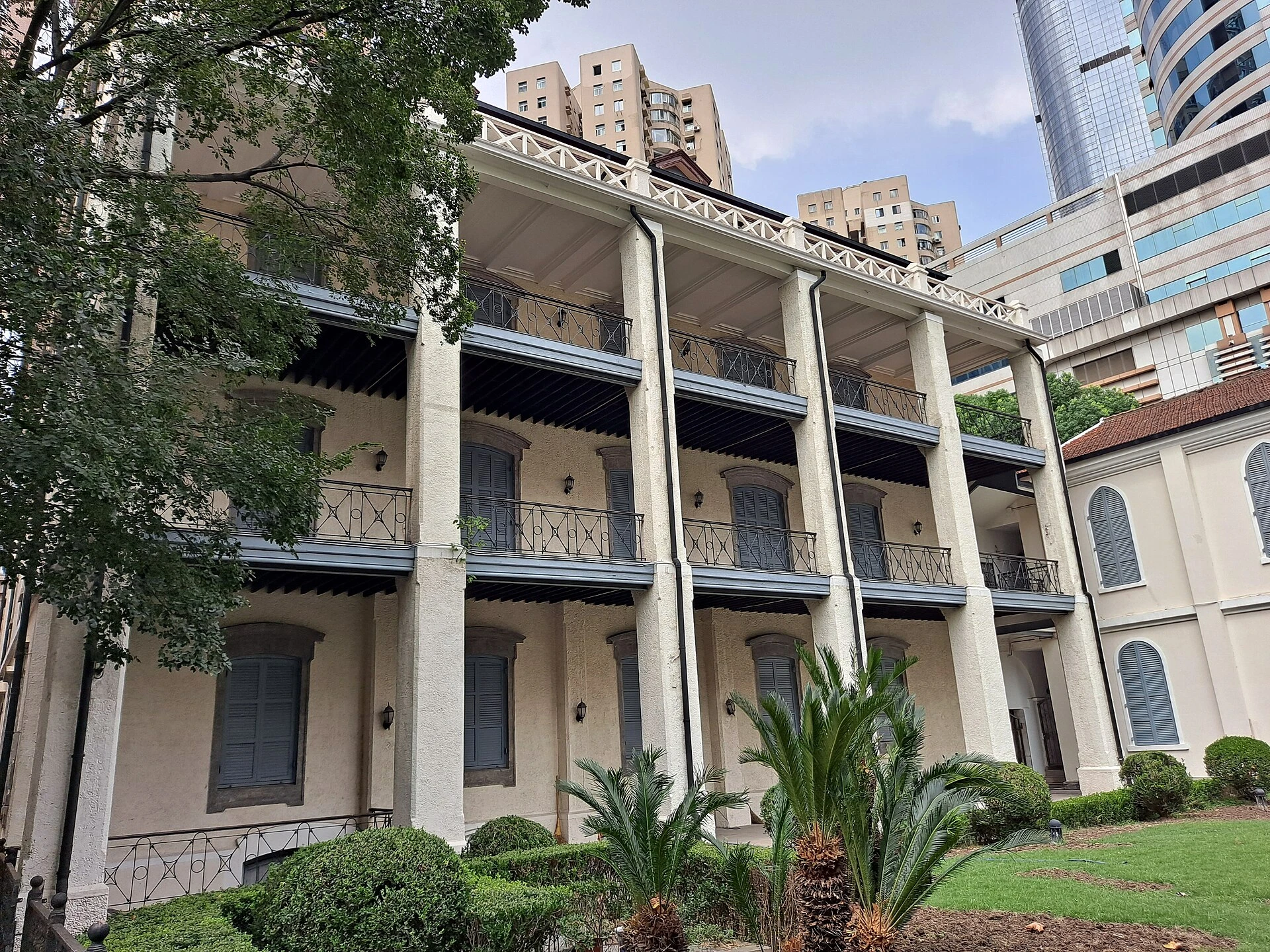
For the modern Zikawei Library, use 158 North Caoxi Road / 漕溪北路158号 and the Chinese name 徐家汇书院. For the historic Xujiahui Bibliotheca, use 80 North Caoxi Road / 漕溪北路80号 and 徐家汇藏书楼. Similar English spellings do not make them the same institution, and a photograph of timber shelves does not tell you which entrance to use.
Save each place separately in your map before travelling. That small piece of preparation prevents the familiar situation in which a visitor arrives at a reading-room door with an image of an entirely different library. Check both names again when looking at booking instructions: an account or reservation for one institution does not automatically cover the other.
What the new library is for
The modern library is a public room as well as an architectural destination. Readers need seats, children need space and staff need to move books and help people. Its cultural and leisure facilities do not turn all of that into a backdrop. I would give the room time to be a library before asking it to be a photograph.
Start by understanding the floor you are on. Where is quiet reading expected? Which areas are for children, conversation or exhibitions? If you only have forty minutes, choose a small area and use it properly. Sitting down with a book or reading a display often gives a better sense of a civic library than covering every staircase.
Read the interior carefully
David Chipperfield Architects’ project account describes the practice’s work on the modern library interior. That is a useful distinction: do not casually credit every part of a building to the designer whose name appears most often online. In architecture, the client, shell, interior and later fittings may have different authors.
Look at how shelving defines a room, how stairs help people understand the building and how daylight reaches a reading position. These questions are more revealing than whether the space looks expensive. A public library succeeds partly through details that a dramatic photograph can hide: a usable desk, a clear sign, a place to rest and a manageable level of noise.
The Bibliotheca is a different proposition
The historic Bibliotheca belongs to Xujiahui’s longer network of learning, collecting and religious institutions. It should not be approached as a second branch of the new library’s tourist circuit. A historic collection can require controlled access even when a heritage-zone summary lists the destination as free.
Separate three possible ambitions: seeing the exterior, entering a public visitor area and consulting a historical item. Those are different requests. A pleasant architectural visit does not grant access to stacks or rare material. If research is your purpose, contact the library about reader eligibility and collection procedures rather than arriving with a sightseeing reservation and hoping it will be enough.
Check the operator, not an old hours graphic
Shanghai Library’s notice dated 19 October 2026 announced a closure for electrical works on 20 October. It refers to that day; it is not evidence of an indefinite shutdown. It does demonstrate why an undated opening-hours screenshot is a poor basis for a special journey.
Before visiting the Bibliotheca, read the operator’s newest notices and confirm which spaces are available. Do the same for the modern library through its own channels. If the historic interior cannot be confirmed, plan an exterior look and spend your reading time in the contemporary library. An alternative established in advance is better than a disappointed argument at a staffed entrance.
Put the cathedral in the right place
Xujiahui Cathedral is nearby at 158 Puxi Road / 蒲西路158号. Notice that Puxi Road and North Caoxi Road are different streets, even though both the cathedral and modern library use the number 158. Copying only the number is an efficient way to get confused.
An exterior pause can connect the libraries to a broader neighbourhood of religious and educational institutions. An interior cathedral visit needs its own confirmation and must fit around worship. Do not assume that a library booking includes it. One of the pleasures of this compact area is the ability to compare public buildings without demanding entry into every one.
Photograph the building without taking the reader
Point the camera towards architecture rather than at a person’s laptop, notebook or face. Avoid blocking a staircase for a posed photograph, and do not move a chair or book display for a composition without asking. A quiet room can become surprisingly noisy when visitors treat whispered directions to a photographer as an exception to the rules.
If people are visible in a wide image, keep them incidental. For close architectural details, ask about photography restrictions where they are not obvious. Never assume that permission to photograph a room extends to scanning collection items or publishing pages. The best image from a library visit may simply be the one taken outside.
How I would divide an afternoon
Choose one library as the main visit and treat the other as a shorter comparison. For a general visitor, the new public library is the easier starting idea; the Bibliotheca becomes a planned addition once its current arrangements are clear. Leave time for walking and for a real break rather than filling every minute with interiors.
Carry the two Chinese names and addresses, check the day’s notices and decide what you would do if one door were unavailable. Above all, read something. A library itinerary in which nobody opens a book is possible, but it misses the most generous thing these places offer.