Look at the space before the door
A gate at the pavement, a garden wall, a short approach or a shared entrance: each creates a different relationship between home and street. Compare these thresholds as you walk. They give you a way to think about privacy without entering a building.
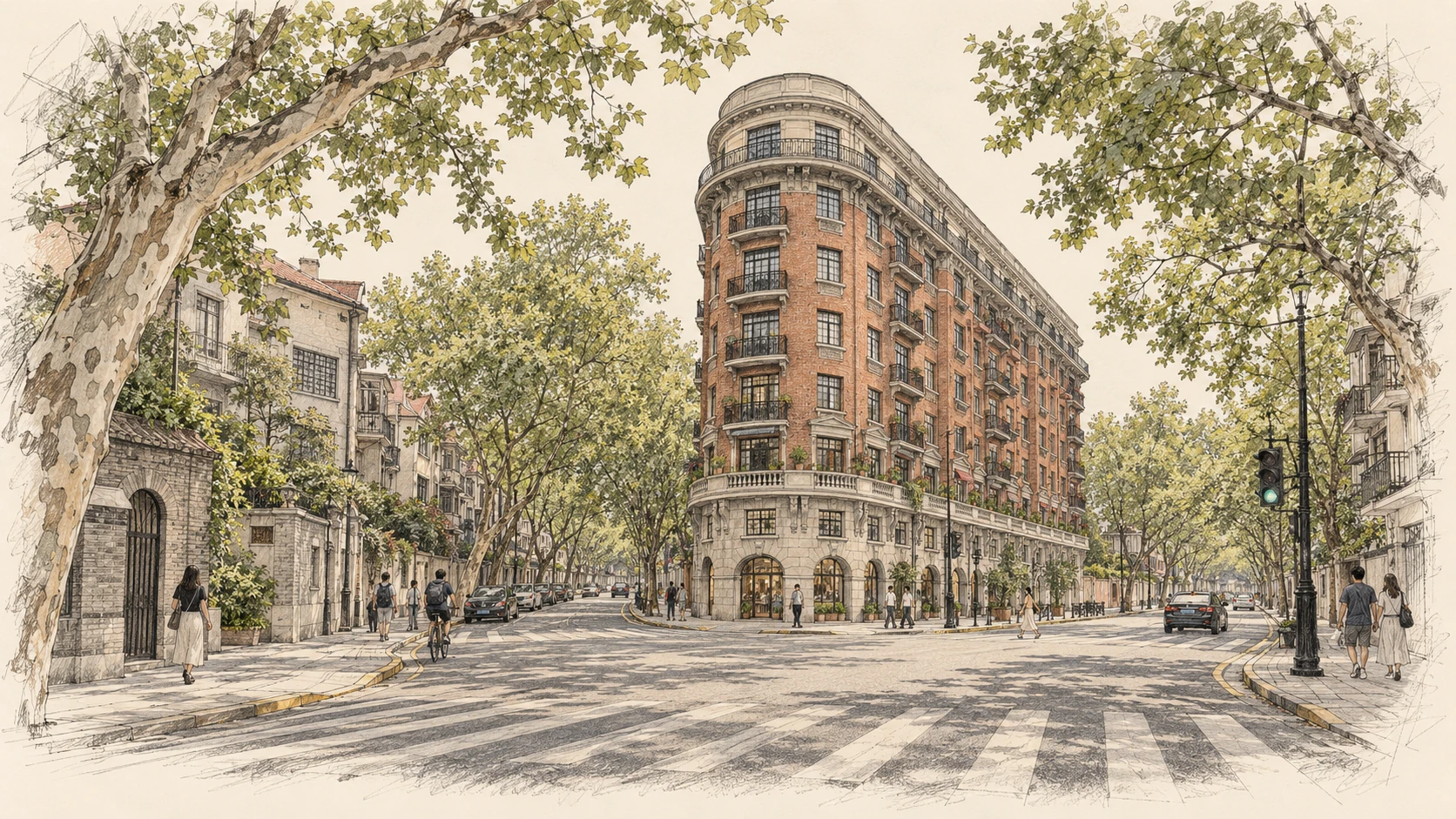
Wukang Road contains garden villas, apartment buildings and lane housing. Looking at their differences is more rewarding than treating every older building as part of a single style.
Follow a material across the street
Choose one detail: exposed brick, a roof tile, a balcony edge or a window surround. Find it again and notice what changes. Materials help you see alterations, repairs and different design choices, even before you know a building's history.
You do not need to label every facade. A careful question about how something was built or used can take you further than a confident but inaccurate style name.
Look above the architecture
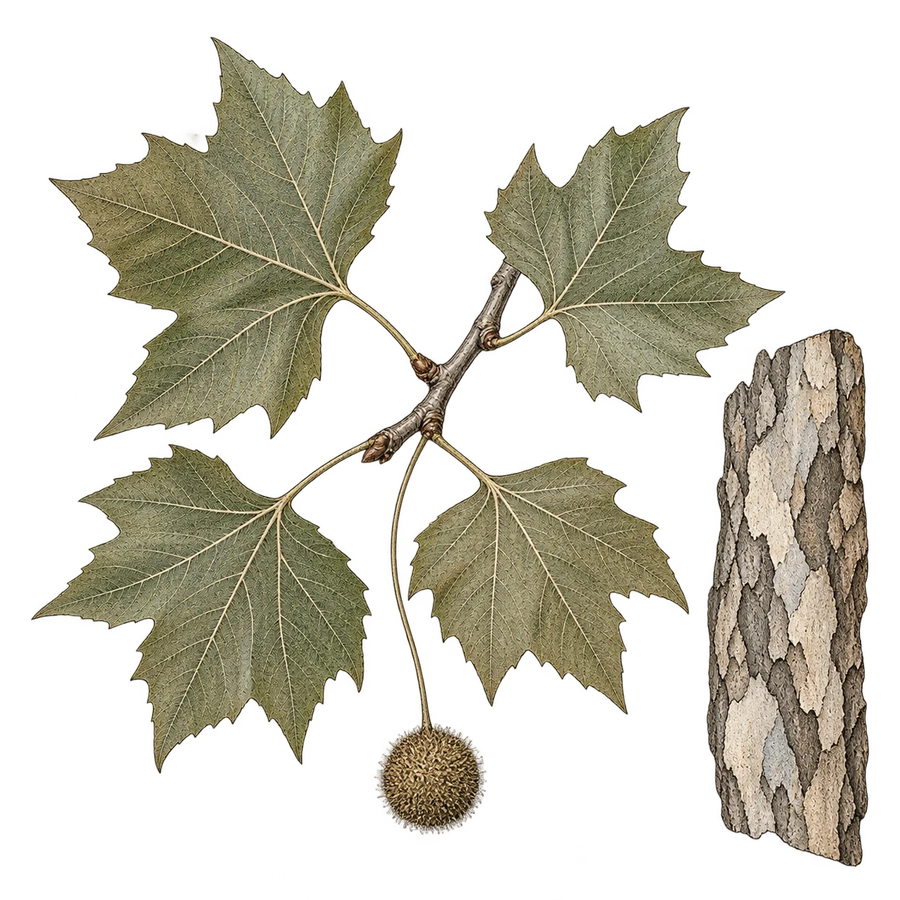
Plane trees are part of the neighborhood's character. Their broad canopy changes the light on buildings and their bare branches change the streets again in winter. Shanghai's familiar 'French plane trees' are London planes; the local name is not a claim that they are native to France.
Finally, remember that the street is a neighborhood. Keep gates and entrances clear, photograph from public viewpoints and leave private courtyards to the people who live there.