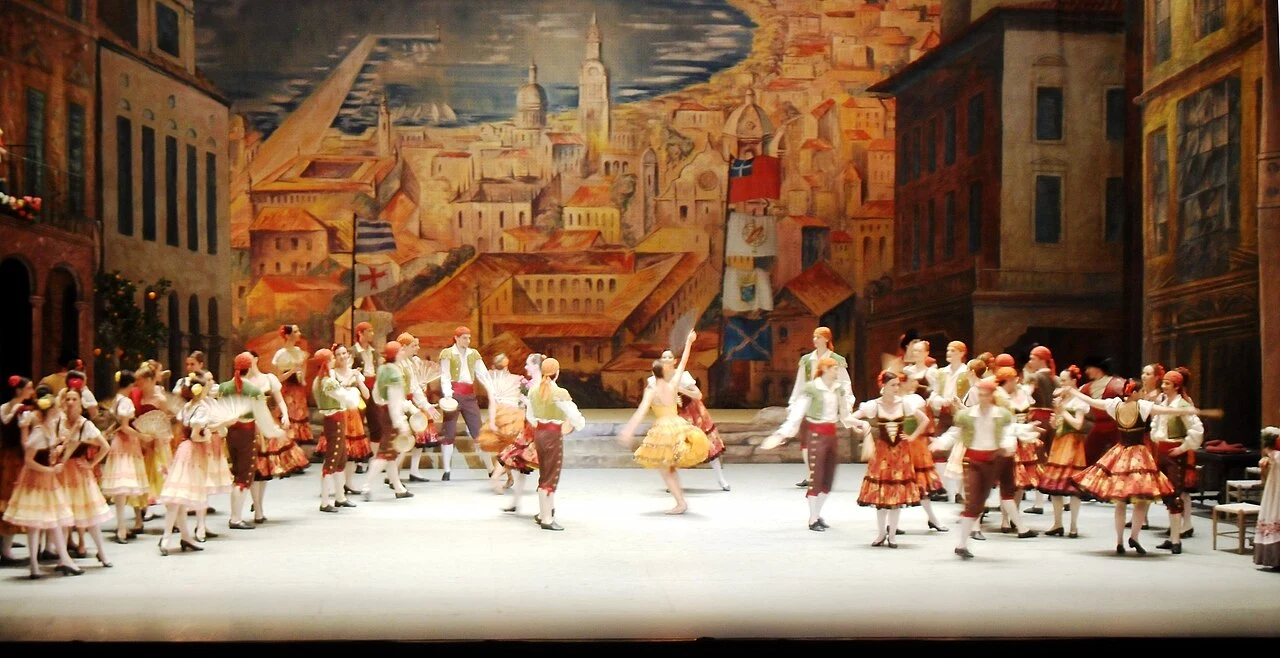

A comedy inside Cervantes’ world
The ballet takes its setting and wandering knight from Miguel de Cervantes, but the lovers Kitri and Basilio carry the central action. Her father wants a richer match; the young couple’s resourcefulness drives the comedy. Don Quixote’s chivalric imagination runs alongside their more practical problem of being allowed to marry.
That difference from the novel is helpful to know before the curtain rises. The ballet is built around a Spanish village, character dancing, romantic misunderstanding and classical display. It does not attempt to compress the whole book into movement. Ludwig Minkus’s music and Marius Petipa’s choreography first brought the work to the Bolshoi in 1869, giving the title a particularly long connection with this company.
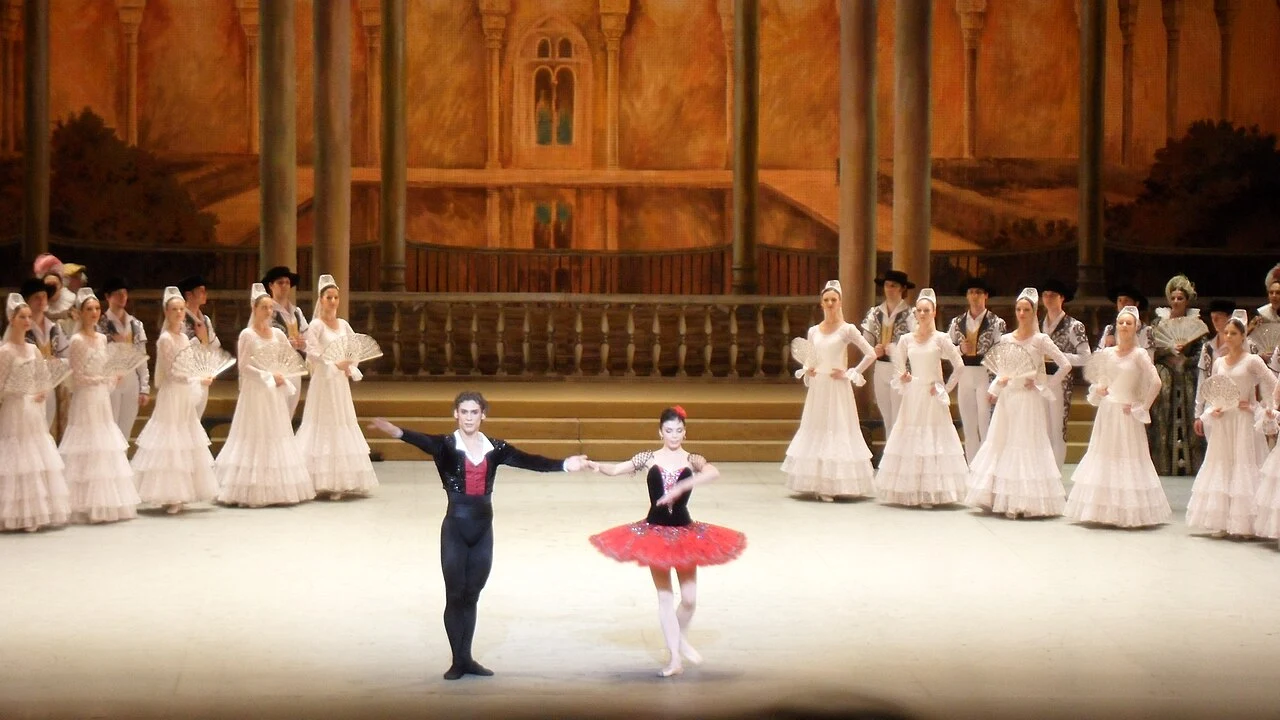

Why this title travels well
Don Quixote is one of the more direct introductions to classical ballet’s comic side. The principal relationship is easy to follow, and the dance has an extrovert theatrical character: turns, jumps and partnering form part of the celebration around the lovers. Its wit and village bustle offer a different evening from the spectral landscapes associated with some 19th-century ballets.
The Shanghai visit also includes a separate Bolshoi Gala on 24–25 October. Those dates belong to another programme. The 21–23 October engagement is the full Don Quixote listing; a gala ticket should not be mistaken for the same evening under another name.
Shanghai dates and booking
Don Quixote (《堂·吉诃德》) plays 21–23 October 2026 at Shanghai Culture Square (上海文化广场), 36 Yongjia Road (黄浦区永嘉路36号). The venue lists 19:30 performances. General ticket sales begin 31 July at 15:00; the advertised early offer gives 10 percent off 1280- and 1080-yuan tickets until 10 August at 23:59.
Individual cast information and any booking changes belong to the official performance listing. The attraction here is the company and the work; named principal dancers should be checked for the particular date.