Understand the construction before adding fillings
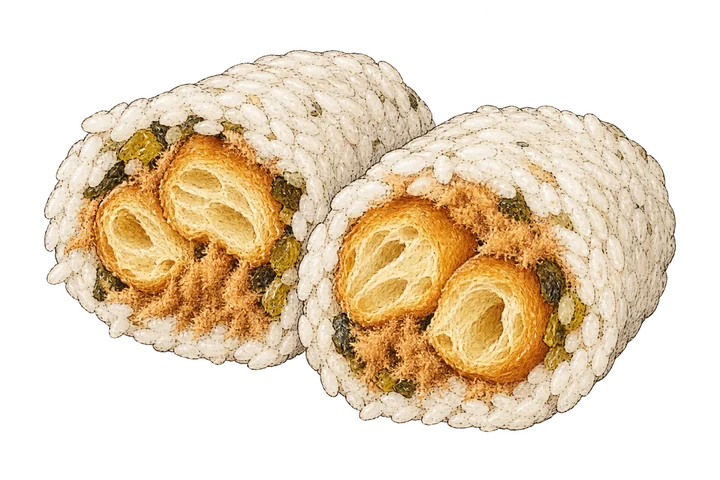
The basic form is steamed sticky rice wrapped around youtiao, the fried-dough stick. Shops may offer sugar, pickled vegetables, pork floss or other additions. The rice is the wrapper and part of the filling power. This is not a thin rice-paper parcel with a token quantity of starch.
The useful first question is which version the shop makes. A photograph with many fillings may show an upgraded order. A simple roll may give a clearer account of the rice and fried dough. Neither is inherently more local, generous or worthwhile. They answer different appetites.
For a first taste, I would resist building the largest possible combination. Each extra filling changes the proportion of rice, crisp dough and seasoning. If you start with everything, it is hard to know what you would remove or repeat next time. A modest roll provides a baseline; tomorrow's breakfast can be more elaborate.
Judge rice as a wrapper with a job
The cooked rice is spread into a layer, the fillings laid across it, and the whole thing enclosed and pressed into a compact roll. That sequence explains why assembly matters. Too much compression makes the wrapper dense; too little leaves the fillings escaping. A well-proportioned roll holds together without requiring an effortful bite.
Look at the proportion rather than only the size. A very large white exterior may mean a lot more rice rather than more of the fillings you chose. That is not necessarily a fault, but it matters if you are paying for an upgraded center or planning several breakfast stops.
Keeping some of the wrapping around the lower half can make the roll easier to handle. Follow the shop's serving method and avoid tearing it all open merely to stage a cutaway photograph. The food was assembled to be held together. A perfectly exposed cross-section is less useful if the rest of breakfast falls onto the pavement.
The fried dough is the contrast
Youtiao gives the rice something to work against. A distinct center brings a change of texture to each bite. How crisp it remains depends on the dough and the time spent inside the warm rice. A roll eaten later is a different proposition from one eaten soon after assembly.
Try the first bite before adding a drink. Can you distinguish the center from the wrapper? Does the rice's moisture make the dough more enjoyable or make everything feel similar? These questions explain more than the slogan that the freshest version is always best. Some diners prefer more softness; others want a firm contrast.
My preference is for enough definition that the roll still feels assembled from different components. That does not require an aggressively crunchy core. It requires the youtiao to contribute something beyond volume. If its only effect is to make the rice roll larger, another filling combination may suit you better.
Sweet, savory and the assumptions between them
Ask which choices the shop offers. White sugar gives a simple roll a distinct granular sweetness; pork floss adds fine, dry strands; chopped preserved vegetable supplies a sharper, firmer interruption. These additions behave differently. A roll with everything inside can become less defined than one with a single well-chosen contrast.
The sweet-versus-savory choice is also a question of proportion. A little sugar beside fried dough can remain a clear accent. A thick layer changes the whole bite. With pork floss, the rice needs enough moisture to bring the dry fibers into the meal. Tell the maker what you prefer before the roll is closed.
If you dislike combinations of sweet and salty flavors, say so before the roll is made. If you enjoy them, do not assume the most heavily filled version gives the best balance. A little seasoning may work more clearly against the rice than a long list of additions competing for the same bite.
What to order beside it
Soy milk is an obvious companion, but choose the version deliberately. Plain, sweet and savory orders lead the meal in different directions. A sweet drink beside a sweet-filled roll can make sense if that is the breakfast you want. A savory bowl adds toppings and more substance, which may be unnecessary before a large lunch.
For two people sampling, ask whether one roll can be cut for sharing. A shop may have a preferred way to serve it or may not offer that service. Confirm before asking someone to reassemble a roll already wrapped for takeaway. Shared tasting works best when it fits the shop's operation.
After one roll, give yourself a few minutes before ordering another substantial item. Cifantuan rewards appetite calibration. Its great practical quality is that it can be a whole breakfast in one hand. There is no reason to turn that advantage into a problem by treating it as the first of six compulsory courses.