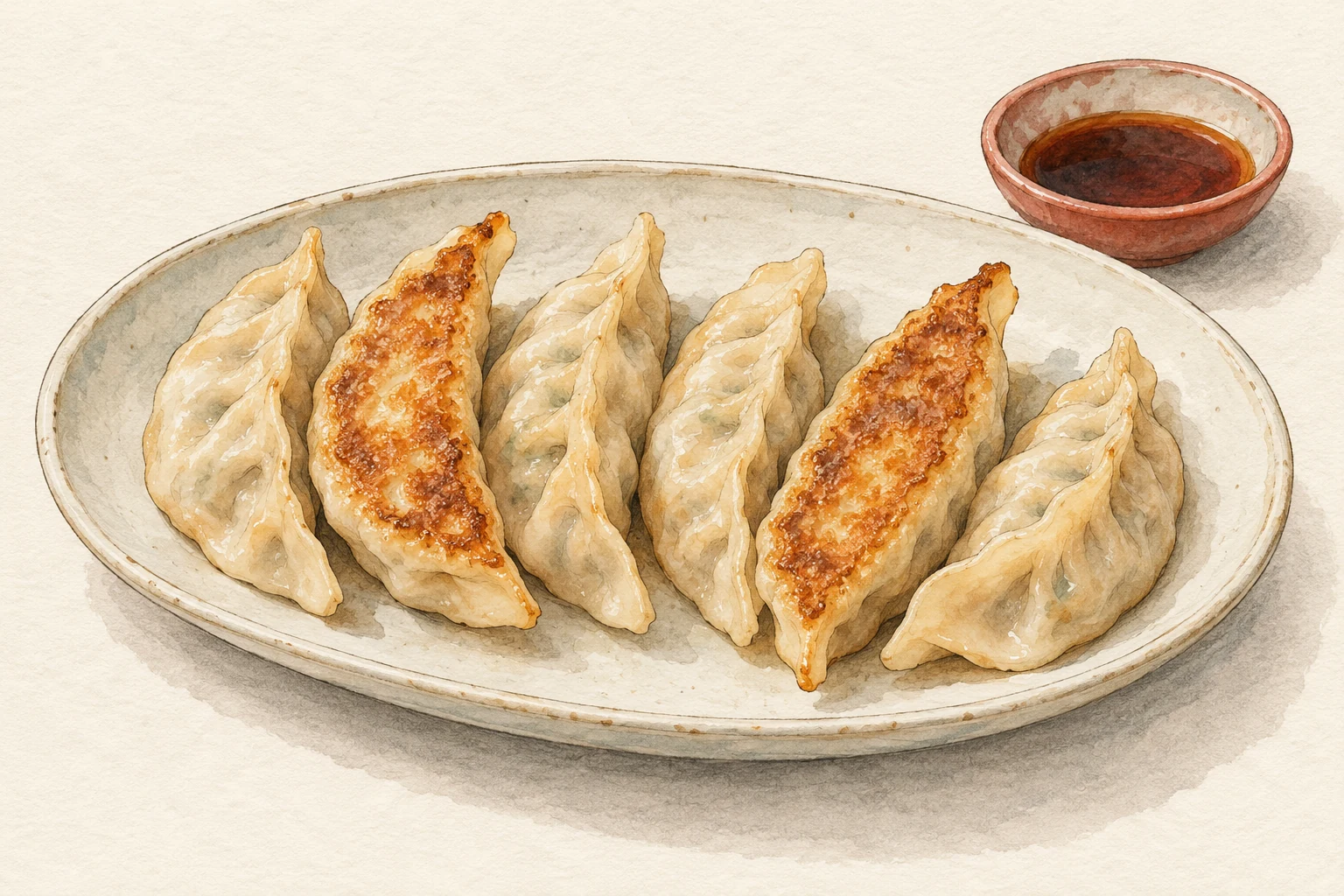
A dumpling wrapper and a bun are different starting points
Guotie (锅贴), usually translated as potstickers, use an unleavened wrapper. Shanghai examples are often elongated, with a generous section touching the pan. Shengjian (生煎) are buns, usually rounder, and their dough can be fully fermented, partly fermented or unleavened depending on the style. The category has more variation than the single English phrase pan-fried dumpling suggests.
This is why “shengjian are always fluffy” is not a reliable buying guide. A thin-skinned, juicy modern version may sit far from a breadier traditional bun. Similarly, two guotie orders may differ substantially in wrapper thickness and the amount of liquid inside.
Ask what the shop makes, then compare the food in front of you. A category tells you where to begin; it does not settle which version you prefer. I would choose by the relationship between wrapper, filling and base rather than by a rigid test of which shape deserves the most authentic label.
The base should support the whole bite
Turn one piece enough to inspect the bottom without spilling it. Color and texture are separate questions. A dramatic dark patch can be brittle, hard or burnt; a lighter base may still have a satisfying crispness. Use a bite to judge what the photograph cannot.
In a guotie, the broader base can give you a long run of pan contact. In a shengjian, the base contrasts with the upper wrapper. Either can become a one-note experience if crispness is the only thing the kitchen achieves. The filling and the rest of the skin need to remain worth eating.
For my money, the best base is one that stays connected to the dumpling or bun as you eat. If it detaches as an impressive shard while the upper half becomes a separate soft parcel, the parts may be less satisfying together than their individual photographs suggest. This is a preference about the complete bite, not a ban on a crisp skirt.
| Feature | Guotie | Shengjian |
|---|---|---|
| Form | Folded, often elongated | Round bun |
| Dough | A thinner dumpling wrapper | A thicker, raised wrapper |
| Compare first | The fried surface and wrapper | The base, bun and filling |
| Before ordering | Ask about filling and portions | Ask about filling and portions |
Broth is a feature, not a scoring system
Some shengjian carry substantial soup, while other styles rely more on the meat's juices. Guotie can also contain hot liquid. Treat an unfamiliar piece cautiously rather than assuming only round buns need a spoon. Make a small opening and give the contents time to cool before a large bite.
The most explosive piece is not automatically the best. Extra liquid changes the balance between meat and wrapper, and a less soupy style may offer a clearer bun texture. A good comparison asks whether the amount of broth belongs with the rest of the piece.
If your previous shengjian experience was a thin wrapper with a dramatic flood of soup, tell the guide or server that. Trying a breadier, less soupy style next may explain the category better than ordering an even larger example of the same thing. The comparison is about range, rather than escalation.
How to order a fair comparison
If the shop offers both, ask the minimum order and piece count. Two small orders shared between two people may be enough for an informative breakfast. Check the fillings as well: comparing beef guotie with pork shengjian changes more than the wrapper, which may be interesting but is a different exercise.
Taste one of each before adding strong condiments. Then repeat a bite with vinegar or chili if you like. You now have two comparisons: the foods themselves, and how each responds to seasoning. Submerging both immediately can make them seem more alike than they are.
A freshly served batch is worth eating while it is still at its intended texture. Do not hold one order untouched while waiting a long time for the other merely to create a symmetrical photograph. Make notes or save the menu name instead. A fair comparison does not require both foods to deteriorate at the same rate.
Which one would I choose?
Choose guotie when you want the thin-wrapper relationship between the filling and a broad fried surface. Choose a breadier shengjian when the upper dough is part of the pleasure, or a thinner style when you want a juicier bun. If you are unsure, asking about the shop's dough is more useful than asking which snack is objectively better.
Consider the rest of breakfast too. A substantial order of buns beside a large rice roll repeats a lot of starch and filling. A smaller portion with an appropriate soup can produce a more balanced meal, depending on appetite. Confirm the soup's ingredients rather than assuming it is a neutral extra.
Neither snack needs to replace xiaolongbao in your affections. They provide another cooking method and another set of textures. The useful outcome is a preference you can describe: a thinner skin, a broader crisp base, more bread, or less broth. That is enough information to improve the next order.